

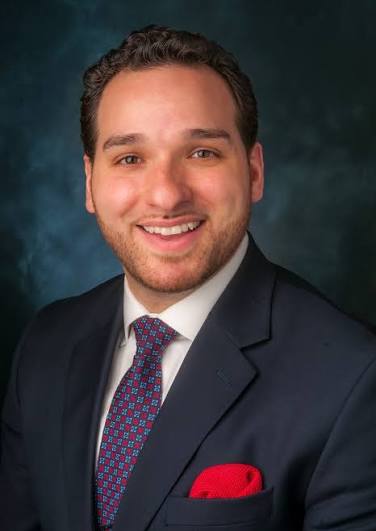
Richie Marrero, Partner at 360 Benefits and Founder of Pichón Golf, joins Craig Castelli to discuss strategic benefits planning for business owners facing rising healthcare costs. Richie emphasizes proactive, long-term planning over annual renewals, exploring how level-funded and self-insured plans can help businesses manage costs. They also discuss AI’s growing role in healthcare efficiency and the importance of benefits integration during M&A transactions. Richie shares the story behind Pichón Golf, his custom golf apparel business, and its mission to make golf more accessible to underserved youth.



Exploring the Art & Science of dealmaking
Welcome to The Close M&A Podcast with Caber Hill Advisors, where we bring you exclusive insights from M&A experts, business owners, and industry leaders navigating the complexities of buying and selling businesses. Hosted by Craig Castelli, this podcast demystifies the dealmaking process, shares success stories, and offers invaluable lessons for business owners and investors.
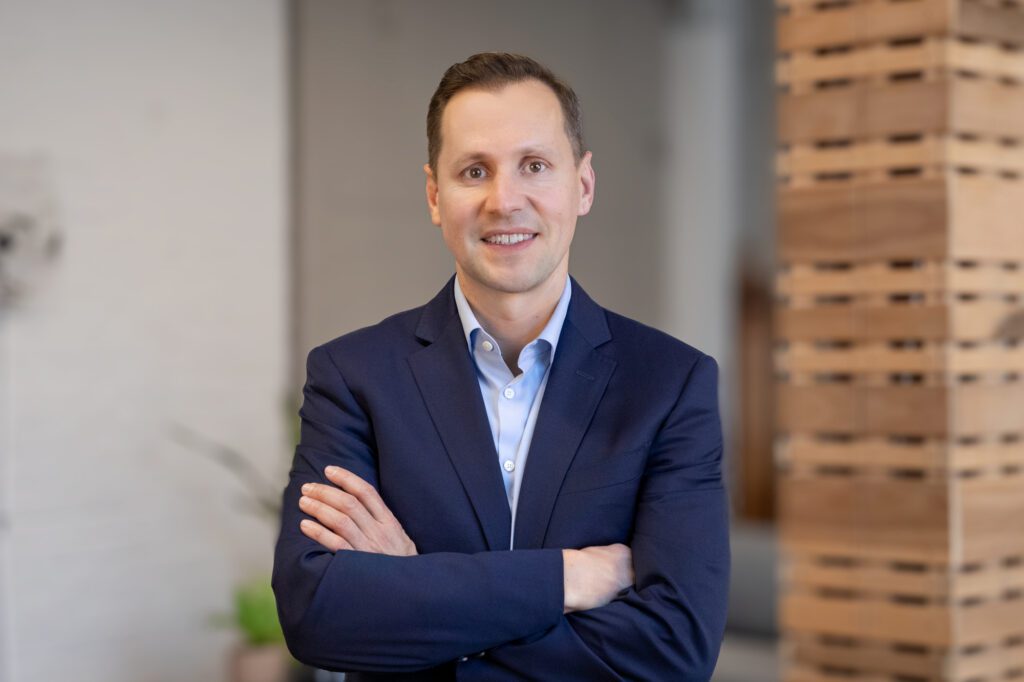
Craig Castelli, Founder & CEO of Caber Hill Advisors, is a trusted M&A expert with decades of experience advising business owners through successful transitions. Alongside a rotating roster of advisors, entrepreneurs, and investors, Craig brings engaging conversations that illuminate the world of middle-market M&A.
- ABOUT THE EPISODE
-

Richie Marrero, Partner at 360 Benefits and Founder of Pichón Golf, joins Craig Castelli to discuss strategic benefits planning for business owners facing rising healthcare costs. Richie emphasizes proactive, long-term planning over annual renewals, exploring how level-funded and self-insured plans can help businesses manage costs. They also discuss AI’s growing role in healthcare efficiency and the importance of benefits integration during M&A transactions. Richie shares the story behind Pichón Golf, his custom golf apparel business, and its mission to make golf more accessible to underserved youth.
- SUBSCRIBE
-
- ABOUT THE PODCAST
-
Exploring the Art & Science of dealmaking
Welcome to The Close M&A Podcast with Caber Hill Advisors, where we bring you exclusive insights from M&A experts, business owners, and industry leaders navigating the complexities of buying and selling businesses. Hosted by Craig Castelli, this podcast demystifies the dealmaking process, shares success stories, and offers invaluable lessons for business owners and investors.
- ABOUT THE HOST
-
Craig Castelli, Founder & CEO of Caber Hill Advisors, is a trusted M&A expert with decades of experience advising business owners through successful transitions. Alongside a rotating roster of advisors, entrepreneurs, and investors, Craig brings engaging conversations that illuminate the world of middle-market M&A.
- BE OUR NEXT GUEST
-
LISTEN
WATCH
READ
Craig Castelli (00:04):
Welcome to The Close M&A Podcast with Caber Hill Advisors. I’m your host, Craig Castelli. And today my guest is my good friend, Richie Marrero. Richie is a partner with 360 Benefits, a benefits consultancy and brokerage here in Chicago. He’s also the founder of Pichón Golf, a very cool custom golf apparel business that he started a handful of years ago with a lot of philanthropic goals in mind. I’m rocking my Pichón Golf mock zip right now. So we’ll make sure we talk about that as well. But Richie, let’s just jump right in as is my style. And we’re in open enrollment season right now. It’s October 22nd as we’re recording this. What do business owners need to be thinking about as they prepare for benefits decisions they’re making now and in the next year?
Richie Marrero (00:53):
Yeah, absolutely. I appreciate you having me on, Craig, as always, and it’s always a pleasure to spend time with you because I always learn something. So grateful for the opportunity to be with you today. And that’s a great question. And my response to that question always lies in that needs to be strategic and forward thinking. Oftentimes in our space and benefits tend to be the second largest P&L item for most organizations, so we always want them to be thinking about it strategically. But I would encourage a leader or owner, CFO to be thinking about it sooner in the year. A lot of times they wait and their broker might wait unfortunately to deliver news, but it should be something that’s strategically thought out in more than just this year. We shouldn’t be handling it in a single year. We should be thinking about how it’s going to impact our organization for years to come. And without a strategy, you’re really going to position yourself to hope and hope is not a good strategic approach to benefits on an annual basis. So I always pump that back to the owner and say, “Well, what do you want your benefits program to do for you? Is it a benefits program that is really geared to recruiting and retaining talent? Is it we just need it because our employees are asking for it? What is your philosophy around it?” And we tend to love with working with those leaders and owners of organizations that are thinking about it as a tool to create better work environment, create healthier employees. And what we find is the organizations that lean into that and think about it strategically in that way always get better outcomes. And those outcomes can be rich benefits, but not breaking the bank. How do we maximize every dollar that we’re spending on benefits to get the best reward for our employees and our team members? So that’s the one thing that I always share with CEOs. But in the same ilk, I mean you’re doing that every year. Well, how do you think about it?
Craig Castelli (02:46):
I mean, I will tell you that I am guilty as the one who treats it as a little bit more of an afterthought. I mean, we offer a full suite of health, dental, vision, robust PTO, 401k with a match. I think for our size and what we are, we offer a pretty good plan. And to me, it’s just table stakes. I know a lot of smaller businesses that don’t offer the benefits. That was never really a consideration once I figured out that even a small company like us could provide benefits and that we didn’t just have to give a subsidy and send employees to the exchange. We were very happy to roll out a program. But at the same time, it’s pretty widely publicized that there are potentially record breaking increases across the board this year. I saw some stats, different big insurers projecting eight to 11% increases in premiums. I would love that. We just got our quote and it’s a 20% increase to our premiums across the board. And so I was not strategically thinking as you say, so we are just basically eating it right. What do we have? I’m not going to not offer coverage and I’m not going to just saddle the employees with 100% of that cost. It’s not the right thing to do. But I think everybody needs to also figure out how to balance those rich benefits and the goal to retain employees and keep your employees happy with the cost containment. And you kind of alluded to that in what you were just saying, so I’d be curious to just unpack a little bit more how you strike that balance and what the outcome of some of the strategic thinking should be.
Richie Marrero (04:36):
That’s a great point. And sometimes it may seem overwhelming as a smaller business owner, and I just mean smaller by employee size because it does feel like you’re at the mercy of the carrier community in that regard because there’s not a lot of competition and a little bit of lack of transparency in your market segment. But that’s where you should be leaning on a broker partner like us. And the strategic guidance that should be had is long-term, but it should be tailored to your organization. Where does your organization fit from an employee count standpoint? What does your current program look like? Plan design, carrier relationship, all of those things factor into a strategic plan. And now more than ever, leaning into what data becomes available to you and how are you leveraging that data to make sound decisions as it relates to your plan moving forward. I’ll give you an example. Historically, most organizations under a couple hundred employees would never consider looking at self-insurance or level funding, which is a hybrid between fully insured, which is what most organizations in the middle market and below are, and self-insurance, which is the employers taking on the majority of the risk. But if I go into that math problem with my eyes wide open and I understand what my total risk is from day one, it makes that math problem a little bit more palatable. And then there’s going to be some variability in utilization, but that’s going to be there even in a fully insured environment as well. So our hardest job is helping educate those CFOs and leaders within the organizations that we’re consulting to, to understand the nuance within those different funding arrangements. And I think that’s where the biggest wins come because when you go further, level funded and then self-insured, you start to get more access to data. You can control your plans a little bit better, and then you have greater transparency on utilization. Those two factors give us the ability to put ourselves in control of the decisions that we’re making instead of, I’m going to use you as an example, being reactive, you got a 20% increase and now you’re backpedaling like Jalen Johnson on a deep route from Green Bay Packers and you can’t catch up. So that’s the feeling, the sentiment that you as a business owner or a leader feel, and it’s a crappy feeling when you don’t feel like you can do anything about it. Leaning on your broker partner to plan, prepare ahead will give you the best opportunity to have success in a broker and framework that is our healthcare system today. A broker partner’s not always going to be able to reduce it down to a single digit increase, but they will give you the best fighting chance to do that and advocate on your behalf. And that’s the approach that we take every year. And every single client is different based off their utilization, their plans, and the mix of what they’re trying to accomplish. So it’s fun for me. We take pride in that. As a social worker, I always want the greatest outcomes for our clients. So I sit behind the table. I’m just the problem solver for their goals, their objectives and what they’re trying to accomplish. And then we weave that into the puzzle that is getting the right plan design at the right price for their teams and their employees.
Craig Castelli (07:55):
When should that conversation start?
Richie Marrero (07:57):
That’s a great question. For every organization, it’s different. I’ll give you this. We tend to bring on clients six to eight months before they renew or immediately after they renew. And the reason why that is because when you get into that 90-day window before renewal, it becomes a little bit more difficult to have a smooth process. And my core objective when working with clients is ease of doing business with us and ease of us helping them get to the next level and making sure that we can roll out a strategic plan that doesn’t feel cumbersome. It relieves the HR team and the CFO from a lot of the things that they might perceive as the work that needs to be done. So if we take that off their plate, give them a path forward that is really easy and efficient, it makes that transition a lot better and everyone wins in that situation.
Craig Castelli (08:48):
What are some of the trends you’re seeing in terms of whether it’s plan design or shifts in certain directions?
Richie Marrero (08:56):
I don’t have a magic wand, but I anticipate that if you’re not self-insured in the next three to five years, you’re doing yourself a disservice, even as a smaller company. And when I say self-insured, I mean level funded and self-insured. If you’re 250 employees and above and you’re not self-insured and your data is pretty normal, your utilization is pretty normal, you’re costing yourself money in perpetuity for years to come. Working with brokers that have the strategic guidance and the expertise to take a group self-funded is going to be the way of the next three to five years. Many have already started doing that. Kudos to them because they’re saving money from the moment they made that shift. Year one, it’s probably flat or the one where you’re not going to see as much cost savings. But if I looked at the trends from a fully insured group going into self-insured over a 10-year window looking out ahead, they’re always going to be putting more money back in their pocket.
Craig Castelli (10:00):
And so really the strategic CFO or business owner is planning this out multiple years in advance. This is not just an annual decision, which frankly, I know many up to a certain point or up until the point they have this conversation with you are just doing that reactively or even if there’s a little bit of planning involved, it’s one year at a time.
Richie Marrero (10:22):
Yeah, and there’s strategic support that we provide. So I always like to say the crawl, walk, run approach. A CFO and an HR leader and owners of companies, they need to understand it. It feels really, really scary because there’s this open-ended risk that is perceived on the self-insured side. So that crawl is us educating them, and that education can take a year, two years, three years, and then they get into the position where now they’re walking and they have some conceptual understanding of what self-insurance means and all the nuance and capabilities within that funding arrangement. And then we take them into that run phase. And when they’re running, that means that they’ve adopted it, they’re now self-insured, whether they’re using self-insured and paying for it themselves or using captives to spread out some of that risk because they like being a part of a group instead of themselves. All of those concepts, when broken down and they’re running, they look back on it and they’re like, “Why the hell didn’t we do this sooner?” And it requires the right partner in order to get to that point where they look back and it felt like it wasn’t a big lift. They’re seeing that they’re keeping more of their dollars. All of those aspects are why we believe that if you’re not self-insured as an organization, you’re leaving money on the table.
Craig Castelli (11:36):
Okay. That makes a ton of sense. And I mean, that’s your long-term EBITDA driver. We got to touch on M&A a little bit here. In 2026, not only is this an M&A podcast, and I’m required to talk about M&A a little bit, but we also have to get to AI. I think from a macro perspective, I’d argue that we have the best healthcare system in the world, but we also have a very screwed up healthcare system too that has a lot of inefficiency and a lot of room for improvement and that creates business opportunities a lot of different ways. What are you seeing with AI? And I think to shape the question a little bit more specifically, there’s opportunities for AI to take costs out of the system, but I think AI also enables providers to submit more claims, more complex claims, which can then drive up what they’re billing, which is the counterbalance to cost coming out of the system. So where are you seeing it, whether it’s in your business or more broadly in the impact on your clients?
Richie Marrero (12:39):
I’ll give you two examples. I’m going to give you an example that pertains to businesses, and I’m going to talk in terms of 360 benefits and how we can leverage AI and technology to create not better outcomes, but more efficiencies and time savings for our team as we serve our clients. We can take proposals, we can take data, throw it into a system, and it spits out what we want it to spit out because we’ve given it directives. And a lot of times when you give it those directives, it gives us the data in a manner that we probably couldn’t have come up with. So it’s clean, it’s better. We go back and forth there. So it saves us time and energy there, which allows us to create hours to then serve other clients’ other capacities. But it still requires subject matter experts and it still requires additional eyes to make sure that the answers that we’re getting back are just assumed to be accurate. So that’s something that we are getting better at and understanding. So that’s how we as a brokerage are using AI to drive some efficiency. Now, when I look at the systems, the hospital systems and things of that nature, I actually spoke with a doctor recently who’s using AI in the room where it would require typically a nurse or two nurses to take notes. So what he’s doing is he’s using this AI tool that’s listening to the feedback that he’s giving his patients and documenting all of it. And as it documents all of it, what it’s doing is it’s saving him the physical time that he had to go in and write those notes. So now what used to take him 25, 30 minutes per patient is maybe taking three to five minutes per patient because he’s just reviewing the notes to make sure they’re accurate. And what he can do now is he can actually do that pretty quickly thereafter he’s met with the patient. So it’s ready, it’s on time, and it’s accurate. Whereas in the past, he was jotting notes down and then going back and writing them all and then putting them into the system. So there’s some efficiency there. As PE and folks get into the healthcare space, they love that efficiency because it allows that doctor to then see more patients, more billing, yada, yada, yada.
Craig Castelli (14:40):
You know what else it does though, sorry to cut you off, is burnout is a real issue. And when you save the doctor that time, not only are they able to see more patients, but they’re able to spend more time doing what they actually love to do, what they actually went to school to do. And so okay, just good for everybody’s overall health and wellness. As a business owner, that means I have better doctor retention and my business probably grows a little bit faster, more organically because of the fact that these doctors are happier in their jobs.
Richie Marrero (15:11):
Craig, I’m glad you stated that because you see it. Those are the businesses that you’re selling and buying on a regular basis. So you’re absolutely right. It’s about efficiency. It’s about keeping doctors practicing healthcare because that’s why they got into the business. They don’t want to be keeping books. They want to serve people. They want to make sure that they’re serving people. So that’s one way that I believe AI is really moving the needle. And it’s here. It’s not going anywhere. We can’t be afraid of it. We got to interact with it. We’ve got to learn how to use it within our toolkits to make sure that we’re optimizing our ability to serve. Again, the end user for us is the client. How do we serve our clients and how do we leverage this technology to do that efficiently? There’s ways to do it. You just can’t be afraid of it. And myself, it took me a little bit of time to plunge in and start to dig in and understand it, and how do I leverage it to be better both at home, in the office with my colleagues in the community? Where can we leverage these tools that are there to make an impact?
Craig Castelli (16:12):
Yep. How often are you involved in M&A from the standpoint of one of your customers is either being acquired or making acquisitions and you have to get involved in whether you’re providing gap analyses or just rolling out coverage across larger and larger employee bases?
Richie Marrero (16:31):
Yeah, I wish we did it more. I know we’re a boutique firm here. A lot of times those opportunities are farmed out to much bigger firms, the Aons, the big shops of the world, if you will. But we’ve been able to do some of that work, and we like doing that work because it best prepares that client. Even if they’re acquiring or selling, it best prepares them to maximize, again, their second largest P&L item. Why are they not aware of what it’s going to cost when they acquire this group that has 150 employees? What does that benefit cost look like? So we’ve done a little bit of those analyses for our clients. How do we merge their benefit program with your benefit program to make sure that it’s seamless and you don’t piss off half your new employee population? So those are the things that we’re doing. And then if we’re working with an acquirer, we say, “Hey, make sure you get their benefit program so that you understand what those dollars look like.” Or if it’s a recently acquired business to say, “Hey, let’s look at that immediately so that we can understand how we can reduce your costs or bring them into whatever program makes the most sense financially.” But those are all strategic conversations that are being had with CFOs and COOs because it does matter. It does matter. Losing key employees because of your healthcare program can cost you a lot more than the cost of the actual healthcare. So it’s just being strategic in leveraging those aspects. And we like doing that. I like doing that because that’s problem solving.
Craig Castelli (17:52):
Right.
Richie Marrero (17:53):
Then making sure that they’re doing it compliantly. I’ll give you a perfect example. We have a client now that’s being acquired. They’re self-insured. They’re going to be acquired into a fully insured program. So we have to unwind the self-insured program because there’s run out on it and then make sure that that relationship and that integration into that new benefit offering is appropriate and it doesn’t cost the previous owner who had the self-insured program any additional risk or money down the line. So we’ve navigated that for them effectively, and they’re probably in a position where that acquisition will take place over the next six to eight months. So just making sure that all the T’s are crossed and the I’s are dotted because it could be a big financial gap to the owner of that business.
Craig Castelli (18:35):
You don’t want to make those expensive mistakes and if you’re not working with the right advisor on this front, you’re taking some unnecessary risk, I would imagine.
Richie Marrero (18:45):
When you all are evaluating, when you’re looking at two companies coming together, how are you evaluating the benefits side of that transition or that acquisition?
Craig Castelli (18:56):
I mean, from where we sit, it’s more of a financial analysis and frankly, just starting with are you offering or are you not offering? I mean, we’ll still see numerous smaller businesses that are not offering much in the way of benefits to their employees. And we know that when they bolt onto a larger acquirer, there’s a bunch of cost added to that company just by simply onboarding all the employees onto that plan. And we’ll have clients make the argument, “Well, most of our employees get coverage through their spouses, so this cost isn’t really going to hit.” And I’d be lying if I said I wouldn’t try to use that in some of the negotiation to bolster EBITDA. But I mean, the reality is that is going to be baked into the model of the acquirer in some way, shape or form gets factored into the deal. Sometimes though you see the opposite where small business owners offering really rich benefits paying 100% of the copays and the premium or the premiums, I mean not copays. And it’s a platinum Blue Cross plan and they’re in network with all the key doctors and they’re selling to a group that is not offering as rich of a plan. Maybe it’s just not the same percentage of the premium, somewhat of an easy problem to solve. You can gross up compensation to offset the additional cost and you’ll make them neutral financially. Where there is more pain post-transaction is when the doctor networks switch and they lose access to certain key providers. And from my limited understanding, there’s not a whole lot you can do about that other than perhaps just going out of network to see those providers because we can’t offer this pool of employees a better or worse plan than we offer this other pool of employees. And so they just get stuck eating it. And so there’s some preparedness you can do, but frankly, in the frenzy of a deal, it’s not coming up until the latter stages, unless it gets voiced as a key concern by a client. They’re really focused on what’s the valuation number one, what’s the valuation number two, what’s the valuation number three? Then we get into deal terms, then we get into cultural fit, and this is, frankly, it’s lower down the list. It should be higher when you think about the increasing value of culture and employee retention, but I’d be lying if I told you it was a top five topic in the early stages of the deal.
Richie Marrero (21:28):
100%. It doesn’t surprise me one bit. And people’s healthcare and their doctors, they have a relationship with them. So whenever there’s a change in network, it could be painful and a stern part for employees to push back on, unfortunately. And all it takes is a handful. What we find is that the loudest employees are usually a smaller amount, but they permeate through organization. So it’s important to make sure that you’re doing a little bit of diligence on that on the front end. So for sure.
Craig Castelli (22:02):
I would say it is rare that we hear somebody lost an employee over that, but it’s certainly headaches that nobody wants to deal with. And so even if you can eliminate that headache, it’s going to make operations much smoother because maybe that’s not the direct cause of them leaving, but if it starts to create some negative ripples for the organization, that can spiral in the wrong direction and create other problems.
Richie Marrero (22:28):
It’s not a hundred percent just to deal with a network problem. It’s not a hundred percent guaranteed, but if you offered making sure that you’re offering the largest national network, at least on one of the plans can alleviate some of that headache. Yeah, there’s ways around it that just requires some strategy and discussion. But again, if it’s not a top priority, it’s probably not being discussed until after the deal’s done.
Craig Castelli (22:50):
It definitely is not discussed until you’ve probably reached the point of no return. Maybe it has not closed, but you’re through Q of E. Legal is well underway. Everybody’s fully pregnant on this deal and it’s going to happen.
Richie Marrero (23:06):
That’s funny, fully pregnant.
Craig Castelli (23:09):
Right. But let’s shift gears a little bit. I want to make sure we leave some time to talk about Pichón Golf. Tell us about it.
Richie Marrero (23:17):
So Pichón Golf is an organization, a company that was birthed in 24, so June of 2024, in a chair with my barber, my best friend, my best man at my wedding. We’ve always wanted to do something with the word pichón because in Puerto Rican culture, it’s a term of endearment. It’s almost like bro in English. So we started, I’ve been playing golf now for a little over 10, 11 years, really enjoy it. And birdie is the literal meaning of pichón, bird in Spanish. So we’re like, “Let’s do something in the world of golf.” The pandemic was alive and well, and we were spending way too much money on $130 polos from some of the household names. And I said, “There’s probably a way to do this more efficiently, but also tie some good to it.” I referenced that I’m a social worker by education. I grew up in the city of Chicago with not a lot of resources. We call it humble. It was frankly poor. So if you don’t have access to golf, it’s hard to get into it. I always say it’s an elitist sport and costs money to play, costs money to get clubs. The startup costs are enormous. So I said, “What if we did something about it?” So we have Pichón Golf LLC, which is the company that does custom clothing garments for corporations. We had 300 pieces over at the President’s Cup not too long ago for a couple financial services firms, and we can do anything custom. Everything’s made out of the same exact facility every single time so we can control some of the nuance of measurements and fit and feel and all those things, but we do it at a fraction of the cost. Our wholesale pricing starts at about 40 bucks a garment and goes up from there. Those are our polos, and everything can be custom from the print to where you put your logo in. I mean, I’m wearing a piece that we did for a buddy of mine. They had their Ryder Cup event in Erin Hills and they did Moon Men versus the Milkman, and we were able to create custom garments for them and everybody had a really good time. So it’s a nice way to elevate your brand elevate in the market. And then we got the foundation. So the foundation is really geared towards getting golf clubs in kids’ hands sooner. So the idea there is every year we’ve bought three to four sets of golf clubs and just give them to kids and send them to a golf clinic. We want to expand on that. We’d love for corporations to get involved in it so we can get clubs in kids’ hands sooner and give them access to a game that’s been so great to me. It’s been great to you. I know after a round of golf on whether or not I want to hang out with somebody ever again, you learn a lot about honesty, integrity, morals, values, how they’re aligned, a little bit about their family, all those things on a four-hour round of golf. So it’s a really good business tool for me as well. So just marrying all the things that I enjoy doing to live a happier life, but also have an impact on some people.
Craig Castelli (25:57):
I wish you wouldn’t have told me you’ve only been playing for 10 or 11 years considering that you smoked me the last time we went out.
Richie Marrero (26:04):
I have my ups and downs. That’s the beautiful thing about the game is you could never conquer it. It’s just an ever a game of chasing better. That’s why I love it. I’ve shot 90 twice this year and I haven’t shot in 90 in a few years.
Craig Castelli (26:20):
There you go. So what’s the long-term goal here? Is it the business at the front or is it really more like the foundation and ultimately that charitable aim?
Richie Marrero (26:36):
You know what? I think that it’ll be a constant relay race. I think that those two organizations will pass the baton back and forth for some time, and the hope is that they can exist for a long time together. The foundation is really my sweetheart. I just want, coming from my background, I always wanted to have an impact. And I think if I had to create a big, hairy, audacious goal, it’s that one of the kids that we given access to this beautiful game of golf at a young age is college scholarship and then maybe makes it onto the PGA or the LPGA tour at some point. That would be amazing, right? And that’s what I talk about when I talk about impact. The company, the custom garments, it’s really cool because we can do stuff that the big, big retailers and well-known names are doing at a fraction of the cost that they’re doing it for the same quality of garments that they’re doing it with. So it builds some cool relationships there. And then selfishly, I never thought that it would work this way, but Pichón Golf has been so great for us at 360 Benefits and creating great relationships with owners and leaders that I’m meeting at corporate golf outings and charity outings all the time. It’s just been natural evolution of relationship building using all of these different tentacles of business. So it’s been fun.
Craig Castelli (27:57):
So a lot of our listeners are successful business owners and professionals who also happen to love the game of golf. So if a listener wants to help out and wants to help you make an impact and reach towards that big, hairy, audacious goal, what can they do?
Richie Marrero (28:17):
They can reach out to me directly. The one cool thing about me is I’ve never kept an EA, and most business leaders say you’re crazy, but I’m all about personal relationships, and those are built by getting eyeball to eyeball with folks and sharing visions so they can reach out to me directly. They can contact me either via LinkedIn, my email, which is just my name, rmarrero@360benefits, or they can reach out me directly. If it’s specifically about Pichón Golf, they can reach out to ramphis@pichon.us. They can find my website. It’s really easy to get Richie. That’s why I’m grateful I have very little enemies in the world.
Craig Castelli (28:54):
I can attest to that. Well, Richie, this has been a lot of fun. It’s really impressive everything you built, both your day job and with Pichón Golf. I can’t wait to see how that takes off in the years to come. And appreciate everyone watching us here on the close. Appreciate you joining today.
Richie Marrero (29:11):
Craig, I throw those kudos right back at you. Caber Hill is a tremendous advisory firm. If you’re ever out in the market looking to buy or sell businesses, it’s at least worth the conversation with Craig, Peter, Jordan, their team over there is all good humans. So appreciate you guys as well. Be well and go Bears, man.
