


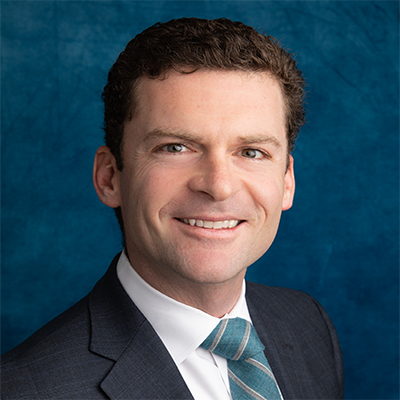
Wealth management is about more than investment performance. It is about knowing clients well enough to guide them through major financial and personal transitions. John Celentani, Managing Director of Private Wealth at Dearborn Partners, joins Craig Castelli to discuss the firm’s relationship-driven approach to advising high-net-worth clients. They explore Dearborn’s private wealth and asset management businesses, how advisors can support entrepreneurs preparing to sell their companies, and the importance of staying within their area of expertise. John also shares the lasting lessons he learned from caddying and receiving the Evans Scholarship.



Exploring the Art & Science of dealmaking
Welcome to The Close M&A Podcast with Caber Hill Advisors, where we bring you exclusive insights from M&A experts, business owners, and industry leaders navigating the complexities of buying and selling businesses. Hosted by Craig Castelli, this podcast demystifies the dealmaking process, shares success stories, and offers invaluable lessons for business owners and investors.

Craig Castelli, Founder & CEO of Caber Hill Advisors, is a trusted M&A expert with decades of experience advising business owners through successful transitions. Alongside a rotating roster of advisors, entrepreneurs, and investors, Craig brings engaging conversations that illuminate the world of middle-market M&A.
- ABOUT THE EPISODE
-

Wealth management is about more than investment performance. It is about knowing clients well enough to guide them through major financial and personal transitions. John Celentani, Managing Director of Private Wealth at Dearborn Partners, joins Craig Castelli to discuss the firm’s relationship-driven approach to advising high-net-worth clients. They explore Dearborn’s private wealth and asset management businesses, how advisors can support entrepreneurs preparing to sell their companies, and the importance of staying within their area of expertise. John also shares the lasting lessons he learned from caddying and receiving the Evans Scholarship.
- SUBSCRIBE
-
- ABOUT THE PODCAST
-
Exploring the Art & Science of dealmaking
Welcome to The Close M&A Podcast with Caber Hill Advisors, where we bring you exclusive insights from M&A experts, business owners, and industry leaders navigating the complexities of buying and selling businesses. Hosted by Craig Castelli, this podcast demystifies the dealmaking process, shares success stories, and offers invaluable lessons for business owners and investors.
- ABOUT THE HOST
-
Craig Castelli, Founder & CEO of Caber Hill Advisors, is a trusted M&A expert with decades of experience advising business owners through successful transitions. Alongside a rotating roster of advisors, entrepreneurs, and investors, Craig brings engaging conversations that illuminate the world of middle-market M&A.
- BE OUR NEXT GUEST
-
LISTEN
WATCH
READ
Craig Castelli:
Welcome to The Close M&A Podcast with Caber Hill Advisors. I’m your host, Craig Castelli. And today my guest is John Celentani. John is managing director of private wealth at Dearborn Partners, a boutique wealth advisory firm based here in Chicago. John, I guess set the table here for us. Talk about the approach you all take at Dearborn and how it may differ from the big banks and wirehouses.
John Celentani:
Yeah. Craig, thanks for having me on. This is exciting and great to see you. In terms of the approach, I wouldn’t necessarily say that our approach is all that different from a big bank, a wirehouse or any other RIA. I mean, our private wealth team is made up of a bunch of people with CFPs and CPWAs and all that good stuff. And so we’re well versed in the planning process and what makes a good and sound investment portfolio. So I would say from a process standpoint, we’re not necessarily, there’s no secret sauce here, but in terms of how Dearborn might be different than, as you said, the big banks or wirehouses where I have been in my career, I would say a couple things. Number one is just a personal familiarity with clients. So my associate who’s sitting right outside my office right now, each and every one of my clients knows her very well. She recognizes their names, she recognizes their voices. So there’s a familiarity from a personal standpoint that’s there that may or may not be there on a bigger team at a bigger firm. I could tell you all kinds of stories about phishing scams that we’ve run up against and quite frankly that have been thwarted or foiled simply because I or Annie or our operations person knows that, gosh, this person says that they’re Mr. Jones, but I can tell that this is not Mr. Jones on the end of the line. So it’s just a real deep familiarity with our clients, number one. Number two, the thing that I tell clients if they’re making a decision between Dearborn and a bigger firm is the fact that I can almost guarantee that they’re going to experience zero turnover if they choose Dearborn Partners. So I’m relatively young in this business. I’ve got a team around me that I would say has a lot of longevity in front of us. And I just know from being on the other side of the table that at a big firm, it’s a revolving door to some extent.You might have the same team or the same advisor for two to three to five years, but beyond that, it’s kind of a gamble. If you sign on the dotted line with a bigger firm, you probably are working with a completely different team inside of five or six years. Last thing I would say is just really, we have a singular focus on high net worth financial planning and investment management. And I just think a lot of other firms can’t necessarily say that. So those are the three things that I would point to in answer to your question.
Craig Castelli:
Let’s double click on that second one a little bit because I think that’s really impressive. We could read off stats.You guys have grown from five billion AUM to 12 in six, seven years. A lot of growth, a lot of other accomplishments that I think is just publicly available at Dearborn. But to retain talent over a very long time is one of the hardest things to do in any business. So what is the secret that keeps people at Dearborn?
John Celentani:
Great question. I would say it’s really shared values, it’s culture. And that’s probably a very cliche answer to your question, but if I’m really being honest, I do think that that’s what it is. I’m here because of a very unique story with a mentor and a friend who’s one of the founders of the firm. The folks who work on my team are here for similar reasons. There was a familiarity and a personal relationship even before there was a business relationship and just a real buy-in, I would say from everybody in terms of what are we trying to accomplish here? How are we trying to do it? And it’s less about the destination than it is about the process of getting there. So hopefully that’s not too cliche, but if I’m being honest, that’s really what it is.
Craig Castelli:
Yeah. Well, I think there’s a little bit of cliche in that a lot of people will give you the same answers. And then if you actually dig into their numbers, you will see that cycle of employees in, say five years, employees out and the constant phone call to clients saying, “Hey, I’ve got big shoes to fill. I’m your new representative.” It’s not cliche when you actually live it and you demonstrate it through action and it’s proven through the fact that this team is here year in, year out, decade in, decade out, providing great service to their clients.
John Celentani:
Yeah. And listen, we’re not immune to that either. I mean, honestly, we just went from six or seven people on our advisory team to down one. We had a young guy who was with us for about two years just go to a large bank. And so we’re not necessarily immune to that, but I would say the key pieces have been very, very stable, especially the lead advisors who really own the relationship with the client. People come here and they retire here. And before retirement happens, there is a very thoughtful, very drawn out and very sort of client centric and client involved transition process. So I don’t want to give you the impression that we are somewhere where people go and they never leave. That’s not the case because we’ve had this young man came here as an intern. He did a great job. We hired him on full-time. He was here for two years. He made a lot of strides and he was ready to move on. And we’re all very happy for him because I think there are things that he’s going to be doing at this large global bank that we don’t do here and we wouldn’t be able to offer him those opportunities. But I would say for those of us who are really kind of bought into this is exactly what we want to do, it’s a great place to be.
Craig Castelli:
Yeah. I mean obviously nobody bats a thousand and sometimes it’s good to also demonstrate that your youngest team members can move on to what on paper at least may look like a bigger and better thing, joining the global institution and gaining that experience. I went the opposite direction in my career from one of the largest companies in the world to running a small business. And while I would likely never go back, and you had the same kind of path yourself, there are things you learn working for those large institutions that you don’t learn elsewhere, just the rigor and the structure and the systematic way of doing things. And there’s benefits to both sides.
John Celentani:
Totally. Yeah, couldn’t agree more.
Craig Castelli:
So I think what’s interesting too that I’ve observed with Dearborn, I think it’s something like 85% of acquisitions amongst wealth management firms and RIAs have been backed by private equity. And so competing now with the big household names like the Merrills and the Morgans, you now have private equity fueling roll-ups of a bunch of more boutique oriented wealth management shops, which in a way is a great opportunity for the founders of those firms to realize liquidity that they might not elsewhere, but also then really takes them out of that boutique category and makes them part of a bigger, what likely becomes more corporate entity at some point. Dearborn’s gone the other direction. Your senior partner sold shares to your junior partners, you guys, from what I can tell, plan to remain fiercely independent for the long term. Talk a little bit about that process and that decision making and the value you think that brings to everybody.
John Celentani:
Yeah, maybe let me take a step back and just talk a little bit about the firm as it exists today because, and you know this, Craig, but just for the benefit of those listening, I’ll zoom out a little bit and talk a little bit about essentially Dearborn, we have two businesses that exist under one roof. So I sit on the private wealth management side of the table. We manage north of a billion dollars in client assets and our clients are individuals and families. We’re doing their asset allocation, we’re doing retirement planning, we’re managing portfolios, but really a separate business with its own P&L under the same roof is what I call our asset management business. So our investment team, five person investment team runs a number of proprietary investment portfolios, and those portfolios are available to third party financial advisors like me who work at places like Raymond James or Robert W. Baird or Morgan Stanley, for example. And so the asset management business, that’s actually the second part of our business from the standpoint of a timeline. So private wealth came first, that’s how Dearborn was started way back in 1997. And that part of our business has been around for as long as Dearborn has been in existence. So the asset management side came second, but it has just grown exponentially really since 2011 when the rising dividend strategies were launched. And there’s a long story that I can go in behind that. But that business is obviously just tremendously scalable and scaled it has. So that represents the bulk of our assets. And then between private wealth on one side of the fence and asset management on the other side, we really share resources, things like operations, compliance and so forth. And so that has really worked, I would say, to the benefit more so of private wealth than anything because the firm and AUM has just continued to grow and we’ve kind of hitched ourselves to this rocket ship of asset management, which has just really has done the lion’s share of the work in terms of growth. And that’s allowed us on the private wealth side to keep our heads down, focus on our clients, do a really good job, stay close to our clients and not have a ton of pressure, quite frankly, to go out and generate a ton of new business. I mean, we can be really thoughtful and selective and intentional about who do we want to work with and what does the ideal client look like for us? Are they a good fit for our investment philosophy? And so not having necessarily a lot of pressure to go out and close X number of new clients in a year or a month or a quarter has been a nice tailwind for us.
Craig Castelli:
So what does the ideal client look like?
John Celentani:
Yeah, I would say the ideal client for us, I mean that’s a great question and it’s one we get all the time. And it’s a funny question because every client, every family is so different. But I would say from the standpoint of what they all have in common is, I talked earlier about the culture of the team and the shared values of the team, and we look for a lot of those same qualities in our clients. And so I would say there’s a healthy attitude toward what lots of money can and can’t do for you, to be quite frank. So I would say a lot of our clients, they’re people who have worked really hard for what they have and they’ve remained really grounded and they are very family focused. Those are a lot of the soft things that we look for in clients that whether they made their money building a business and selling it after 25 years or winning the lottery, I mean there’s so many different ways to make money, but a lot of those things, however a client made their money, there are things that the families that we work with have in common that don’t necessarily have a lot to do with this person’s a corporate executive, this person’s a high performing M&A attorney, this person has inherited a lot of wealth. To some extent, none of that really matters to us.
Craig Castelli:
I mean, it sounds like you like working with people like you and you have freedom of flexibility to be able to do that.
John Celentani:
Well, I mean to some extent, yeah. I mean, part of what I love about this job is you get to meet people who are so different and who have just taken so many different roads and detours and careers and family life and moved all over the country and all over the world, and you hear so many interesting stories. But yeah, I agree with you. I think in a lot of ways, the people that we end up working with the longest and the people that I get along with the most, there’s a shared sort of worldview, not necessarily in everything, but when it comes to the really important stuff, there’s an understanding that, yeah, I mean, we want to put together a really sound plan. We want to have a roadmap for how to get from point A to point B, and we’re going to accept that there are some risks involved in trying to get us there and we’re going to do our best to mitigate those risks. And at the end of the day, we’ve got to be flexible. We’ve got to be really thoughtful about our approach. And I’ll just give you an example. Somebody who expects a call every month with what did the stock market do and why is my portfolio up or down more than the market is just probably not a good fit for us because we have a really long-term view. We’re not trading all of our client accounts every day or even every week. And so you can tell pretty quickly whether or not someone is looking for an investment strategy that we just don’t offer here.
Craig Castelli:
Yeah. Well, at the end of the day, people still do business with people, and I think that statement is even more prescient in the age of AI where we’re all going to be replaced by bots. But the reality is if you assume that at some level competency is table stakes. In a market like Chicago, there are plenty of competent advisors doing what you do, plenty of competent advisors doing what I do. But we are entering into long-term relationships with our clients and we should at least get along, if not really truly enjoy working together and become friends when all said and done, have some alignment around values and vision and expectations. And when that’s off, it’s just tough. And it increasingly becomes an important client selection criterion for us as well.
John Celentani:
Yeah. Well said. Well said.
Craig Castelli:
So you touched on this rising dividend strategy, and I wanted to ask about that because I know it’s been a hallmark of the asset management group. So talk a little bit further about that.
John Celentani:
Yeah. So the rising dividend strategy started in 2011 when one of my partners, a woman by the name of Carol Lipman, joined Dearborn Partners. Carol at that time had been in the business for 25 years and she had worked at A.G. Edwards. And then during the financial crisis, that was swallowed up and swallowed up again. And she ended up at a very large bank and just didn’t really care for the atmosphere or the culture there. And so through a friend of a friend of one of our founders, Carol was introduced to the partners back in 2011, and her investment philosophy, which she was running the largest separately managed strategy at Wells Fargo at the time, her investment philosophy just really matched up well with what the founders of Dearborn were doing. And so everybody who was part of those conversations, I would say took a leap of faith, Carol, to come to Dearborn and the founders to make a bet on her. And it was shortly after Carol joined Dearborn that advisors that had known her and known her track record got wind of the fact that she was here. And the assumption when the strategy started was that they would have to fund it with their own money and build up a track record, and then after a couple years could probably go to market with some fact sheets. And it was a couple days or a couple weeks after Carol was here that advisors started calling in saying, “Can we start investing yet with Carol?” And so she just brought a real following. And just to break it down, essentially Carol, in her spare time during her day job, would be going to the library and doing research on stocks. And what she found was that the stocks of companies that pay and increase their dividends with regularity tended to go down quite a bit less in tougher markets than the overall market. And so from her perspective, it was sort of like, “All right, I can get my client’s equity exposure with some downside protection when markets get really, really ugly.” And in a nutshell, that’s what it was. And so she started to study and identify the stocks of companies that did this. So whether or not a company was paying a dividend for a couple of quarters or for 50 years, if there was that pattern of companies increasing their dividend every year or every couple of years, then that was a good candidate for the portfolio. And once you identify those companies, that’s kind of your universe, and then you do some valuation work on top of that and you go from say 180 companies down to 25 or 50 that actually make it into the portfolio on a regular basis.
Craig Castelli:
Are there any other common threads among those 25 or 50 that make it in beyond the rising dividend?
John Celentani:
Yeah, there’s quite a few. So you want to stay away from companies with a lot of debt, and to the extent that they have debt, it’s investment grade. But really it’s not necessarily the history of the dividend that’s important for the investment team. It truly is reading between the lines of the earnings report and talking to the management teams to understand, okay, what’s the outlook in terms of the dividend policy? They’re looking for a lot of free cash flow. Another one of the most important metrics that they’re talking about with companies is their payout ratio. So what percentage of earnings is going toward dividends? And if that percentage gets to be a little bit too high, again, they’re trying to see around corners and say, okay, we’re bumping up against what historically has been the upper end of where a company can healthily pay out its dividend. We don’t want to be owning this company if they stall out or God forbid cut their dividend. So maybe it’s time to move on and find another company that while the current yield might not be as high, we have confidence that they’ll be able to quickly grow that dividend at high single digits, low double digits for the foreseeable future.
Craig Castelli:
Okay. And this is available not just to Dearborn Wealth clients, but this is offered to other wealth advisors, RIAs, other firms. It’s totally separate product that you guys sell, for lack of a better word.
John Celentani:
It is, yeah. We’re on the platform at a number of the firms I mentioned already. There’s also a mutual fund that for the separately managed accounts, I think there’s a minimum of 25 or $50,000 depending on where you are, who the custodian is or who the advisor is, but we do have a mutual fund as well. So yeah, that’s out there.
Craig Castelli:
Okay, great. So let’s shift gears a little bit because we at some point have to talk about M&A or the lower middle market, otherwise I get fired as host of this podcast. So I know that your client base all fits the high net worth, ultra high net worth criteria, but comes from a variety of backgrounds. And as you mentioned, I know you have a lot of big company executives, a lot of highly paid attorneys and other service providers, but you do have some entrepreneurs amongst the client base as well. So what is your approach to helping them through an exit process from prep through post-sale? And I guess as part of that, how do you stay close and make sure that you’re brought in so you don’t just get a phone call the day after they sold and say, “Hey, I’ve got this extra money for you to manage.”
John Celentani:
Yeah. Well, that’s a great question. I would say for us, I have really tried to instill in the team here a love and sort of a passion and a level of attention to planning that just I want to stay out in front of conversations like that to the extent that we can. And to me, it all goes back to planning. So every client meeting, every client conversation, I want it to be planning driven. I mean, investments are important and performance is very important, but I always tell clients when they’re thinking about hiring us that to me, it would be malpractice for us to give investment advice unless we do a plan first, at least a basic financial plan. Tell me about your assets, your liabilities, your cash flow in, your expenses out, and we can at least now start to have a framework for the conversation because I don’t want to be giving you advice in terms of what to own unless I have some sort of semblance of what the overall picture looks like. What else do you own? How else are you investing? What is the time horizon that we’re looking at? So I really want everything to be planning driven, planning focused, but I also don’t want to get too bogged down in the initial stages. And I think that’s really where a lot of clients and frankly advisors get lost and you kind of start through this 115-page questionnaire and building a really detailed plan and you stall out because there just isn’t three hours that day to get it all done, and so it never gets done. So what I’ve really tried to implement and preach to my team is let’s build a real basic financial plan at the outset. And with every conversation, every meeting, we’re adding onto that. And maybe you go into a meeting with a client and you have two or three of them a year, and that’s an opportunity for us to really dive deeper on income taxes or really dive deeper on the family, or let’s take a real deep dive on what does the estate plan look like right now and what are some of your goals from a wealth transfer standpoint or charitable standpoint? Because trying to cover all that at the outset to me is just too hard and there’s just information overload. So if somebody calls me and they ask about shouldn’t we own SpaceX right now, I’m always looking that as an opportunity to say, “Well, maybe before I answer that, let me ask you a couple questions because there’s a couple gaps in the plan still that we haven’t really touched on. Let me ask you about this.” And then that gives me a day or two to get back to them and say, “We’ve done some more planning and I’m thinking about your question about owning this or that or about…” And then there’s an opportunity to ask a follow-up question about say their business and what the timeline is for potential sale or succession or whatever it might be. So it’s always kind of defaulting into planning mode is how I think about it.
Craig Castelli:
Yeah. And so then you’re always in that mode, you never really have the opportunity to not be there when they’re thinking about the sale. I mean, I’m sure every once in a while there’s somebody who doesn’t tell you everything, but you’re there. So we’re on the cusp, so they say, of this massive transition of baby boomers selling businesses, and depending on who you read, some surveys say 90% of owners are going to sell within the next decade and most say they have a transition plan already, whereas other surveys contradict that one says two thirds of business owners have never had the company appraised. What do you see as the fundamental steps somebody should be taking in the three to five years before they’re experiencing liquidity event, whether business prep, personal prep, however you see your role in advising them through that?
John Celentani:
Yeah, so I really look at my role. I really try to stay in my lane, Craig. It’s no secret, I could never do what you do. And this is partly my experience at a large bank where I think there’s a temptation sometimes to be all things to all people. And what I really try to communicate to my clients is here are some things that we’re really good at and we would love to be a resource for you if and when you’re thinking about making a change as it pertains to X, Y, or Z, and namely in this case, selling your business or getting ready to sell your business. And it’s kind of positioning myself in a very low pressure way to say, “Hey, this is not my area of expertise, but if you need help with anything, I want to know about it and I want to try to be a resource. So I may not know how to help you prep your business for sale, or I might not know the right M&A attorney who’s going to do a great job for you, but odds are good that I could be of some assistance, whether it’s asking some question that you haven’t thought about, it’s making an introduction to somebody like you that you may not think that you knew you needed help from a firm like yours, but it ends up being a really healthy, positive step in the right direction. So I guess that’s how I think about it. I try not to oversell myself and as I say, be all things to all people. I think we’re really good at asset allocation and financial planning and investment management, but I’m not here to tell you,” Oh, this is a great blueprint for how to market and sell this business.”
Craig Castelli:
Right. Somebody needs to help the average business owner make sure they have the right team assembled. And sometimes it’s me, sometimes it’s you, sometimes they’re really close with a longtime corporate attorney, but there has to be somebody that sees where all those pieces need to be and whether they’re in place or not. One of our early screening questions is always asking about who they work with for financial planning and how that relationship has gone and what things they have put in place or what conversations they’ve had. There’s a selfish motivation in that I don’t want to get to an LOI stage and then have them talk to you for the first time and you say,” Hey, that looks like a great offer and you’re 45 years old and you’re going to run out of money at 60 and then the deal is off right there. But that’s more holistic. I say that somewhat tongue in cheek because really it helps them make sure that they’re approaching things eyes wide open and making the right decisions. And if they haven’t done that planning or they’ve worked with somebody who’s more of an insurance salesman or a stock picker than an actual planner, they really aren’t setting themselves up for success and nobody wins in those scenarios.
John Celentani:
Yeah. I’m thinking about a CPA as you’re talking that we work with a lot in California, and nothing impresses me more because this guy on a few occasions has referred his clients out to me and other CPAs because you say, “I just really don’t have the expertise in this particular area that I really think that you need.” And so this is a guy I’ve referred a number of my clients for whom it makes sense to work with somebody with expertise in his area, because I know he’s not going to try and be all things to every single client that comes his way. He’s very knowledgeable about what he needs to be knowledgeable about for the clients that he serves, but if he sees a client that he knows he can’t service, he’s very upfront about that. And I really appreciate that about him.
Craig Castelli:
Yeah. No, that’s fantastic. So we’re coming up on time here. I want to end on a little bit of a lighter note. I’m increasingly a believer that young people, teenagers, college years should have some type of a service job as they’re gaining experience. Waiting tables, my 13-year-old for two weeks in August is a counselor at a summer day camp. We forced her to apply. Turns out she’s loving it. You were a caddy, you were a good enough caddy to be awarded an Evans scholarship and attend Northwestern on that. So I’m assuming you share that to a certain degree, but I guess talk a bit on the values of caddying and some of the lessons that taught you and why anybody who’s younger or who has children should think about going into that or supporting the Evans Scholars for the great things that it does.
John Celentani:
Yeah. Well, I could spend another 40 minutes on just that, so I appreciate the question. But to me, there’s not a better job than a kid can have than caddying. So I was a caddy. I started when I was 11 years old. I was very fortunate to get the Evans Scholarship. My two sons have started caddying last summer and this summer, and I try to play as much golf as I can and I always take a caddy. I’m a big believer in it. So you’re 11, 12, 13 years old, you’re with adults who you don’t know and you’re forced to walk up to them and look them in the eye and shake their hand and introduce yourself. And then you get to spend four hours with them. And it’s hard work, especially when you’re smaller in stature, but you get to be outside, you get to meet some really interesting and oftentimes very successful people. And it’s not always a comfortable atmosphere. So I can remember many times as a teenage boy, guys hitting a bad shot and getting really upset or yelling and swearing and whatever. And so you see people in these pressure situations and it’s really actually been quite informative for me in my career as an advisor because as a caddy, I think you’ve got to know when to speak up, you’ve got to know when to shut up. And at all times you’re focused on the details. So you’re thinking two or three steps ahead of your player. And these are things that when my son showed up on the first day of caddying this year as a 12-year-old kid, he had no concept of this. But over years of caddying, you start to really understand that to some extent all these people are very much the same and the job is very much the same, but there’s a variety in the personalities and just the walk around the golf course that makes it a really, really fun and interesting job. But yeah, the Evans Scholarship is near and dear to my heart. There are now well over 10,000 alumni, folks like me who we’re fortunate to receive. It’s a need-based scholarship to get a full ride to college, including housing. And it’s a really great organization that does a lot of good. Right now, I mean, we’re sending kids to school and the average household income for some of these kids is just, you wouldn’t even believe how low it is. And so these are families that they would not be sending their kids to college if not for the Evans Scholarship. So I’ve tried to remain involved as best I can and support the foundation because it truly does change lives for a lot of these kids.
Craig Castelli:
That’s fantastic. I only caddied for one summer, but I’ll never forget my first loop. I mean, it was terrifying. I had no idea what I was doing, but you learn a ton. I think you’ll appreciate this story. So I played with one of my partners about a month ago, and I won’t say which club he belongs to, but it’s a club in the Chicagoland suburbs. And his oldest son just started caddying there this summer. And so he’s first year, he’s a B caddy. He can never get a loop. So we’re going out, it’s a quiet day, it’s just the two of us. And he’s like, “Do you mind if I request a B caddy?” I said, “I don’t really care. We’re not bringing clients. Go for it.” He had to fight the caddy master because there were honors and A’s waiting to go out. But he’s like, “Look, I know what my son’s going through and he never gets out. I’m not going to take my son, but I want to give somebody else some experience.” And a little rough at times just because I feel like most of the time you’re playing business golf and people are trying to impress and they’re bringing out the caddies with 20 years of experience. But the kid did great. We were able to give a couple pointers along the way. If you’re caddying for a foursome, maybe do this instead type thing. Took it in stride. I think it was a really positive experience.
John Celentani:
Yeah, I’m so happy to hear that. And I tell the caddy master at the clubs where I play, same thing. Whenever possible, give me a B caddy or give me somebody who might be thinking about applying for the Evans Scholarship because it’s often tough for the kids to get out, but when you get them out, it’s always a joy. I mean, I’ll just tell a quick story before we break because one of my clients who is an Evans Scholar as well, his father eventually became a client and he liked to play golf, but he never had a caddy. And so I brought my friend who is a client and his father out to play golf and I said, “We’re going to take caddies.” And my friend’s father had never had a caddy and he fought me tooth and nails. “Please, I don’t want a caddy. I’m embarrassed. “And I said,” Trust me on this. “And he had the best day and he said,” I never want to play golf again without a caddy. “And it’s not because the kid did an amazing job and told him what club to hit or told him the line at every putt, but walking shoulder to shoulder with somebody for four hours, it’s a nice experience. And sometimes you guys, you really hit it off and other times you don’t, but at the very least you get some company for the ride.
Craig Castelli:
Yep, absolutely. Well, John, this has been a lot of fun. If anybody wants to learn more about Dearborn Partners or get in touch with you, what should they do?
John Celentani:
Yeah, just Google Dearborn Partners, John Salatani. And we’re a small team, but really, really good and happy to chat at any time.
Craig Castelli:
Well, it’s been a real pleasure. Thanks for coming on and thanks everybody for watching us on The Close.
John Celentani:
Thanks, Craig.
