

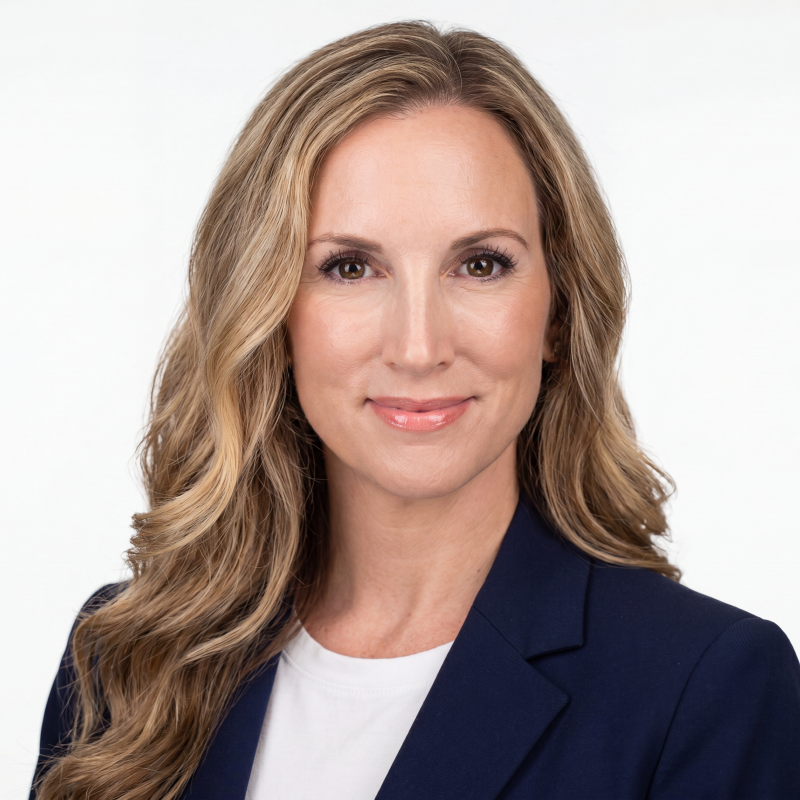
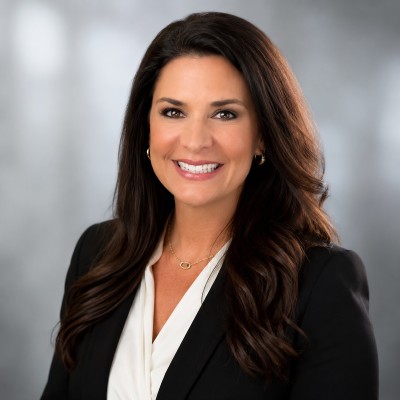
Donna Hare and Amanda Benbow from G&A Partners join the podcast to explore how HR can create value in M&A transactions rather than being treated as an afterthought. They discuss people risk as a key transactional concern, covering topics from PTO accrual pitfalls and benefits benchmarking to AI-driven workforce analytics and culture-driven retention strategies.



Exploring the Art & Science of dealmaking
Welcome to The Close M&A Podcast with Caber Hill Advisors, where we bring you exclusive insights from M&A experts, business owners, and industry leaders navigating the complexities of buying and selling businesses. Hosted by Craig Castelli, this podcast demystifies the dealmaking process, shares success stories, and offers invaluable lessons for business owners and investors.

Craig Castelli, Founder & CEO of Caber Hill Advisors, is a trusted M&A expert with decades of experience advising business owners through successful transitions. Alongside a rotating roster of advisors, entrepreneurs, and investors, Craig brings engaging conversations that illuminate the world of middle-market M&A.
- ABOUT THE EPISODE
-

Donna Hare and Amanda Benbow from G&A Partners join the podcast to explore how HR can create value in M&A transactions rather than being treated as an afterthought. They discuss people risk as a key transactional concern, covering topics from PTO accrual pitfalls and benefits benchmarking to AI-driven workforce analytics and culture-driven retention strategies.
- SUBSCRIBE
-
- ABOUT THE PODCAST
-
Exploring the Art & Science of dealmaking
Welcome to The Close M&A Podcast with Caber Hill Advisors, where we bring you exclusive insights from M&A experts, business owners, and industry leaders navigating the complexities of buying and selling businesses. Hosted by Craig Castelli, this podcast demystifies the dealmaking process, shares success stories, and offers invaluable lessons for business owners and investors.
- ABOUT THE HOST
-
Craig Castelli, Founder & CEO of Caber Hill Advisors, is a trusted M&A expert with decades of experience advising business owners through successful transitions. Alongside a rotating roster of advisors, entrepreneurs, and investors, Craig brings engaging conversations that illuminate the world of middle-market M&A.
- BE OUR NEXT GUEST
-
LISTEN
WATCH
READ
Craig Castelli (00:05):
Welcome to The Close M&A Podcast with Caber Hill Advisors. I’m your host, Craig Castelli. Today I have the privilege of welcoming two guests, Amanda Benbow and Donna Hare from G&A Partners. They’re going to talk about the people side of M&A transactions and where HR can get involved and really create a ton of value for both sides in a deal. Amanda and Donna, before we get started, for those who may not be familiar, tell us a little bit about G&A Partners.
Donna Hare (00:30):
So, G&A Partners is basically an HR operating partner for small and mid-sized companies, with a national footprint and 30-plus years in the space, backed by TPG. We handle companies from startup through accelerated growth to exit.
Craig Castelli (00:50):
Okay, excellent. So, in some of the materials that you’ve shared, they talk about people risk as a real transactional risk that tends to get treated as an afterthought. What do you mean by that statement?
Donna Hare (01:07):
Amanda, you want to jump in or you want me to start with this one?
Amanda Benbow (01:09):
You go. I’ll fill in the holes.
Donna Hare (01:12):
So, I think if you ask anybody who’s in M&A, you’ll never hear someone say that they didn’t buy a company because of HR. But the interesting thing is, anyone who’s ever bought a company will tell you about the potential dumpster fires they inherited because of things related to HR. And so, although due diligence on HR is not always a heavy item when someone’s in an LOI, a lot of that risk shows up for whoever inherits it. If organizations spent a little more time on some of those areas on the front end, they would be able to get that business up and running faster without having to deal with those issues.
Amanda Benbow (02:00):
I would add, as a founder-led business or if you’re going to market, you don’t want whoever is buying your company to put a price on what they see that risk to be. So, if you have your house cleaned up from an HR perspective, you’re not having to worry about that being a skeleton in the closet when you get to due diligence.
Craig Castelli (02:21):
So let’s unpack that a little bit. When you talk about having your house cleaned up from an HR perspective, what are some of the things that a business owner should be thinking about?
Donna Hare (02:32):
If you’re putting a company on the market, there are things to think about. For example, there’s a company we’re working with right now, and they’ve got an exit that they’re putting in place in two years. You’ve got a CFO coming into this organization, and they’ve got a bunch of different vendor relationships that don’t talk to each other. The way they’re contributing for benefits is not really agile in terms of optimizing EBITDA. So when people make different selections, that’s costing them more money. Those HR-related issues, and whether someone can come into a business and duplicate that success without having to clean it up, can be the difference between you being a platform or an add-on. If somebody has to clean it up, they’re not going to have you as the base. A lot of companies don’t necessarily think about that until they’re on the market. Then someone who’s stronger at due diligence starts asking some of those questions, and you realize that your valuation is lower. Had you known that, maybe you would have cleaned it up beforehand.
Amanda Benbow (03:42):
It can be very simple things, like reporting and knowing your true cost of overhead. To Donna’s point around medical, how does that work? What are those functionalities? You’re going to be asked those questions during due diligence, but not having a really good understanding or being able to pull those types of reports can cause delays. Again, is it a risk? Is it not a risk? Those are the types of questions the ultimate buyer is going to dig into when you don’t have credible data to back up the answers.
Craig Castelli (04:22):
On the benefits side, should you be more concerned if you’re offering your employees too rich of a package, perhaps paying 100% of premiums that a buyer isn’t going to carry forward, or if you are undercompensating or under-benefiting? I think everybody knows that a 1099 workforce is likely a problem in diligence. But even if we’re compliant on the W-2 front, you each touched on benefits a little bit. Where is the real issue created there?
Donna Hare (04:59):
It depends on the industry. So, if you’re in an industry where it’s expected that you’re offering certain types of benefits, I think it’s helpful to understand where you fit in that ecosystem and what the benchmarks are for your industry. I had a private equity client that was extremely rich with what they were doing for benefits, but they were killing it as far as their multiples, and they had great retention and great output. All of those factors were allowing them to attract and retain the right kind of talent. So you have to look at the totality of things: the maturity of the talent that you have, whether you have a turnover issue, and whether that turnover is because of compensation or benefits. It’s all relative to that workforce. I don’t think you can look at one particular vertical. You have to look at it holistically.
Craig Castelli (05:55):
Yeah, I want to talk about retention, but let’s save that because I want to stay on this topic a little bit longer. I think there are two types of issues, even if we get away from the category of benefits or something else. There’s something that becomes an economic issue: the deal moves forward, but perhaps there’s a price reduction because EBITDA gets lowered. That’s the obvious fear that everyone has. Where are there issues that are potentially legal in nature and create even bigger problems beyond simply a negotiation of the purchase price?
Donna Hare (06:34):
I think about employment agreements. So, if you have a company where the organization is tied to a service that its employees or 1099s, for example, are providing, and the revenue isn’t based on a clear timeline, that can create risk. We had a client years ago where the agreements had no structure to them. We said, essentially, ‘Your entire revenue base for this organization may not hold up because everything is completely open-ended.’ They were purchasing this company for, I think, around $50 million, and most of the revenue was coming from agreements with a 30-day out and no structure around them. That’s pretty risky to step into when, in their industry, the service was somewhat of a commodity and there was no clean legal structure. We said, ‘You really should look into that.’ There were all kinds of legal issues around where most of that business was coming from, based on the way those agreements were written with their clients and also with their people. They had some people classified as 1099s and others as W-2 employees, and they ended up walking away because they couldn’t predict that the revenue was going to continue based on those agreements. And that’s just one example. I don’t know, Amanda, if you’ve got anything else to add there.
Amanda Benbow (08:11):
I think there are some simple things, like whether you’re buying or not buying the 401(k), that can cause big issues. There’s the bonus structure: when is the timing, and what are the parameters around it? Depending on when the transaction is, who’s responsible? Then there’s PTO accrual. These are things that are often afterthoughts when we’re stepping into a transaction, but they can really affect the bottom line of that organization if there aren’t, to Donna’s point, very clear, concise agreements in place. Or, at the very least, if there aren’t, you need to understand whose responsibility it is and what the expectations of the employees are moving forward.
Craig Castelli (08:53):
Yeah, PTO accrual especially, we find to be a big gotcha for a lot of sellers. We try to do a good job of talking to our clients and even prospects about this upfront, just so they’re aware. But we’ve seen companies where there’s no accrual. All the PTO is granted in full on January 1, and for deals that are closing in January, they have 100% of the year’s PTO liability to take care of. For those listening who aren’t fully familiar, what typically happens in almost every deal is the seller retains responsibility for paying out any accrued but unused PTO, and then the employees start fresh with the buyer. So, this can be a six-figure hit to the purchase price. It doesn’t hit EBITDA. It’s not something that’s going to stop the deal, but when you think about what really matters at the end of the day, how much cash you’re left with after you sell, that’s one thing you can’t necessarily do a lot about.
I don’t know. I guess you tell me what can be done, other than perhaps shifting to an accrual if you don’t already accrue, so you’re at least prorating across the year. I think it’s more about understanding that this is part of how deals get structured.
Donna Hare (10:10):
It’s the cost of it, right? Especially if you’re not going to retain all of the talent, you have to add replacement costs, which people do not typically price in very well. Maybe there’s replacement talent you’re going to need, and maybe not all the employees are going to stay with the organization. Now you’ve got an additional cost there. It’s just like a self-funded medical plan where they might have a plan in place, but you can’t always assume there are reserves. The IBNR is an expense that we’ve seen north of half a million dollars on a deal because there was an assumption that, if the plan had been in place for years, there would be reserves. It just depends on who put it in place. We’ve seen a couple of them where they had no reserves, and you’re talking about a $500,000 to $750,000 hit on something that nobody even looked at until after the sale.
Craig Castelli (11:11):
Oh, go ahead, Amanda.
Amanda Benbow (11:14):
The goal isn’t to make it all rainbows and sunshine from an HR perspective. It’s really about understanding where those pitfalls are and who is responsible for those costs.
Craig Castelli (11:30):
A lot of this seems like it’s a good argument to join a PEO. I mean, should every company just do that and then all their problems are solved?
Donna Hare (11:40):
I would say no. We do PEO, we do things that aren’t PEO. We do ASO, we do HCM. So we really take the client’s situation and structure the relationship around that. It’s not about the product offering; it’s about what they’re trying to solve for. But it’s all relative to who you’re using. There are a lot of players in the industry doing some level of HR, whether it’s HR administration, HR outsourcing, or PEO, which, frankly, a lot of people don’t even understand even if they’re using one. There’s some regulatory shift of liability with that, but it depends on the company you’re using, their level of competency, their understanding of you as a business, and what your end game is. A lot of times, organizations are solving for the tactical, so they start by understanding what you have in place.
Then they mirror that and start delivering services, versus an organization that says, ‘Okay, what are you trying to accomplish?’ and thinks past the first 90 days of that relationship. In a transaction, we get involved in the LOI and we’re building cost models. We’re saying, ‘Okay, if you’re going to hold this thing for two years, what kinds of decisions does that require? Or if you’ve got 15 deals in the pipeline, you probably should think about that and how you structure your plans, because that’s going to affect your cost.’ That’s totally different from just saying, ‘Okay, what do you have? We’re going to mirror it.’ So I think you have to figure out what you’re looking for from your partner. Are you looking for advisement? Are you looking for strategy? If so, make sure you’re choosing the right one, because everybody is not the same in what they deliver.
Amanda Benbow (13:29):
And while a PEO involves co-employment, it doesn’t eliminate any and all risks. To Donna’s point, everyone is different. Understanding what truly sits as a co-responsibility versus what still sits on your plate from a liability standpoint is key. Not every provider, whether it’s PEO or ASO, is structured the same way. You can’t fit everybody into the same model from a service or liability standpoint. Everybody does it in a unique way. So it’s important to understand what that partner brings, where the shared liability is, and what you’re still owning every day on your own, even with a PEO if that’s your chosen partner.
Donna Hare (14:24):
And even the size of the organization matters. I think the industry as a whole has an assumption that you should be under 100 employees, and that’s kind of 1982. There are a lot of companies with thousands of employees using a PEO. They use it differently because when you have an HR department and a chief people officer, you’re not using the PEO as your HR. You’re having it augment and scale your team. It’s allowing you to de-risk and add on acquisitions at a faster rate than you would on your own. The other factor that’s really driving a lot of complexity in the industry is HR talent. The average tenure of an HR leader is one and a half years right now, which is crazy. Years ago, you had people stay five or 10 years. So if you’re like a lot of organizations that have some kind of private equity backing or are preparing for exit, you’re probably not spending a ton of money on HR or maintaining a huge HR department.
So if you have one person leave, that’s a huge issue. Depending on where you operate and the complexity of the labor market there, losing that person can turn your infrastructure upside down and be very disruptive. We get a lot of calls about that basically every week now. We used to get that call once a quarter. Now we get it once a week: ‘Hey, we just had somebody leave,’ because people don’t stay like they used to.
Craig Castelli (15:48):
Why do you think that is?
Donna Hare (15:50):
Well, I could pontificate on this for a while, but I do think COVID had a big impact. All of a sudden, everybody was working from home and HR had to deal with things they didn’t have to deal with before. If you were an HR leader at a company that didn’t value you, all of a sudden HR had a more prominent position. So a lot of people were sitting in their houses, realizing their company wasn’t valuing them, and saying, ‘I’m done. I’m going to go somewhere else.’ What happened is people started paying more for HR. The old-school view is that HR is a cost center, and if you talk to CFOs, they’re still going to say it’s a cost center. But there’s also a recognition that the fuzzy-bunny, purple-flower stuff in HR matters. If you have a better-connected workforce and a better culture, everybody understands logically that you’re going to have better output.
And so that changed the dynamic for HR people, and they had more choice about where they worked. Now you also have technology driving a lot of things. You’re seeing a bigger divide between people who are more strategic and optimizing things like AI, and people who are staying in the old-school model. It’s an interesting dynamic, and I don’t think that’s likely to change. You also have a lot more people who have retired. The younger generation is not as patient as those of us who are older, who tend to stick around longer when there’s disruption. The younger generation is moving around a lot faster.
Amanda Benbow (17:30):
I would also credit private equity moving further into the lower middle market. These founder-led businesses typically do not have a CHRO. They have Betty. We love Betty. Betty’s great, but she’s normally an admin doing her best to remain compliant, or there’s no Betty at all and it falls under the CFO. So these people are more in demand post-acquisition, especially when it might be a platform or a buy-and-build. They’re going to need somebody from a strategic standpoint to come in and be mindful of how they’re going to grow the organization. Because transactions are moving further down market, where that infrastructure may not already be in place, those strategic HR people are in greater demand. They need to understand the people strategy, because it’s most often an afterthought. How are you going to scale this? How are you going to retain people? How are you going to continue to grow? How does leadership’s message, combined with this influx of capital, get people to do the work needed to hit the goals of the acquisition thesis? So I think it’s twofold.
Craig Castelli (18:46):
Sounds like it’s a good time to be a strategic and tech-savvy HR leader. You have a lot of opportunities in front of you.
Donna Hare (18:53):
It is. It’s a lot of education, though. I mean, it’s a lot of fun to be in this space too, because there’s access to data in ways we never had before, and that allows you to do things differently. We joke that we’re in Claude so much that we’ve named it Claudette because we’re a team of ladies and we use it so much. But you can build a model. I mean, something that used to take five days can now be done much faster. You don’t even have to be an expert. I’m very scary in Excel, but I know what I need and I can do it in 15 minutes. If you have people who are really skilled at understanding strategy, the output you can create by leveraging technology makes this a very interesting time. AI is scary to a lot of people too, but it’s also an optimizer if you understand how to leverage it. And I would bet that you see that in your business as well.
Craig Castelli (19:47):
Oh, absolutely. I mean, it’s a game changer for us. It has us rethinking a lot of things about staffing, capacity, growth. We view it as more of a growth accelerant than a reason to cut costs and stay the same size. But either way, it’s just an amazing, game-changing tool. And it’s funny to see some of the epiphanies when members of the team were a little hesitant to adopt it and they finally jump in and their day-to-day is completely transformed for the better.
Donna Hare (20:21):
It can be interesting.
Craig Castelli (20:22):
Yeah, yeah. Talk a bit more about what you’re doing with AI at G&A and how it relates to measuring outcomes and applying what you’re doing to the transactional work for your clients.
Donna Hare (20:38):
We’ve got a really big initiative from a technology standpoint. If you think about dashboards and data, they provide insight. Insight is helpful. It can be strategic and informative, and we’re taking that to a different level. It’s not just about building smarter dashboards; we’re trying to close the distance between a signal in the workforce, the decision someone makes because of it, and the number you can point to afterward. So it’s taking predictive information as well. By doing so, you’re getting ahead of information you might never have thought about and asking how you can use it strategically. Understanding our turnover is helpful, but you also have to ask, ‘What is our retirement risk in the organization?’ If I know the retirement risk, the turnover, and the different markets we’re in, where do we have the highest labor cost and the lowest profitability versus the others?
Then, by understanding that, where do we need to get ahead of that retirement risk, and what can we do as an organization? Is it internal? Is it external? You can do so much more when you’re not being reactive, and data allows you to do that, especially if you have a framework around it. So we’re spending a lot of energy on this. It’s very exciting because we’re taking the old-school mentality of HR data and turning it into something a CFO would actually look at and say, ‘Okay, this is actually moving the needle for us as a business.’
Amanda Benbow (22:40):
It’s giving the CFO, the operator at a PE firm or the founder some really good insights on how to make these financial decisions moving forward.
Craig Castelli (22:52):
I mean, it seems like it is very powerful and can really help with succession planning and overall staffing management. It’s never going to be easy, but it probably simplifies the process and takes away a lot of the pain, or at least a lot of the surprises.
Donna Hare (23:11):
At the end of the day, anything that has to do with data, and even AI, does not provide deductive reasoning and does not have emotional intelligence. So you still have to have a layer of that to understand and interpret what the data means. Whether you do it internally or leverage an external source, you have to have somebody who can take the data and say, ‘Okay, where would I question this differently?’ and not just assume the data is correct. I mean, you can look anything up with AI and it will tell you something, but there are certain things you want to double-check and make sure of before you act on them.
Craig Castelli (23:52):
You’re saying we’re safe for a little while longer, us humans?
Donna Hare (23:55):
A little bit. A little bit. Yeah. I think we have a purpose. At the end of the day, it’s interesting because we’ve been talking about this for about 30 years, and I feel like now people are actually starting to connect it. Even though you’ve got a lot of things being replaced with AI from a people standpoint, all businesses are created by people, optimized by people, detracted from by people, and sold by people. For the near future, it’s one of the areas of business that’s always fascinated me. Companies have a marketing strategy, an operational strategy, a technology strategy, and all these different things. Then you say the words ‘people strategy,’ and people look at you like you have three heads. Other than in a manufacturing-type environment, people are one of the highest costs a business has, and they get the least amount of energy. That’s always fascinated me.
Craig Castelli (24:51):
So I want to end by talking about retention a bit more. Full disclosure: these days, Claude does all of my prep for my podcasts, and you already dropped the phrase ‘purple flower, fuzzy bunny,’ which Claude had told me to ask about because it picked up on a talk you gave at ACG DealMAX two years ago that was somehow published in the public domain. I think the line was that some of the benefits, fertility was one that was cited, that are viewed as fuzzy-bunny, purple-flower stuff actually lead to the best retention rates. I want to get into deal-specific retention too, but just as I’m running a company, beyond the table stakes of a 401(k), health insurance, and PTO, what are the things I need to be doing? What do our listeners need to be doing to maximize retention? I think the whole world is finally waking up to realize that retention drives organic growth, and organic growth drives value. Everything you’re building towards is on the backs of your people, and if you make them happy and you motivate them and you retain them, then your business will take off.
Donna Hare (26:06):
I would say, first and foremost, it’s funny that they picked up on that and that it got publicized. I have these weird lines that I’ve been saying for years, and somehow people remember them, so I’ve just stuck with them. But when you look at valued benefits, I think most organizations don’t even know what’s valued by their employees. So I would say, as a baseline, find out what is valued by your people. Get an understanding of engagement so that you understand what matters. And you’re going to have variance, right? Somebody who’s 25 and doesn’t have any kids is going to have a different perspective than somebody who’s 55. They’re looking through different lenses, but you can get an idea of what that looks like. You also have to look at where people are geographically. More and more, people value their time.
And I know this is a touchy subject. It depends on the industry and whether people are working from home or not. It’s very polarizing because you’ll have people who say everybody has to be in the office because we have to have everybody together. At the same time, you have really, really good talent that says, ‘I don’t want to drive two hours a day, and I’m not even going to consider that organization.’ So I think you have to understand your footprint, look at productivity within your workforce, and figure out what’s valued by your employees. The interesting thing is that people sometimes focus on the five people who went into HR’s office to ask a question, but that doesn’t represent 95% of their employees. They just assume it does because five people asked about it.
And sometimes it’s just time. Again, this is fuzzy-bunny, purple-flower stuff, but it could be that people just want to feel valued. Everybody who does a job, no matter what they do, wants to feel like they’re contributing. Maybe they want to be recognized by their leaders a little more for the work they’re doing. When you understand what those things are, a lot of them, maybe a third of them, are free. It doesn’t cost you anything to understand what matters and be a little bit better of a leader. We had a medical client, and the biggest feedback when we did a survey 20 years ago was that the doctors would walk in and never say anything to anybody. That drove the women in the office crazy, and their scores were terrible.
And we said, ‘What do we do?’ I said, ‘Just have them talk to people. Ask them how their day is. Bring something in.’ Then they did a health initiative where somebody brought in donuts on Friday, while the people who were in the Atkins phase were upset because they couldn’t eat them. I mean, this is kind of silly, right? So all they did was get a tray with meat and cheese on it, which cost them $20. But the funny thing is, when we surveyed again, the scores went up, and all of this probably cost them $700. So sometimes it’s just about asking and getting a baseline for what’s important to your employees. Those are all the free things. I mean, there are other things too, but those are some of the basics.
Amanda Benbow (29:37):
What Donna’s speaking to is culture. I think it’s that fuzzy thing, that buzzword everybody uses constantly in transactions, conversations, or panels. Much like AI, it’s all over the place: culture, culture. But every culture is different. It depends on the industry, the market, and the size. It can be as simple as half-day Fridays. You’re going to get people’s discretionary effort if you understand what motivates them, which is ultimately going to make them the best billboard for your organization. When people are out in the community saying, ‘I work for the best organization,’ it makes people curious. What is it? What do they do? They become a natural commercial for your organization. And they’re going to take pride in their work. They might stay the extra hour to get the project done.
And then what does that do? It makes your customers happier because employees are taking pride in their work and their outcomes are better. Their interactions with the end users, your client base, are better too. So culture is a very big buzzword that’s hard to define because it’s unique to each business. But when time is spent understanding what those motivators are, it can most definitely be a driver.
Craig Castelli (31:01):
Yeah. I think we saw, especially coming out of the pandemic, every conference and every business leader talking about culture, culture, culture, probably because it was such a pain point with all the job changing that was happening at that point in time and the fact that nobody was together for a period of time. But two businesses in the exact same industry, competing with each other, can have very different cultures and both be successful. I think, to your point, it’s about understanding yours and what’s important to your people, harnessing and embracing that, and making sure everybody lives by it. So I guess the last part here is to bring it home with the transactional side of retention. What are you seeing in deals, whether it’s bonuses and equity grants on the positive side or restrictive covenants on the negative side? What is being done to ensure smooth transitions and retention of employees post-close?
Amanda Benbow (32:00):
I think you have to take it a step further and understand who you need to retain. Is it one salesperson who owns your three largest contracts? Is it Betty, who has so much understanding of the organization, how it works, and the heart of the organization? I think oftentimes it’s a blanket statement: What can we do? Is it a bonus? Is it equity? But oftentimes it’s about an individual because of their understanding of the uniqueness of the organization, and that’s where the underlying value is. Then you solve for that. Donna, I’m sure you have a lot more to add to that.
Donna Hare (32:43):
I mean, the cheerleader part, definitely. There’s always one or two people who know how everything works in that organization. A lot of times, because these are smaller businesses that don’t have a lot of structure, that person has everything in their head. So if they get hit by a bus, you’re in trouble. You need to figure out who that person is in the organization. Also, acquisitions are generally not something employees are excited about. Sometimes organizations feel like, ‘Okay, we’re not going to tell everybody until the last minute,’ and I think there’s a danger in that. Obviously, depending on the transaction, you have to be careful, but there’s also a lot of data that says if you’re better at communicating what’s happening and what’s changing, rather than leaving people with ambiguity and the unknown, you can reduce anxiety. People get anxious when they have no idea what to expect, good, bad, or indifferent.
So whatever the positive things are, you come out, do a town hall, and tell everybody, ‘Here’s what’s going to be different.’ When people understand what it is, even if they don’t love it, they feel better when they’re communicated with. We always advise clients to let us get involved early and get boots on the ground. We’ve seen a lot of positive results from doing so. Talent stays because people feel better about it. I know that’s the fuzzy-bunny, purple-flower stuff, but when people don’t feel good about where things are going, they leave because they don’t have answers. That’s something you absolutely can control. And if you’re not good at it, partner with somebody who is, where that’s their competency and strength, so you’re getting in front of it instead of dealing with it later.
Craig Castelli (34:35):
Yeah, I agree with all of that. We’ve found, from where we sit in deals and having been a part of hundreds of these, that employees very rarely leave pre-sale because they find out the company is for sale. Every once in a while, you get a very high-performing employee who may try to take advantage of the situation and negotiate something for themselves. I think the most frequent reason we’ve seen an employee leave is because they had been trying to buy the company themselves and probably negotiated something with the owner that fell short of what the market at large was willing to pay. They had already committed in their mind that they wanted to pursue something more entrepreneurial. You can’t always plan for that, though you can try to incentivize them not to do it. When employees leave two years post-close, it’s because communication was poor or expectations were not met.
But I find, generally speaking, there’s always some uncertainty and concern. They’re concerned about their job and their compensation. They’re asking: Will they still have a job? Who will they report to? If there’s little to no change around that, generally speaking, everybody stays and does what they’re supposed to do, and the deal goes off without a hitch. But you can’t always overcome that ingrained fear in the mind of the entrepreneur that all hell is going to break loose the second their employees find out.
Donna Hare (35:57):
Absolutely. If you think about years ago, you would see just these larger companies being acquired. Well, they don’t exist anymore, so everybody’s gone down market and is really purchasing that $5 million to $12 million EBITDA company. That’s the heart of small business. Everyone knows someone who’s been acquired now, and 10 or 15 years ago, you couldn’t say that. So people are more open, I think, to the idea that it’s probably going to happen in certain industries where you never used to see an acquisition environment. I would say the non-sexy industries, like fencing companies and pest control, because everybody’s figuring out where they need to be to create value. With all the changes in technology, some of those industries are relatively insulated because you can’t replace those services with AI or robots. And so those businesses, although often very unsophisticated, are very ripe for acquisition.
Craig Castelli (37:03):
You’re talking about the Caber Hill wheelhouse right there: the real economy in the lower middle market. And you’re right, there’s very rarely fat to be trimmed on the people side in those businesses. Everybody has value. Amanda, I think you made an interesting point. We always think of key employees as the top salesperson, revenue generator, or C-suite executive. But more than likely, there’s at least one person with a ton of institutional knowledge, all in their head, who doesn’t carry one of those titles and doesn’t have a big book of business associated with them. Coming in from the outside, it’s difficult to discern who that person is. But when you let that person go, intentionally or unintentionally, and all that knowledge walks out the door, you have even greater integration risk than you already did.
Amanda Benbow (37:56):
Exactly.
Donna Hare (37:58):
That’s where the additional diligence is more about asking, ‘How do things happen here as an organization?’ Not just, ‘Hey, what’s the revenue? Who are our customers?’ It’s about how things get done in the organization. You ask those additional questions, like, ‘Who’s the person who knows everything?’ That doesn’t necessarily come up as a question on the diligence tracker, but it should, because that’s the person who could walk out the door and leave you saying, ‘No one even knows how to turn the lights on in the place.’
Craig Castelli (38:32):
Right, right. Exactly. Well, Amanda, Donna, this has been a ton of fun. I appreciate you joining us. If anybody wants to get in touch with you two or find out more about G&A, what should they do?
Donna Hare (38:46):
We’ll send out all of our digits and all that: email, social media, cell phone numbers, things like that. We can certainly publish that with the podcast, or everybody can find us online.
Amanda Benbow (39:03):
We’re pretty accessible via LinkedIn too. That’s an easy, quick way to connect and follow up with questions and things. We’re happy to be a resource beyond just leveraging us. We’re pretty connected in the private capital space. Our claim to fame is really being connectors beyond just the HR outsourcing and operating silo in which we sit. Donna has 25-plus years, and I have nearly 20 years in this space. So if we don’t know them, we want to get to know them, but we can probably connect you to somebody who does know them.
Craig Castelli (39:38):
Yeah, I can vouch for all of that: the willingness and how giving you are with your connections, but also just your expertise in this area. I know I’ve learned a lot talking with you since we’ve gotten to know each other, and even just here today I’ve learned a number of things. So this has been great. Thanks again for joining, and thanks to all of you for watching us on The Close.
