

Brendan Anderson, founder of ScaleCo, joins Craig Castelli to break down what it really takes to turn small, founder-led businesses into scalable growth companies. They discuss why people, not strategy, drive success, how infrastructure and data unlock value, and why many business owners underestimate the work required to grow. Brendan also shares how ScaleCo partners with companies long before investing, and why staying focused in the Midwest has been key to their model. It’s a candid look at private equity, operational discipline, and building businesses that last.



Exploring the Art & Science of dealmaking
Welcome to The Close M&A Podcast with Caber Hill Advisors, where we bring you exclusive insights from M&A experts, business owners, and industry leaders navigating the complexities of buying and selling businesses. Hosted by Craig Castelli, this podcast demystifies the dealmaking process, shares success stories, and offers invaluable lessons for business owners and investors.
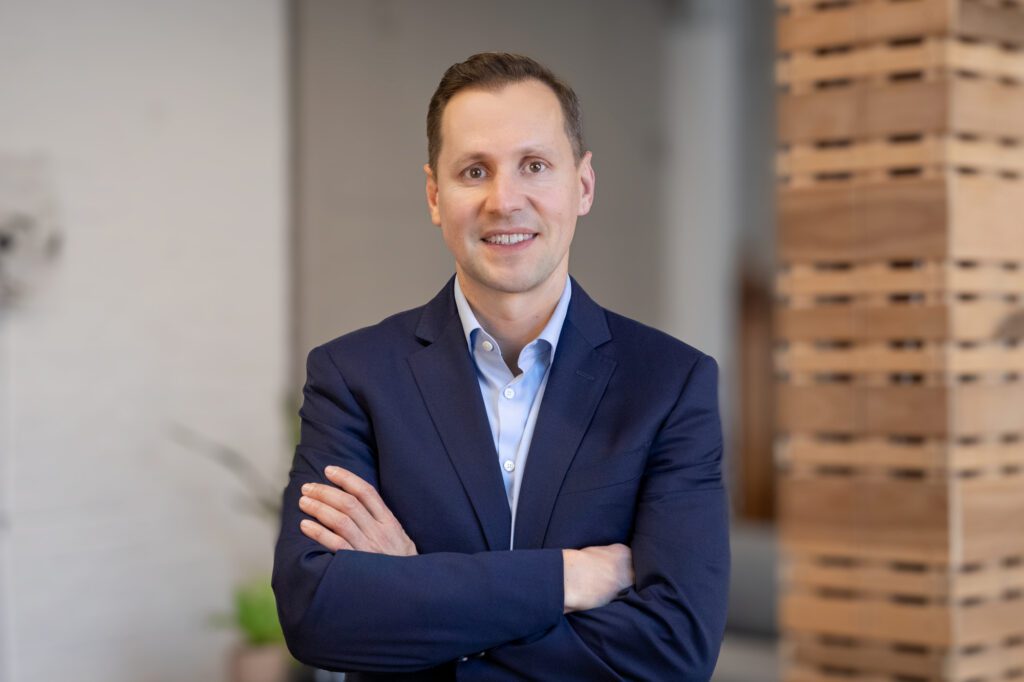
Craig Castelli, Founder & CEO of Caber Hill Advisors, is a trusted M&A expert with decades of experience advising business owners through successful transitions. Alongside a rotating roster of advisors, entrepreneurs, and investors, Craig brings engaging conversations that illuminate the world of middle-market M&A.
- ABOUT THE EPISODE
-

Brendan Anderson, founder of ScaleCo, joins Craig Castelli to break down what it really takes to turn small, founder-led businesses into scalable growth companies. They discuss why people, not strategy, drive success, how infrastructure and data unlock value, and why many business owners underestimate the work required to grow. Brendan also shares how ScaleCo partners with companies long before investing, and why staying focused in the Midwest has been key to their model. It’s a candid look at private equity, operational discipline, and building businesses that last.
- SUBSCRIBE
-
- ABOUT THE PODCAST
-
Exploring the Art & Science of dealmaking
Welcome to The Close M&A Podcast with Caber Hill Advisors, where we bring you exclusive insights from M&A experts, business owners, and industry leaders navigating the complexities of buying and selling businesses. Hosted by Craig Castelli, this podcast demystifies the dealmaking process, shares success stories, and offers invaluable lessons for business owners and investors.
- ABOUT THE HOST
-
Craig Castelli, Founder & CEO of Caber Hill Advisors, is a trusted M&A expert with decades of experience advising business owners through successful transitions. Alongside a rotating roster of advisors, entrepreneurs, and investors, Craig brings engaging conversations that illuminate the world of middle-market M&A.
- BE OUR NEXT GUEST
-
LISTEN
WATCH
READ
Craig Castelli (00:05):
Welcome to The Close M&A Podcast with Caber Hill Advisors. I’m your host, Craig Castelli. And today my guest is Brendan Anderson, founder and partner at ScaleCo, private equity firm in Cleveland, Ohio. Brendan, welcome to The Close.
Brendan Anderson (00:19):
Craig, thanks for having me. Excited to be here.
Craig Castelli (00:22):
So let’s go to the beginning. You founded ScaleCo in 2018. Tell us what was the idea and why’d you think it would work?
Brendan Anderson (00:29):
We had been buying, investing in these lifestyle businesses for a very long period of time. We did a soul searching and decided that reflecting on the portfolio, we were much more successful when we stayed closer to home. And I also knew or believe strongly that we needed to build ourselves to actively support these companies through that transition from really founder or owner driven to more sustainable growth companies that would drive value and continue to grow for a much longer period of time, past the founders operating days.
Craig Castelli (01:07):
Yeah. I mean, there’s a huge need for that in the market. There was back then. There is today we’ve been hearing about the silver tsunami, as they like to call it, and all these baby boomers who own businesses and are supposed to be selling them en masse. And I’m still waiting for that to happen, I suppose, but there’s going to be a continual need for what you guys bring to the table.
Brendan Anderson (01:28):
It’s one of the places that it’s obviously extremely hard to do, but it’s one of the places where I believe it’s still very wide open. There are very few people that want to do that hard work. And I can get a big kick out of it. I mean, as people ask me what my hobbies are, and I frequently say, “This is my hobby.” Because when you can pull it off, it’s really transformative to the sellers and the employees and our investors.
Craig Castelli (01:57):
Yeah. You can really change a lot of lives, no question. And you’re rolling your sleeves up in the process. So over these eight plus years that you guys have been doing this under the ScaleCo banner, how much has your approach evolved or changed over this time or has it?
Brendan Anderson (02:15):
Yeah, I mean, it’s the same market, but I think what becomes obvious, as you’ve been at it as long as I have, that it just comes down to the right people. And it’s really finding the right people, getting it … You know this market probably better than we do, but it’s a market where when you get in these companies, they’ve built a wonderful culture, they’ve built a wonderful cashflow, but there’s some infrastructure that needs to be built out. And so it’s finding the right people that can work within the existing culture, make some of those changes. And I think that the biggest change that in my mentality is once you get the right people and you get the process in place, and I hate to use the word professionalize, but it’s almost de-risking the transition of the company, just the changes just to think bigger, just think bigger, get people to say, what could this company look like?
Brendan Anderson (03:13):
And sometimes it takes longer than a lot of the traditional private equity model. It may take 12, 18, 24 months to really make that transition. But once you get there, it really does free you up to think bigger and potentially move faster once you get that done.
Craig Castelli (03:30):
What are the key trends today that are influencing what you guys do?
Brendan Anderson (03:35):
Yeah, I would love to say it’s hard to talk about to any investor or operator today without talking about AI. And without a doubt, it lets you move faster and put your dashboards together faster and pull data together faster and get quoting and respond to customers and all. And there’s many, many more things that other people are doing that we need to start doing. And I do fundamentally believe that disruption is a good thing. It lets people reevaluate opportunities and so forth, but our focus is still the same. We kind of dipped our toes outside of the Midwest and it wasn’t as successful as staying in the Midwest. We would love to find great Midwestern based companies and either find or help them recruit other wonderful managers that really see that as a great use of the next three to 10 years of their life.
Brendan Anderson (04:28):
If you think about how long we’re in truly operating mode, and that’s a big commitment to convince people that this is a great use of their time. So I think it’s a similar market, but potentially moving a little faster. And I would say one of the biggest issues we’ve had with companies is getting the infrastructure in place and being able to generate the data that we really need to operate a business. And I think that’s getting easier every day.
Craig Castelli (04:56):
Is that a scale issue or is the challenge more just resistance to change and getting everybody on board with a new way of looking at numbers, a new way of reporting data?
Brendan Anderson (05:07):
Probably both, but I would say it starts with the scale issue. When you make an investment in a platform, a small company that’s on QuickBooks, and just sometimes it’s hard to get the data and interpret it. And so if just even getting dashboards in or some sort of predictive metrics, sometimes it’s taken the last years to do that because of just the people aren’t used to generating the data, the historical data’s not there, the list can go on and on. And I think that the great thing about today is mapping that data so at least you have a stake in the ground at a period of time when you can start generating the data can just happen a lot faster. And I think most managers … I chuckle, I have a partner who came in from Riverside and he’s always like, “We got to get this data.” And I’m like, well, it’s really hard to get the data. So if we at ScaleCo can provide the infrastructure so that at least the data’s coming in, it may not be great data, but at least it starts coming in and we can start being much more helpful in gathering and interpreting the data.
Craig Castelli (06:16):
Yeah. And I can imagine that’s an adjustment for him because Riverside’s investing in companies that are, what, five to 10 times the size of the companies you guys invest in. So there’s usually a little more meat on the bone there on day one for-
Brendan Anderson (06:27):
With much deeper pockets, with much deeper pockets to fix some of those problems too, right? Sure. Yeah.
Craig Castelli (06:33):
Yeah. Yeah, exactly. So if I’m a business owner and I’m listening here today, how do I know that I’m the right fit to be a ScaleCo platform?
Brendan Anderson (06:42):
That’s a great question. Our ideal platforms are wonderful. I use the word lifestyle business more to describe a wonderful business that the owner has almost intentionally decided not to invest in scale, not to invest in maybe a CFO that could handle a bunch of acquisitions, maybe a director of sales that could handle 20, 30 reports because they didn’t need it. They’re making wonderful living. They’ve intentionally decided that they’ve got a neat, wonderful, wonderful niche business. And the people that would sit back and say, wow, if I had unlimited time and unlimited capital, what could I have turned this business into? And so what we would love, and probably all the other investors out there would be somebody that acknowledges the current state of their business and then sees the upside. So obviously we want to pay a market value, and we would love if they would roll and participate going forward in the way in which that they would best see fit.
Brendan Anderson (07:50):
But we understand that respecting their legacy and respecting their current culture is extremely important, but they better understand that there’s also certain things that have to change. So it’s really that belief in the future and kind of aligning with that. And we’re blessed where we can spin the deal that Caber Hill and we worked on together with Cap City, that was a deal where we worked with Chris for probably two years in advance of making that investment. And a wonderful entrepreneur who saw that future. And so it’s really being able to spend time with those people, get to know what they want. I’m not saying it takes two years on every deal, but we’ve taken that. And we love that period of time in advance to make sure we’re all aligned.
Brendan Anderson (08:43):
A long answer to your
Brendan Anderson (08:43):
question, go ahead.
Craig Castelli (08:45):
Yeah, no, but it’s a great answer because if I go to your website or the website of another private equity firm, you’re going to tell me size parameters and industry parameters and geography parameters. And that’s always a great filter to whether or not I pick up the phone and call you on DLA versus DLB. I mean, I know you a little bit now, so I know beyond that. But let’s say we didn’t know each other, that only tells me so much. There’s always a lot more to the business that’s going to either align with what you’re trying to do or not. And what may not be a great fit for you may be a great fit for some other private equity investor who just brings a different approach, has a different angle on the sector, the dynamic. Some firms only want to partner with ownership, some firms only want to partner with the next layer of management.
Craig Castelli (09:34):
And there’s all these different distinctions that make what seems like a homogenous asset class actually very, very different from one fund to the next to the next to the next.
Brendan Anderson (09:45):
It really is. I’m serious about this. This is really my hobby. There’s the idea of being able to block off a time and just think through a company in the future. It’s a lot of fun for me. And that was another reason that we decided to heavily focus in the Midwest because it really lets you increase that velocity of potential managers that you can work with, get to know and so forth. And so it’s been a lot of fun.
Craig Castelli (10:16):
So you touched on this a little bit, but go a little bit deeper as you’re evaluating that next ScaleCo platform. What about the company is going to make you the most excited?
Brendan Anderson (10:26):
It’s the potential. I think about somebody brings an idea, and we’ve worked with some very small companies where somebody comes in and they say, “I’ve got this company that I’ve heard of, and here’s what I think we could do with it. ” And so I view it as the potential or unlocking the value. And obviously without the platform or the company is the first part, but without that next piece of the manager, it’s typically it’s a manager that will not only bring themselves, but can also recruit other people that comes from a prior life, probably usually a successful life. And it’s one of these things where you say to yourself, sometimes you kind of pinch yourself and go, wow, it’s an amazingly small company. And the people we’re able to recruit to run this company, they’re impressive people. They’ve grown companies, they’ve done wonderful things.
Brendan Anderson (11:21):
So not only is it that I believe I see the potential, but they see it too. And like we mentioned earlier, given up a big chunk of their lives, their operating lives that come over and make this a true life-changing event for them, and that’s important, extremely important.
Craig Castelli (11:42):
Are these often passion projects for some of these managers or is this really just they’re looking at it through an analytical lens and they realize that there’s some untapped market that they can come in and help tap?
Brendan Anderson (11:55):
I think that without being able to see the untapped market, I don’t think many people make that leap. And so we can turn it into a passion project. It turns into a passion project for me because I look at it and I go, wow, this is so exciting. And you and I discussed before this started that Budco Financial opportunity. When we looked at that, I mean outside of Bud Bryan and me and him convincing me that there was some much bigger upside, it was a one customer company without a management team or a location because we bought a division of Budco. But it was one of those things where again, probably took us six, nine months to really understand Bud’s vision for what could happen and the fact that he could recruit a prior team that he’d worked with before. You’re like, “Man, that checks a lot of boxes and gets you really, really excited.” And that’s a deal that we’ve been working with for a long time.
Brendan Anderson (12:50):
And started, I’m looking at the calendar, it’s been 13 and a half years, but it’s been a wonderful 13 and a half years where we’ve offered exits and so forth along the way, but it’s really turned into a little heck of a company.
Craig Castelli (13:04):
Yeah, I mean, that truly was an idea. I mean, there was a business there, but it was small. You had a guy at the top who was one hell of a salesman, right? I mean, that guy could sell anything to anybody. And if you could just build the infrastructure around it, which you did, the thing takes off.
Brendan Anderson (13:22):
And can I tell the connection you and I have that I just found- Yeah, go for it. So it was a crazy, crazy small world. I just found out that Budko’s lawyer was Craig’s dad. And so I’ve been talking to him for 12, 13 years and never put the combination together. So it’s a crazy small world story. So it’s like never-
Craig Castelli (13:41):
I think I realized this when we were working on the Cap City deal, but in the thick of that, never found the opportunity to bring it up and then time passes and you forget. And as I’m fresh enough for this today, piece those pieces together. So my very first professional job, my first internship was at Budco, not the financial division necessarily, but that was being built while I was there as I was working on some finance and marketing projects for them in the city of Detroit, great company, great city. That classic example of that Midwestern business with a lot of potential that you guys love to invest in.
Brendan Anderson (14:17):
Wonderful Midwestern small world story. It’s just as crazy. Anyway, that’s wonderful.
Craig Castelli (14:23):
Yep, yep. So I guess we could probably use either Budco or CapCity as an example or any other company that you think makes the most sense, but obviously you bring capital to the table and you touched on some of this around data, but if you’re connecting with a business owner, a business owner who probably sees the potential, because every business owner wants to sell, talks about the unlimited potential of their business.
Craig Castelli (14:49):
They don’t always fully appreciate all the steps that need to be taken. So what are the problems that you help a business owner solve other than liquidity that they can really appreciate on the front end?
Brendan Anderson (15:02):
Yeah. When I started ScaleCo in 2018, my goal was to build infrastructure around where I see that almost all small companies need. And the companies we invest in may need some of these or all of them. But what I firmly believe is that if we as ScaleCo can deliver five fundamental things, the company will be worth more. And why? Because it de- risks, it professionalizes, and it turns arguably something that not many people want to invest in. And it’s just something that a lot of people invest in. One is obviously size. If we can get the company larger above 10 million of EBITDA, that obviously adds a value, but obviously everybody’s got that goal. And so what we have invested in very heavily is first and foremost is we focus heavily on the team and we have built, I’ll give Holly Adkins on our team the credit for actually formalizing this, but we have a very formal meeting kind of pulse information exchange.
Brendan Anderson (16:08):
It’s built heavily around the entrepreneurial operating system, EOS founded there in beautiful Detroit, Michigan by Gino Wickman. And then we’ve taken that to, in my opinion, a whole nother level where we have all of those meetings in a project platform. We document to do what everybody promises they’re going to do on a weekly basis, monthly basis, quarterly basis, annual basis. We have all of our processes documented on monday.com, and it’s used across the platform. We’ll even use it with advisors like you guys when we’re buying or selling companies or our outside advisors that are working on healthcare and so forth. So it’s an integrated system that I’m extremely proud of. And it sounds insane when you have something that’s that detail oriented, but it really does help us recruit better managers and managers that want to follow a process, want to follow a system, want to be held accountable.
Brendan Anderson (17:06):
And Dave and I, who run ScaleCo, we’re on there too. We’re held accountable just like everybody else. And so number one is we deliver an operating process that helps us recruit better managers. The second thing is the financial reporting. It’s crazy, but after all these years, when we have deals that we have trouble with, we have trouble with financial reporting. So we have a full-time director of finance, Dan Pioch, who works to help us recruit great financial talent in these small companies. He’s a backup to them. He came out of PwC. And so we will deliver good financial statements, not only looking backwards, but we’re looking forward between dashboards and predictive metrics, a huge key part to our value add. We also understand that most of the companies we invest in have not built the organic sales infrastructure, so we do that. We’ll put in the CRM, we’ll even put in the inventory management systems and all of that work.
Brendan Anderson (18:13):
Some of that’s done internally with us, some of it we do externally, but we will also help them build their organic sales infrastructure. We will go in, not input the structure in, but we’ll manage the beginning part of that sales infrastructure. And organic sales growth is by far the most valuable piece of that puzzle. And so we love companies that have a wonderful customer base with no sales infrastructure because we believe that we can use that ideal customer profile and build on that and truly expand. We get it growing organically huge value add. And then last but not least, almost all small companies don’t have the ability to do the corporate development. And this is probably much more standard on the private equity function, but I spent a lot of my time, Dave spends a lot of his time. And then Charles Harris on our team is a full-time BD person, heavily focused on add-on acquisitions.
Brendan Anderson (19:11):
And so once you get a wonderful management team and great financial reporting, you get your infrastructure in place and you’re growing organically, you should be able to do some tuck-ins and add-ons to help truly transform companies. And I mean, it sounds like 101 stuff, but it’s been hard. I’ve been at this for 25 to 30 years and to actually get all of that in a process is, I realize I’m extremely slow when it comes to this, but it’s been harder. It’s been a-
Craig Castelli (19:37):
Well, it may be 101, but 101 ignores the 30 fires that are placed on the desk of a CEO all day, every day that make it difficult to tackle these projects because a lot of these projects, they’re fundamental to the business and they really build the platform to allow you to grow the way you grow, but they don’t create immediate gratification and they don’t solve whatever problem is plaguing you right now in the moment. And so you really need a structure and EOS is, I’m sure, a great tool to really create the accountability that everybody needs to do this, but it creates that structure to propel the business forward.
Brendan Anderson (20:18):
And it’s a wonderful … I look at EOS and the process, it’s a language in which people can communicate. And I love it. In the beginning when we start a platform, a lot of those meetings are, just like you said, blocking and tackling. How do we get data? How do we get the next salesperson on? Just really blocking tackling. And then as the investment goes on, the conversation get a lot more exciting about how to launch partnerships and how do we handle this growth? And it’s a fun transformation of those meetings and process.
Craig Castelli (20:55):
Glad you mentioned your partner, Charles Harris. He is probably one of my top five favorite LinkedIn follows. And I don’t spend a lot of time on LinkedIn, but he has a very humorous take on his business development and personal branding. And I recommend everybody go look him up and follow him because even if you’re not going to be doing business with ScaleCo for whatever reason, the entertainment value is pure gold.
Brendan Anderson (21:21):
Yeah, it’s interesting. Charles and I go back way back. When I first came to Cleveland in the late ’90s, Charles and I, he was running around looking at deals. I was running around looking at deals, and he and I almost bought a frozen sauerkraut business together and then kind of lost track of each other. And many, many, many years later, Jim Marra, we were at a Jim Marra barbecue in town, a former Bluepoint BD person. And he was like, “You and Charles have a similar view on life.” And now I’m going to actually question Jim’s rationale there when I look at some of Charles’s posts, but we’ll see. So it’s been good, been good.
Craig Castelli (22:00):
Yeah, no, you guys have built a great team. I mean, it truly sounds like you practice what you preach, which is also a hard thing. And I find it hard in my line of work. I analyze companies. I give feedback to CEOs and business owners about what they need to improve the overall marketability and sellability of their own business. So I don’t always want you to ask me how much of that I implement in Cambrid Hill. Sometimes we’re doing a great job at some of these things, sometimes not so much, if we’re being honest.
Brendan Anderson (22:32):
It’s funny you say that. I view that with the addition of Dave Jacob out of Riverside and recently Matt Sweet out of a line, and then with some of the operating people we’ve brought on, ScaleCo’s going through a similar process that we ask our companies to go through where I think for most of my career, ScaleCo was a founder-led and inspired business. And really the last two, three years have been taking ScaleCo through that same process of developing the processes and hiring other people to make the right decisions and be empowering them to be in that spot. And so it is crazy how sometimes the cobbler isn’t working on his own shoes or the doctor, but yeah, it’s a very good point.
Craig Castelli (23:17):
Yeah. Yeah. Well, I mean, kudos to you guys because I think you’ve done a great job attracting that talent and it showing. So let me ask you one more question and then we can get out of here. But as if you haven’t done enough of this already, I’m going to ask you for one more piece of advice for the business owners out there, something that they can take back to their companies and maybe make them a little bit more attractive to ScaleCo tomorrow than they are today.
Brendan Anderson (23:41):
Yeah, believe it or not, I’m going to go back to Bud Bryan and he was a big QOS person, quality operating system, which was an Edwards Deming system, the total quality operating system. And his thesis was all profound knowledge comes from the outside. And what I fear about a lot of small business owners is that they’ve been in their own loop for so long and they’ve been talking to the same advisors so long that they’re not hearing a lot of other people’s thoughts, concepts right or wrong about things that they’re doing. And so I would encourage people to just continue to reach out. And it’s hard to do, get in the spot in life or it’s got a lot of things going on, but that’d be my advice. Every time I do it, I’m happy I did it, even if I don’t like what people say.
Craig Castelli (24:35):
Yeah. Well, that feedback is necessary. You don’t have to like it, but if you learn from it, that’s the important thing. So Brendan, it’s been a real pleasure. If people want to find you or learn more about ScaleCo, where should they go?
Brendan Anderson (24:46):
Our website, scaleco.com, or reach out on LinkedIn or my email is banderson@scaleco.com. If have some wonderful ideas about business growth, give me a ring or give me an email and we’ll set something up.
Craig Castelli (24:58):
Alright. Yeah, please do look Brendan up and thanks everybody for watching us here on The Close.
