
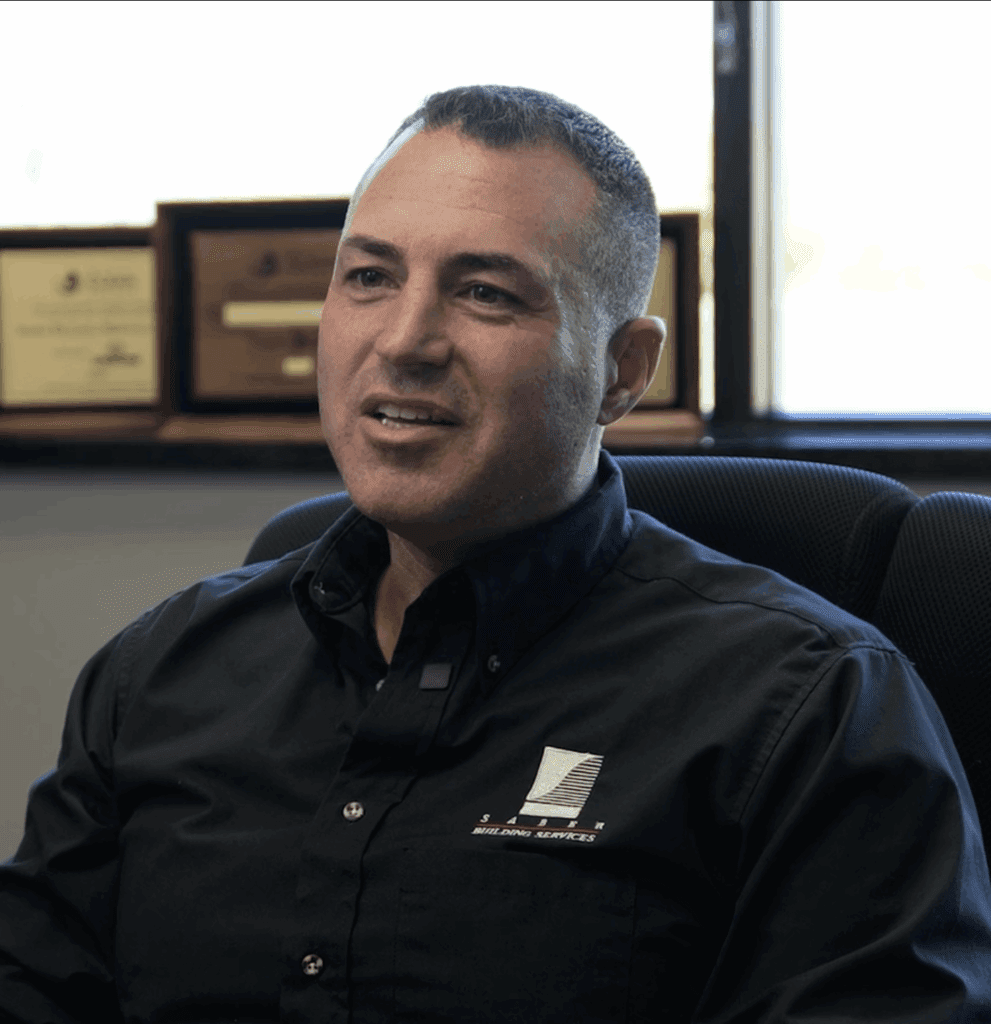
This episode of The Close features Anthony Saber, President of Saber Building Services, a Detroit-based company built from humble beginnings into a 450-person team. Anthony shares how lessons from his upbringing, early family responsibilities, and years of hands-on work shaped his steady growth philosophy. He explains why staying local, prioritizing people, and choosing value over volume have guided the company’s long-term success. Anthony also talks about team development, acquisitions, and what it means to be a trusted leader in his industry.



Exploring the Art & Science of dealmaking
Welcome to The Close M&A Podcast with Caber Hill Advisors, where we bring you exclusive insights from M&A experts, business owners, and industry leaders navigating the complexities of buying and selling businesses. Hosted by Craig Castelli, this podcast demystifies the dealmaking process, shares success stories, and offers invaluable lessons for business owners and investors.
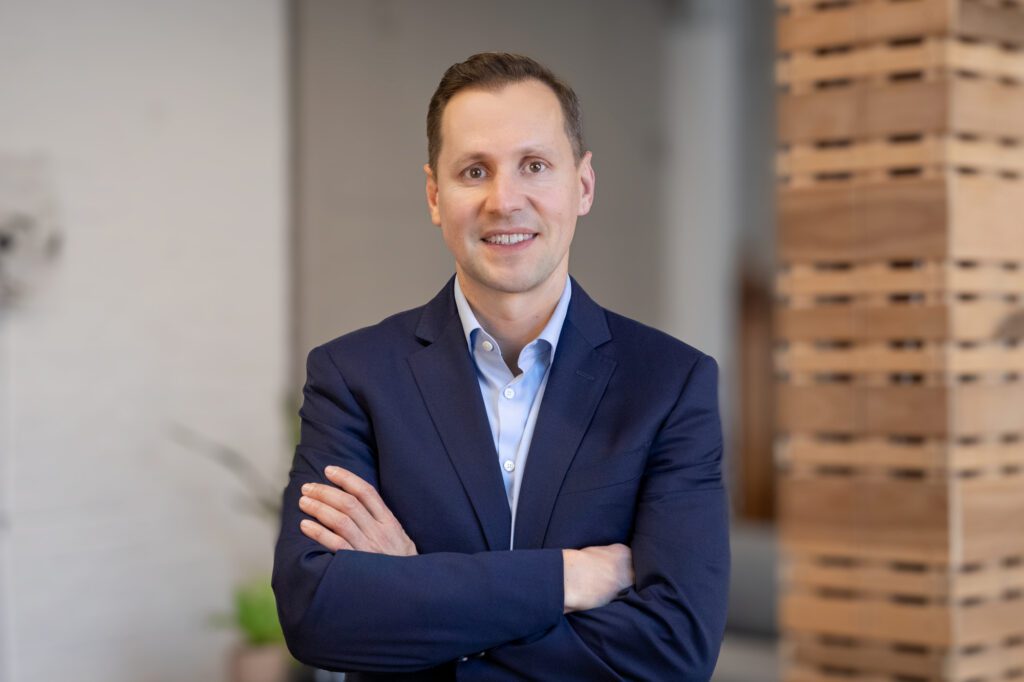
Craig Castelli, Founder & CEO of Caber Hill Advisors, is a trusted M&A expert with decades of experience advising business owners through successful transitions. Alongside a rotating roster of advisors, entrepreneurs, and investors, Craig brings engaging conversations that illuminate the world of middle-market M&A.
- ABOUT THE EPISODE
-

This episode of The Close features Anthony Saber, President of Saber Building Services, a Detroit-based company built from humble beginnings into a 450-person team. Anthony shares how lessons from his upbringing, early family responsibilities, and years of hands-on work shaped his steady growth philosophy. He explains why staying local, prioritizing people, and choosing value over volume have guided the company’s long-term success. Anthony also talks about team development, acquisitions, and what it means to be a trusted leader in his industry.
- SUBSCRIBE
-
- ABOUT THE PODCAST
-
Exploring the Art & Science of dealmaking
Welcome to The Close M&A Podcast with Caber Hill Advisors, where we bring you exclusive insights from M&A experts, business owners, and industry leaders navigating the complexities of buying and selling businesses. Hosted by Craig Castelli, this podcast demystifies the dealmaking process, shares success stories, and offers invaluable lessons for business owners and investors.
- ABOUT THE HOST
-
Craig Castelli, Founder & CEO of Caber Hill Advisors, is a trusted M&A expert with decades of experience advising business owners through successful transitions. Alongside a rotating roster of advisors, entrepreneurs, and investors, Craig brings engaging conversations that illuminate the world of middle-market M&A.
- BE OUR NEXT GUEST
-
LISTEN
WATCH
READ
Craig Castelli (00:04):
Welcome to The Close M&A Podcast with Caber Hill Advisors. I’m your host, Craig Castelli. Today our guest is Anthony Saber of Saber Building Services in the Detroit area in Michigan. Also a die hard Detroit sports fan, so we’ll try to stay on topic and talk about business and not delve into how awesome the Lions, Tigers, Pistons are doing these days. So Anthony, jump right in here. You say that this is the only company you’ve ever worked for in your twenties, did you have any idea of what this business will become?
Anthony Saber (00:35):
So I really didn’t when I was, first of all, I’ll just give you a little background. My parents started the company in 1979. I was four years old, so I grew up in a business where I worked side by side with my parents. It was a very small company. My dad was a janitor at Uniroyal Tires in Detroit. They closed the plant and they decided, told everybody basically either move to Kentucky or go find something else to do, and that’s when he and my mom decided to start this business. So for me, it was all I knew growing up. We had this small business, we worked as a family. There was my brother, myself, my mom and dad, and we cleaned these little one day a week cleaning accounts all over southeast Michigan. And so at that time we didn’t think that there was really no thought that we were ever going to become anything major.
(01:34):
It really wasn’t a part of the fabric of our family at that time. See, nobody in my family, my mom or dad or grandparents on either side had ever had a college education or a professional degree in any way. So we were a blue collar family, but through that time my mom and dad were really, really hard workers and what they did is they taught me some really valuable lessons. Of course, at the time it didn’t seem like that always when we were out working at night on Friday or Saturday as a 10, 11, 12-year-old kid. But the truth is they taught me how to work really hard and then they really just showed us a valuable lesson. But with that, when I was 18 years old, I ended up getting married and my wife and I had our first child shortly after I turned 19 years old.
(02:32):
And so at that point, the cleaning industry was the only thing that I really knew how to do. And thankfully I knew how to do it really well. The basics of cleaning and processes of getting something done to a very high level, I knew that really well. It was like second nature. And so when I look back in my twenties at that point I had no idea what it could become, but I just knew that number one, we wanted to be at a level where we could go on a family vacation. It was like we wanted to just be able to live a decent life, have a decent income, but today, thank God we’re at a place we have 450 employees and it is just become an amazing thing for our entire family. And of course businesses like this are generational. When it’s successful it’s a generational success. But yeah, thinking back in my twenties, I really could have no vision of what we could become.
Craig Castelli (03:41):
I have to imagine at 20 years old you’re just in survival mode. You’ve got a 1-year-old, you’re taking over this business and it’s probably hard to see beyond day to day, week to week at that point.
Anthony Saber (03:54):
Absolutely. You’re just focused on really survival and I think that’s what it is. The great thing for me is as a young man in high school and stuff, I was in sports, I was a wrestler, all of my youth from the time I was five years old all the way up. And so I really had great examples, not only my parents, but my coaches of what hard work really, really looks like and what you can accomplish if you really are just willing to put in the work. And those lessons early in life really, really helped us when we looked at it from a business standpoint. When I was in my early twenties, the one thing I remember just starting to work with customers and getting new opportunities that I would really do anything to prove to them that we were going to be the best value.
(04:50):
I was going to go above and beyond whatever the contract said I was going to do above and beyond. I was going to go do some extra window cleaning, carpet cleaning, whatever it took. If they asked me to do something that was way out of the scope, sometimes I did it and I was trying to prove to them that we were going to be the best value and we were going to work and do whatever it took to become that. But I learned those lessons of hard work at a very young age and just recognize that if we just apply that in business, it works. And
Craig Castelli (05:24):
What’s your tagline? Anybody can be the best price,
Anthony Saber (05:28):
But only one can be the best value.
Craig Castelli (05:31):
Yeah, I love it. It sounds like you went out there and proved it day to day and had to have set an example for your team to follow suit.
Anthony Saber (05:37):
Yeah, that definitely became our motto. Probably I was in my mid twenties when I don’t know what sparked it, but it just came across my mind. I thought, you know what? Only one company can really be the best value. And of course now we look at that in a little bit different way. I don’t look at that being the best value just from the customer standpoint at this point. We focus as much or more on our own team members and I want to say what does it take to be the best value for our team? I want that I them to show up every day and say, this is a great value for me to work here. And that’s more than just a check. That’s more than just getting paid at the end of the week. So we really have taken that concept and applied it to every aspect of our business,
Craig Castelli (06:23):
And it shows itself in team members who have been with you for what decades at this point and have been able to grow their own careers alongside the growth of the company. Somebody said to me recently, I think it was on another one of these podcasts, that a big part of growing the business is being able to continue to provide growth opportunities for talented team members. Because if you stop growing, they eventually get capped. If you keep growing, they can grow right there with you
Anthony Saber (06:52):
A hundred percent. And honestly, that’s a big part of my focus today is what can we invest in the team that we already have, but even potential team members coming on, young people that are hungry, I was maybe when I was in my twenties that they just need a little bit of guidance. And I am so thankful over the years, especially looking back into my twenties, I was hungry, but I had a lot of people come into my life at that time and a lot of the right things just happened that really opened up doors of opportunity and gave us a good foundation.
Craig Castelli (07:31):
That’s amazing. So if I’m doing my math right, your mid to late twenties when you take over as president probably had very different goals than you’d have today for the business. So talk a little bit about what really motivates you today. What are really the big goals for the company today as opposed to just the hustle when you first took over?
Anthony Saber (07:54):
Yeah, so today again, it’s about steady growth. We’ve always just been about steady growth over a long period. I know a lot of probably some of your guests and a lot of people in the business world, especially the M&A world growth is a huge focus for them, and I totally get that. For me, it’s been like, Hey, we want slow steady growth over a long period. We want our foundation to be so solid and we really are just looking to make a huge impact in our own community. Again, coming from where I came from, we didn’t aspire for anything huge or great other than we want to be great at what we do and really have a great impact on the people that we are close to in our circle. So again, I look at today, the growth for me is about helping other people.
(08:55):
My favorite thing that I can do right now is sit down in my office across my desk with a young man or young lady and help them to understand the principles that we applied to get to where we’re at in hopes that someday or somehow they’ll grasp those concepts and say, you know what, if I do these things, I can be successful too. I can have something great. And so those are the things that I look for. Of course, we want to continue to grow as a business. We just want it to be steady growth and we want the growth to make sense. We want it to be a positive thing for everybody involved. And we understand that not all growth is that way. Sometimes it benefits the owner, but it may not always be a benefit to the team that has to get the job done. So I’m really pay attention to that and I want it to be great for everybody involved.
Craig Castelli (09:51):
Is that a big part of why you focus on such a tight geographic radius as opposed to having ambitions to go multi-state or even cover the entire state of Michigan? I think I saw the vast majority of both your employees and customers are within 40 miles of home.
Anthony Saber (10:08):
That’s right. That’s right. That certainly has been on purpose. Initially, it started out with the fact that over the last 25 years I’ve been raising six children.
Craig Castelli (10:21):
You’re allowed to be selfish too.
Anthony Saber (10:25):
With having six kids and them being involved in sports and activities and church and stuff like that, I was not willing to travel and be gone away from home. It was just something we decided early on that we’re not going to sacrifice growth of our business for time away from my family. And so that was a decision that was early on. So that kind of what sparked staying close to home. And of course over the years, several of my biggest customers, which was really, really hard, would ask us to, Hey, we want this to be a regional contract. We need you to go to Chicago, we need you to go to Pennsylvania or whatever. And there were times where we really considered that, where I would actually, I went to a facility in Chicago and walked it through the bid process, but then I would always come back and say, you know what?
(11:18):
That’s really not who we are. This is who we are and we’re going to stay in our lane. And if that doesn’t work for you as a customer, we totally get it, but this is who we’re going to be. And so that’s where the initial goals were from, of course was from the family. But from an operational standpoint, for us in our industry service business, dealing with a lot of part-time employees, it’s very hard to manage outside of where you have a little bit of control. And what I saw is over the years, a lot of my competitors, when they got to that 5 million, 10 million level, they begin to spread a hundred miles, 200 miles other states. And I watched and saw what happened and they started to lose their core business in their own backyard. And so for me, I wanted to focus on our backyard and say, okay, well if they’re going to look at all this other stuff, then by all means we’re going to stay good and be the go-to company in our own area. And so that’s really worked for us over the years. It’s not to say that we’re not going to grow out of that area. Of course at some point we’re going to have to, but it really is going to have to make sense whether it’s larger customer that makes sense, or it may be an acquisition down the line that really is a good fit for us. And then at that point it will make sense.
Craig Castelli (12:45):
I think two of the most common ways we see cleaning businesses grow, it’s either through M&A or it’s on the backs of a growing regional or national customer. Hey, we want you to travel here. Can you come to this facility? We just expanded here. Can you come take that on for us? And you’re right, it spreads you very thin, and it just completely changed the dynamic of the business. I’m curious, as you turned down some of this out-of-state work, did it ever cost you a customer at home because they wanted you to either handle everything or handle nothing?
Anthony Saber (13:19):
Yeah, that actually did happen. It was probably our biggest account at the time. We serviced like five buildings in southeast Michigan for them. And they had made a decision from their corporate purchasing that it needed to be at least regional 10 states or whatever. And of course we said, that’s not going to work for us. So they allowed us to bid it, but we knew at the end of the day they would probably make a choice away from that. So what happened was, and this is again that kind of solidifies our philosophy on how we’ve for our business, is they hired a company out of South Carolina and that company came up with the assumption that they were going to be able to hire all 30 of our employees. Well, because we were a tight knit group and we had direct communication with our people, especially back then, they weren’t able to keep one employee.
(14:17):
And because of that, within 30 days they failed. And you would think that that customer then would say, you know what? You guys come back. They didn’t. They hired another company that was regional that was actually based out of Detroit, brought that company in, but they were to cover 5, 6, 7 states and they lasted about six months. And then one of the directors called us in, it had been about a total of eight months, called us back in and said, we made a huge mistake. We’d like you guys to come back. And of course we didn’t go back in there arrogant in any way. We went and said, you know what? Thank God, you know what? We’re happy to come back. We’ve always wanted to serve you guys and we’re happy to have you back. And so that was an example to us that if we stay in our own lane and we just continue to do what we do well, that we’re always going to have the right opportunities.
Craig Castelli (15:16):
That’s amazing. And in hindsight, obviously you made a great decision at the time, how many sleepless nights did you have about losing a big account?
Anthony Saber (15:24):
You know what? That one hurt because that customer was at the time, the first big customer. When I really got involved in running our business, I wasn’t even the president of the company at the time, but it was the first big customer that I was able to help start up and I was in, had control over the startup. So when that went away after 16, 17 years, and not only that, I had to drive by it every day from my house to my office, just
Craig Castelli (15:58):
Daily reminder.
Anthony Saber (15:59):
It was like a daily reminder for eight months and it was a struggle. But of course when they called and said, we want you to come back, it made everything worth it. And we knew it was the right decision. Even when we lost it, we knew it was the right decision for us.
Craig Castelli (16:17):
It is always the right decision, yet it always feels risky. It doesn’t always feel right, even if you know it is. I can say that to situations we’ve had that have been similar as well. So you talk about the slow controlled growth, the focus on the local area, but you’re not afraid of M&A. You’ve had acquisition and opportunities, you’ve made some small acquisitions along the way. How much of the growth has just been organic, winning new accounts, hiring people versus acquiring other companies?
Anthony Saber (16:50):
90% has just been organic, and when I tell people this next statement, most people are pretty surprised the fact that we’ve never had a salesperson in our company. It’s all been word of mouth and referral based. And I’ve realized over the years that especially in a service business, if you can really become a great service, I just don’t think you’re ever going to have to really look that hard for business, right? Because I mean, especially nowadays, it’s like, man, you can’t get good service in anything, any industry. It is tough to find good service. So we just always had that focus. Now we have done a few small acquisitions, so we’re not afraid of that. And I love when the opportunity presents itself, but about 15 years ago, we acquired a small window cleaning company and it was a company that we had worked with for a few years.
(17:58):
They were a subcontractor of ours for a while. So we were somewhat familiar with them. We never did a lot of work with them, but enough where I knew who they were and when the opportunity came up for us to purchase them, 15 years later, I can look back and say it’s probably one of the best businesses decisions I’ve ever made. And it’s not that this company has grown into anything huge, but it’s been such a steady source of excellence. The group that we acquired, the people that came with it, two of these men that were part of this company have become some of the greatest assets that our company has on our team. And so it helped to professionalize things. It allowed us to add services to existing customers, but in a really professional way because these guys hang off of 30, 40 story buildings,
(18:56):
They’re all certified. And so it adds an element of professionalism to who we are as a cleaning company. And so that has just been such a great blessing. Not only that, it’s a more profitable division, it’s very specialized. And so that’s the kind of stuff that really is exciting. And when I look back over the 15 years, it’s been a great, great purchase. Then about 12 years ago, we bought a construction cleaning business, very small company. They had maybe 7, 8, 9 employees, but very specialized in a very specific industry. Of course, we dabbled in that a little bit, but it helped to bring on a team that was really professional in what they did. It brought a customer base that we still have today, and several of those original employees are on our team today and even more key roles than they were when they came. So that again, was another great thing. Very small acquisitions, but they’ve ended up being really a key part of the fabric of our business. And then most recently in July, this past July, we finished an acquisition of a local cleaning business janitorial company that was based just 15 miles away, 60 plus year old company.
(20:26):
And so far that’s going really well. I mean, we brought on about 50 employees with that. And so that’s kind of got me excited again about the possibility. It had been about 12 years since we had done any acquisition, so we’re certainly open to that, but we really want to make sure it’s the right fit. I don’t want to grow just for the sake of growth, but it really needs to be a benefit to everybody involved.
Craig Castelli (20:54):
What excites you the most when you look at someone else’s business?
Anthony Saber (20:58):
Man, that’s a good question. I really do get excited about looking at other businesses, and there have been a few companies that we have looked at and I enjoyed the whole process on even deals we didn’t close, but the process itself was enjoyable to meet the owner, to really hear their story and find out where did everything come from, what brought you to this place? And that’s exciting to me. But also being able to look at the team and their processes and how do they do things different than we do? Are we able to, is there things that we can improve in their situation or can we improve things for their team members? I get excited about potential talent things when I’m looking at a company, who do you have on your team that’s going to be a difference maker for my entire team who’s going to bring something that we don’t already have? So that’s really exciting, and I just think it’s an honor to even be in the consideration for a successor of somebody’s business that has potentially poured their entire adult life into building something. I feel like that’s a great honor to even be in that conversation.
Craig Castelli (22:22):
How can a business owner look at themselves and look at their own business and identify that they will be the right fit for you or that you’ll be the right fit for them? However you want to think about that.
Anthony Saber (22:36):
Yeah, so I think number one, the things that we look at is, of course, location is a big part of that. For us. It’s still a big piece of what we look at, but we’re also looking at the type of business, the type of facility that they have, not only the size, the size of that facility matters to us. We’re looking for companies between 50,000 to 500,000 square feet. So if somebody’s 5,000 square feet, that’s not going to be for us. But if you’re 5 million square feet, that’s really not for us either. And I know for a lot of companies, they’re like, I can’t turn down anything like that. But I’ve gotten good at turning down that stuff and staying focused on what we’re really good at. But as far as the things that we look at the most safety of the building, we really, really press for a culture of safety.
(23:34):
We’ve been fortunate to win the safety award for our industry seven out of the last nine years. And so having that culture of safety means when I walk into a building, if I see things in that facility that I consider probably a little iffy on the safety side, we’re going to decline to even bid that job. We don’t want anything to do with it because it’s my responsibility to make sure the people that I employ when they walk into a building, they’re in a safe place and we take that real seriously. So there’s a lot of factors that we look at, but those are really the main factors,
Craig Castelli (24:16):
What’s in store in the next three to five years.
Anthony Saber (24:20):
So man, I think more of the same. I mean, I think we want to stick to the steady growth. I think I’m excited about the possibilities. We have a really good solid operations team. So I think structurally we’re in really good condition financially. We’re in great, great shape. We really have always minimized any debt ever over the course of our business. And we think that, of course, we know that a lot of the baby boomer generation are going to be looking to exit if they already haven’t. There are certainly going to be over the next three to five years. And so for me, we want to be ready for the right opportunities. And one of the things that’s kind of been exciting for me in the last couple years is I’ve had several business owners, competitors in my local market that have said to me, when I’m ready to sell, you’re the only company that I want to sell to.
(25:23):
And so that’s who I want to be to the people. We want to be the trusted company where they know they can share information with me. We’re not beating down their doors trying to steal their customers. We want to do things the right way in every aspect of business. So I want to be that trusted partner with people that when they’ve got to a place where they’re ready to exit, they’re like, Hey, I’ve built this team. I built, I care about my people and here’s somebody that I think’s going to take good care of them. That’s where we want to be.
Craig Castelli (25:54):
That’s where everybody should strive to be. When you have that reputation in the marketplace, it is just such an indicator of all positive things for the business today and in the future.
Anthony Saber (26:08):
Absolutely.
Craig Castelli (26:10):
So last question for you here. Give us a piece of advice for a business owner, something they might not hear somewhere else.
Anthony Saber (26:18):
So I think I have a couple, and honestly, you can
Craig Castelli (26:22):
Take as many as you got.
Anthony Saber (26:24):
I don’t think this is anything that you haven’t heard before, but I think sometimes it’s just good to have reminders. Number one, I try to tell all of our leaders, and I think especially a business owner, because you’re so crucial to your team, is what your team needs the most as a steady leader. And what we’ve got to be careful of is getting too excited when things go great and getting too down or depressed when we lose or things aren’t going great, there’s going to be ups and downs in business, but our team needs us to be steady in that leadership. I think that’s a big thing that I really have tried to be over the years and trust me, we’ve had our losses. Everybody does. But being steady through that, making sure that your team knows, look, we’re not going to be shaken by this stuff. This is just a little blip in this time, but we’re going to move forward and everything’s going to be fine. That’s number one. And then a few years ago, I saw a quote from John Maxwell that really kind of resonated with me. And it says, success is having the people who know you the best, respect you the most.
(27:39):
And that is something that I’ve tried to take to heart because respect is earned and we’ve got to earn that every day. And so I think it’s, especially in the culture and the day that we’re living in, business owners have a tendency to try to look good to the world. I mean, social media, all the stuff that we’ve got going on, we want to be perceived to the world. But I want to remind everybody to look, the most important people are the ones that are closest to you. It’s your family. It’s the coworkers that you show up with every single day. Those are the ones we should be concerned the most about. How much do they respect us? And that respect is going to be earned every single day.
Craig Castelli (28:24):
That is one of the best pieces of advice I’ve ever heard. Those cliques and those likes aren’t going to be there when times get tough. They’re not the ones that are really going to celebrate the wins with you either. You’re right. It’s the people that you spend the most time with that know you the best. That’s
Anthony Saber (28:41):
Right.
Craig Castelli (28:42):
Well think it’s been a lot of fun. Appreciate you coming on. If anybody wants to get in touch with you or learn more about Saber, what should they do?
Anthony Saber (28:51):
Check out our website, saberbuildingservices.com, look us up. I’m happy to communicate with anybody. You can always give our office a call. Love to talk to other business owners and stay engaged in the industry and in business as well.
Craig Castelli (29:10):
Well, Anthony Saber of Saber Building Services, once again, thanks a lot for joining and thanks all of you for watching us on The Close.
