



Private equity is entering a new era shaped by higher interest rates, evolving capital markets and the growing impact of AI. Andrew Busch, economic futurist and former Chief Market Intelligence Officer for the U.S. government, joins Craig Castelli to discuss what he calls the “PE reset” and what it means for investors and business owners. They explore why the strategies that worked in a low-interest-rate environment may no longer deliver the same results, how AI could reshape productivity and competition, and the forces likely to keep the cost of capital higher for longer. Andrew also shares what business owners should consider as they prepare for growth, succession or an eventual exit in a changing economic environment.



Exploring the Art & Science of dealmaking
Welcome to The Close M&A Podcast with Caber Hill Advisors, where we bring you exclusive insights from M&A experts, business owners, and industry leaders navigating the complexities of buying and selling businesses. Hosted by Craig Castelli, this podcast demystifies the dealmaking process, shares success stories, and offers invaluable lessons for business owners and investors.
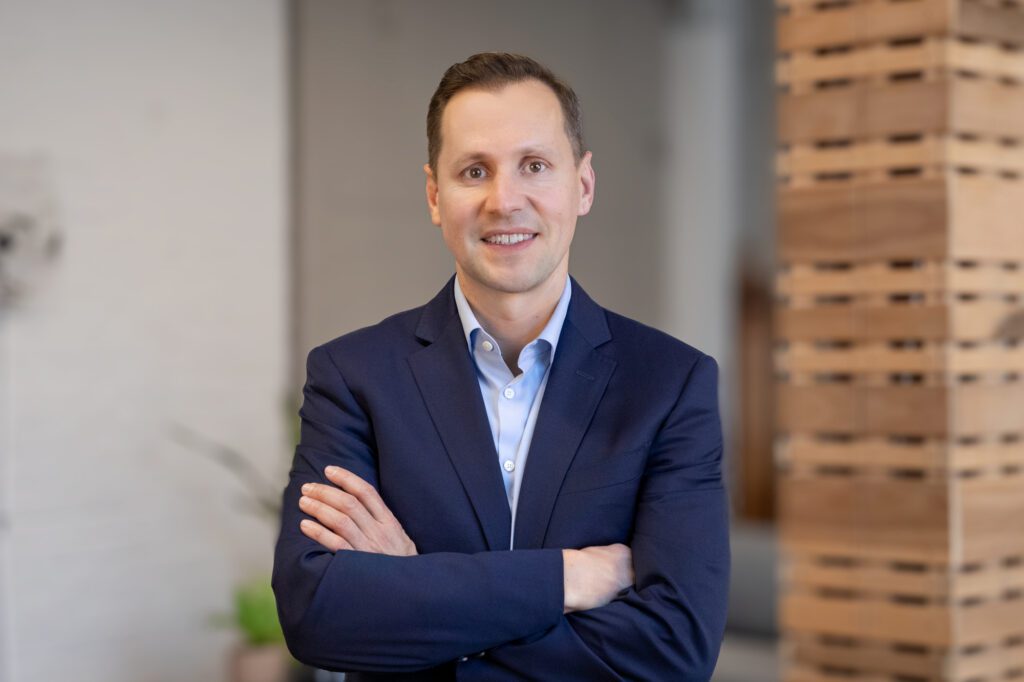
Craig Castelli, Founder & CEO of Caber Hill Advisors, is a trusted M&A expert with decades of experience advising business owners through successful transitions. Alongside a rotating roster of advisors, entrepreneurs, and investors, Craig brings engaging conversations that illuminate the world of middle-market M&A.
- ABOUT THE EPISODE
-

Private equity is entering a new era shaped by higher interest rates, evolving capital markets and the growing impact of AI. Andrew Busch, economic futurist and former Chief Market Intelligence Officer for the U.S. government, joins Craig Castelli to discuss what he calls the “PE reset” and what it means for investors and business owners. They explore why the strategies that worked in a low-interest-rate environment may no longer deliver the same results, how AI could reshape productivity and competition, and the forces likely to keep the cost of capital higher for longer. Andrew also shares what business owners should consider as they prepare for growth, succession or an eventual exit in a changing economic environment.
- SUBSCRIBE
-
- ABOUT THE PODCAST
-
Exploring the Art & Science of dealmaking
Welcome to The Close M&A Podcast with Caber Hill Advisors, where we bring you exclusive insights from M&A experts, business owners, and industry leaders navigating the complexities of buying and selling businesses. Hosted by Craig Castelli, this podcast demystifies the dealmaking process, shares success stories, and offers invaluable lessons for business owners and investors.
- ABOUT THE HOST
-
Craig Castelli, Founder & CEO of Caber Hill Advisors, is a trusted M&A expert with decades of experience advising business owners through successful transitions. Alongside a rotating roster of advisors, entrepreneurs, and investors, Craig brings engaging conversations that illuminate the world of middle-market M&A.
- BE OUR NEXT GUEST
-
LISTEN
WATCH
READ
Craig Castelli:
Welcome to The Close M&A Podcast with Caber Hill Advisors. I’m your host, Craig Castelli. And today my guest is Andy Busch. Andy is an economic futurist and his resume is quite impressive. You may recognize his face from CNBC from about a decade ago when he hosted the Money in Motion Show. He’s been an advisor to the US Treasury as well as the McCain presidential campaign. He served as the first chief market intelligence officer for the US government from 2017 to 2019. And today he runs BPI, an economic policy and consulting firm where he’s CEO, consultant, and a sought-after keynote speaker. So make sure you look him up and invite him to speak at your events. Andy and I were introduced by a mutual friend after he published an article in July titled The PE Reset. So Andy, why don’t we start there? Tell us the premise of the article.
Andrew Busch:
Well, the premise is basically that the PE industry needs a big reset. It’s had a great run of really cheap funding from wherever we started in 2009-ish when they cut interest rates to zero and did a lot of quantitative easing till about 2023. And that is really important for people to understand that that led to a lot of easy multiple expansion, cheap financing. It was a great way to run a business in a very simple way. I mean, yes, you still had to do a lot of the nuts and bolts of research on it, but you really didn’t have to run it as much as you have to run a business now today to get the value out of it. And I think that’s what’s challenging of the PE industry right now is they’re trying to figure out what they can do with all of the investments they did when they had very cheap financing.
Craig Castelli:
So is that more of an emphasis on operational efficiency and actual integration or where do they need to go?
Andrew Busch:
Yeah, I think there are multiple verticals that they can go after. We help clients in this space quite a bit and give them direction where to go. And our strategies have been along the lines of, “Hey, you got to get a lot better at operational efficiency and productivity.” This is not just firing people and cutting staff. That’s what a lot of PE firms do. That’ll only get you part of the way there. Yes, you can cut your expenses for sure, and that’s one way to get it. But really the other way to get it to run a business properly is to have your chops ready to go so you know what you’re doing, you know where you want to go with the business, but also businesses really need to develop an operational plan for AI to inject the productivity that they need to grow the business and to be more efficient at it.
Craig Castelli:
Yeah. And it’s interesting, I was talking with a friend this morning who has a PE firm knocking on his door. He’d be an add-on to one of their portfolio companies and they invested fairly recently within the last 18 or so months in this platform. And so a lot of the challenges that at least we see in private equity these days are these pre-COVID investments or immediately post-COVID investments, money was still essentially free and they could play that multiple arbitrage game and rollover equity and even just the overall value of those companies on the PE firm’s books is really, really challenged. Do you think that the same rules apply to those companies as the more recently invested businesses that were perhaps funded in this new interest rate regime or should we look at the two vintage classes separately?
Andrew Busch:
Yeah, I think you have to because of the funding, the cost of funding. I always used to tell people, if you’re looking at valuations of companies and you start thinking about a small mathematical equation and the denominator that you discount those cash flows, if it’s a half a percentage point, well, all of a sudden those cash flows are worth a ton of money, right? Happy days. But if that changes significantly, then those discounted cash flows are worth a lot less. And that’s what’s happened to the people that made investments in 21 and 22. And typically, as you know, Craig, in the PE world, you’re looking at a five-year kind of timeframe and those five years are coming up where the LPs are looking for their money back. They want DPI, not TVPI. And so that’s really what’s happening here. So it changes the framework for how we should approach those investments. And I think because of that, there’s a lot of things that are changing within the PE world. If you’re looking at it, secondaries are a big thing, but that changes the nature of an LP because then you can go specific to a company and your risk is quite different for that as you become a co-investor to some extent. Or you can go into continuation funds, which is a little bit of kicking the can down the road, but maybe at a different valuation level, that would be helpful as well. And there’s a couple other things that you can be doing. But I think what’s interesting to me is that in the secondaries, I think, and you may know better than I do, but I think the transaction levels are at record levels for that.
Craig Castelli:
I think that’s right. Yeah, I don’t have the statistic off the top of my head, but I don’t think we’ve seen levels like this ever before.
Andrew Busch:
Yeah, and I think it’s just emblematic of where those investments are and how challenging they are. And also getting back to AI, I mean, it’s really changed the nature of a lot of software investments, and that’s where another valuation problem exists for those investments that were occurring in 20 and 21. Everybody’s like, hair on fire. We have to A, hire people, but B, we got to have all of those software technologies to really run efficiently from home or for wherever people were working from. That’s kind of run its course right now, and we’re in this uncertain world about what the valuations for those firms are.
Craig Castelli:
Is AI actually changing the outcome of investments beyond just this? We had the whole SaaS apocalypse or whatever they called it where all the public SaaS companies saw major hits to their valuation with the boom in AI and PE is rightfully hitting the panic button on those investments. But if you think about something more old economy that has the opportunity to implement AI, are you seeing it really move the needle anywhere or is it just a great conversation piece?
Andrew Busch:
Right now, if we take a step back and look at it from an economic standpoint, a lot of people will tell you it’s hard to see where AI is really contributing to productivity. I think that overall the economic numbers that come out of the United States should be taken with a big grain of salt, not as big as China’s numbers, but with the US, I mean they’ve got reporting problems on a lot of this data and the way they measure productivity is kind of strange depending on how you look at it. The San Francisco Fed just did a bunch of research and they really lowered the amount of productivity that they see in the economy. But I will tell you, it just depends on what area you’re in. I think it can be significant, and I think a lot of the productivity that we’re seeing is from people right now working longer hours more than the AI is contributing to it, but it’s just hard to tell. I would just use the example of cell phones. When we first got the Apple cell phones, they were amazing, but no one understood having a computer in your hand, how powerful that was. And I don’t think a lot of the productivity numbers picked up on the efficiency of a cell phone. And just in the same way, I don’t think we’re quite there yet with the productivity that’s coming or even existing to this day from AI. And I know personally the way I use it and how it’s made me, I’m not kidding, 5X more productive personally. And I don’t want to overproject that into other industries because it takes a little while. If you’re in the physical world, it’s a big deal, I think, for these changes that are occurring that we’re already seeing. And so I think it’s generating a lot of growth and it’s generating a lot of CapEx clearly. Almost a trillion dollars is expected, maybe a trillion and a half by next year. So we’ll see how that plays out. But again, I’m not saying AI is the holy grail, it’s just that it’s just hard to get it picked up necessarily in the productivity numbers that we’re getting out of the US.
Craig Castelli:
Yeah. So I think the first time I fully appreciated the power of the cell phone to transform my life was the first time I sent a wire from a chairlift. It didn’t have to be glued to a laptop and a phone to make all that work. And I thought, huh, I could get used to this. You touched on something with the lag in reporting from the federal government and some of the inconsistencies and the problems we have there. How should the average middle market business owner think about that? Is there really an impact on somebody who owns a $30 million manufacturing business or healthcare group practice?
Andrew Busch:
Yeah, I Think there is. I think it’s significant and you really have to be on it. You really need to dive into Claude as an example. I love Claude and I love ChatGPT and I love Gemini. They’re all different and they all come at certain problems in a different way, but I liken this akin to when I was trading currencies way back when, back in the ’80s and the ’90s, it was kind of the wild west of finance. One of the things that used to drive me crazy was having voice brokers. So you would ask the voice broker for a price by the bid or the offer and then you’d say mine or yours, and then they’d come back to you and say whether it was done or not. Well, what ended up happening was for really smart guys like me who understood the economy and understood economics, I was the fastest to the bid, fastest to the offer when information came out. And what ended up happening is that these voice brokers would protect their clients who are making markets. Now, the reason why I tell you that story is because one of the greatest things that happened was the technology shifted and we went from doing voice brokers to being able to do and trade online. And then once you trade online, it was the great leveling of the playing field for people like myself. And that means I could compete against all the large players out there because I could be the first on the bid or the offer technology-wise through a system. And it’s the same thing for small companies. This is the great leveling of the playing field for you against your competitors that are larger because you have access to information and ideas and CRM and how to tie it all together that make you seem like a much larger company because of that. So I think you better be diving into it or you’re really going to be missing out on either sales or productivity enhancements because it just comes at the problem differently and it gives you ideas about things to do and try.
Craig Castelli:
Yeah. I mean, I think in our own business, we’re only scratching the surface, but we’re already seeing areas where it can be a force multiplier. And I’m talking taking what would cost somebody 25 to 30 hours and they’re getting it done in five. I mean, it’s amazing.
Andrew Busch:
Yeah. And I think for PE firms, I think if you’re a small PE firm, small meaning, I don’t know, less than 30 people or 30 people or less, you can compete against the big guys because you could be quick and nimble and faster and do this research on all of these firms so much faster, as you mentioned, 25 to 30 hours, you can combine that down into maybe an hour and a half now. And that’s what’s super cool about this.
Craig Castelli:
So circling back to the PE reset discussion, we kicked this off with, your article cites five forces that you think will keep long-term interest rates higher for longer. Can you just tell us a little bit about what each of them are and again, how the business owner in the lower middle market should think about these?
Andrew Busch:
Yeah. Cost of capital is going to stay more expensive than it’s been in the past. I mean, honestly, I hope we’re never going back to 3% mortgages. The reason why I say that is because if we do, we got big problems with the economy, and that means interest rates are going to go to zero. I don’t think that’s going to happen again. I really don’t. Maybe not, you can’t say never, but I just don’t see that happening again in the next 10, 15, 20 years. So when it comes to interest rates, I try to break it down into a really simple thought process, and that is supply and demand. I know that sounds kind of basic, but it really is. Let me walk you through this. There’s supply of capital and there’s demand of capital. And where I don’t think a lot of people have put much thought to the supply side, this is where it gets really interesting. Then on the supply side, who’s supplying capital into the markets? That’s a question. And my answer is this, baby boomers have been saving for a very long period of time, maybe 30 years or plus, putting aside money every month or every year, hoping to make sure that they have a big enough nest egg so that they can retire. Well, guess what? Those people are going into retirement now. Now, it may be extended another five years from 65 to 70, I don’t know, but baby boomers have reached that age in which they’re going to retire somewhere between 65 and 67 or 70. That means that supply is no longer coming in, and it’s worse than that because those people are not necessarily going to keep saving money. What are they going to do? They’re going to take those investments and sell them and spend the money. So that cheap supply or that big faucet of money coming from baby boomers is no longer going to be there. And that’s one of the big reasons why I think we’re going to start to see interest rates hold at higher levels because that supply of capital’s not there. Now on the demand side, there’s massive demand, and I’ll start with the US government. $40 trillion worth of debt, and it’s not going down anytime soon. So that’s a demand side. If the US government wants to continue to spend money and maybe above what they’re spending right now, that means they’re going to issue more bonds, and that means there’s more supply. And just really quickly in the world of interest rates, if you have more supply, that means what? The price goes down. And in this case, yields go up and that’s interest rates stay higher for longer. So there’s that on the debt side. You have de-globalization, that is manufacturing firms moving back or building things into countries where they’re going to sell into. Sometimes it’s foreign companies like TSMC building their fab plants down in Phoenix, and there’s capital that needs to be raised to do that. Sometimes it’s data centers. We know that there’s a lot of money being spent on data centers. We know within the whole semiconductor and AI ecosystem that there’s a ton of money being spent on that. From a CapEx standpoint, I don’t know about you, Craig, but throughout my career since the 1980s, I’ve never seen this amount of money being put forward to invest not only in the semiconductors, but also in the whole ecosystem. So, a ton of money is being looked at there. And we’re having companies like the hyperscalers who are really cash rich issue debt. I mean, Google is a good example of that. So they’re seeing that their cash flows, which are massive, they still need to invest more, and that means they need to raise money to do it. And so that’s interesting as well. And then finally, because of the potential, well, because of the changes in the way that the US has its approach to its defense shield around the world and pulling back from that, countries are starting to wake up, especially in Europe and saying, “We kind of need to build this out, and if we’re going to spend more money, we’re going to have to issue more debt,” and that’s Europe and NATO countries. And so there you have the five forces that are really at work that, from a supply-and-demand standpoint, are really going to keep interest rates up around these levels higher for longer. Depending on when we put this forward as far as the podcast, rates could be as high as 5%. They could go back down to, I don’t know, four and a quarter, maybe four, but still, I don’t see them going back down aggressively anytime soon. And also we have inflation as well, so that’s a problem for policymakers and for the bond market as they price in risk premiums too. So that’ll keep it higher for longer too.
Craig Castelli:
Is any of this inherently good or bad, or is it just different and we just have to adjust to the new reality?
Andrew Busch:
Well, it makes it harder for PE firms because you can’t raise cheap capital anymore and you don’t have those multiple expansions like you used to. Now, if rates come down somewhat into 2027, I expect inflation to ease a bit. Yeah, you’re going to see maybe a couple of rate cuts out of the Fed, maybe, but the demand for this money is just robust, shall we say. So as you’re looking at it business-wise, the key is just to think about, “Hey, when am I going to need money? How much is it going to cost? How is it going to impact the ROI for this project?” You’re probably going to need a higher ROI or ROC depending on what you want to go through to generate the returns that you want for that money because it’s more expensive, just basic stuff, right?
Craig Castelli:
Right, right. Exactly. Talk about the baby boomers a little bit further, because we touched on retirement, but they also still own the majority of small businesses in the country, and that can’t last forever either. We’ve been waiting on this silver tsunami, as they like to call it, of businesses just flooding the market. And I talk frequently with podcast guests about this topic and when’s it going to hit and what does it mean? What’s your take on the whole situation?
Andrew Busch:
Yeah, I think it was, I forget who came out with the study, but there’s something like six million business owners.
Craig Castelli:
McKinsey.
Andrew Busch:
Yeah, McKinsey, are coming to the end of their ownership cycle, shall we say, and start to think about next-gen coming in and what do they want to do? Are they going to pass it on to their kids? Are they going to sell it or whatever? And I think what’s really important for these businesses is to think ahead. I mean, if you’re running a business, you’re always kind of being pulled in different directions. There’s a lot of fires that you need to put out. There’s a lot of things you need to address quickly, contracts, so on. But if you’re somewhere between 55 and 60 and you’ve been running a company for 15 or 20 years, you better start thinking about, “Hey, when do I want to get out of this thing? How long do I want to do this for?” And start to prepare your business for that. Are you using it for a personal cash machine? Well, that doesn’t work really well if you want to show a PE firm where the money’s going to and if it’s being put back into the business and growing it. So I think that’s what’s really challenging, I think, for a lot of business owners and how they approach it. I would just say as you’re looking at your business, you really have to make it less dependent on you and more dependent upon the structure of the business and the product that you’re selling. That’s really important to think about and building up the team around you that can handle the business when you’re not there, if you get the hit by the bus theory, so that happens, god forbid. And cleaning up the numbers, I kind of mentioned that. I think that’s really important to do. And then try to think about what kind of exit you want. Do you want to pass it on? Do you want maximum price? Do you want to preserve the legacy of the firm and the employees? Don’t just do a handshake to do that. You need to actually incorporate that into any kind of an agreement you get into with a PE firm, or they’ll potentially just come in and hack away. And that’s the last thing most owners want. So there’s a lot of things to think about, and how long do you want to stay on after you come to an agreement? All those kind of things. There’s a lot of things to think about. The most important thing is if you start thinking about it now, when it comes to the exit, you’ll have more choices. The business owners that aren’t thinking about it, they’re going to have fewer choices. And if you have less choices, that means you have less value in your firm. So those are the things I’d suggest.
Craig Castelli:
Yeah, I think those are all great ideas, great examples. We can’t predict, I can’t at least, what the market’s going to be like in five or 10 years for selling a small business. I mean, one thing that we have been able to bank on for years, it’s been good for my business, it’s good for founders out there who are selling, is the growth of private equity as an asset class, the continual move down market. It’s created this natural floor to valuations. You have an increasing amount of money, talking about your supply, chasing a relatively static number of assets, the number of privately held businesses that are available for sale. And so regardless of what we see in economic cycles, the move in valuations is relatively modest. We’ve seen a lot of turbulence the last couple years and valuations are definitely off their all-time highs, but we’re still talking like 90th percentile of all time highs, which absent all of that money chasing deals, they probably fall further off from the peak. That tells me that a properly prepared business, following the advice you laid out in five or 10 years, still sees a lot of options. They may look a little bit different structurally than they do today, but I think we have relative confidence that they’re still going to be there.
Andrew Busch:
Yeah, and then you can toss in the change in the 401(k)s to be able to invest in PE. And now we’re talking about, as they say in government, really big money. And that’s a whole other rabbit hole to go down for PE firms, how they structure that, how they get at it. But holy smokes, that is a ton, literally. I mean, it’s just an unbelievable amount of money that could potentially flow in there. Even if it’s only at 25% of what people are predicting, that’s still so much money. And it is, to some extent, when that happens, that creates great opportunities for business owners. I was just thinking about this the other day when I was looking at the real estate market. You always want to be buying when people are selling, trying to sell, and you always want to be selling when people are trying to buy. And right now in the real estate market, everybody’s trying to sell and people are not buying. So it’s great for buyers. Again, cost of capital is really high. Go back to 2021, 2022, very different story. Everybody wanted to buy and nobody really wanted to sell. And it’s the same thing I think for business owners. You don’t want to get greedy about this, but you do want to think about, hey, start to map out, okay, if this 401(k) thing goes through and interest rates stay around these levels, so it’s not bad, what is the amount of cash flow I’m generating? What is that worth? And what multiple are people going to be putting on it in that particular category? Because there is going to be competition. That’s something the PE world has had, but not really to the extent of what I think will be coming.
Craig Castelli:
So unpack that a little bit, because there are funds you can invest in today through retirement vehicles that sit in the private equity and hedge fund asset class. So is there going to be a greater opening of opportunity there? What is potentially happening?
Andrew Busch:
Well, I mean, this comes from President Trump’s executive order, 14330, if you want to dive into it. It was signed last year in August, but it charges and directs the Department of Labor and the SEC to clear regulatory and litigation barriers for alternatives in 401(k)s, but it has some guardrails on it, some things that people have to abide by. And I would say this, it’s just getting started. I mean, you’re less than a year into this, and I think they have a regulatory sandbox that they’re allowed to play around in so that they don’t get sued. And so I think that’s also helpful, but they have to design a new product to meet these requirements by DOL and SEC. So we haven’t seen the breadth and depth of this expand. I know people are working on it really quick, but I think it’s going to continue to grow. It’s a little bit, I don’t want to use this comparison too much, but it’s a little bit like Bitcoin in the sense that it took a while for this to get some credibility and the comfort level with firms pushing this and then retail investors wanting to get involved with it. But I just think historically, if you look at this, PE and VC stuff was so difficult for retail investors, you just couldn’t get access to a lot of these IPOs that came out. It was maddening. It drove you crazy. And then when the IPO actually came out for the public, it went nuts just like SpaceX did. You go from 135 to 207 and then it crashes and burns down to 108 and then you’re back to 135. So it’s like that’s what drives you crazy: missing those opportunities before it actually IPOs to the public, and that’s what these opportunities are all about.
Craig Castelli:
Yeah. And I guess if a standard around qualified or accredited investor is relaxed in the 401(k) investments, I mean that was probably the missing piece there from what’s available in IRAs today to what could be available in 401(k)s. I mean, you used the Wild Wild West reference already, I’m going to copy it. I mean, that will be a new era of just everybody wanting access to private equity because it says private equity, whether they know much about the manager they’re backing or not.
Andrew Busch:
Yeah, it’s hilarious. It’s like if you just tossed .com back during the .com boom, it’s like your valuation went up. If you toss AI on, well, it’s still going up. There’s a lot of these investments that I see with unicorn stuff that doesn’t really have a game plan as to what it’s going to do. But the people that are involved with it, the founders are well known and have worked in that space, but holy smokes, that tells you a little bit about where that’s at. But I think that’s right. I mean, I think that’s the challenge for sure. It used to only be accredited investors. And this is the thing, right now we’ve seen a dialing back significantly, whether it’s the CFTC or the SEC, of regulations, and that’s all well and good for a while. But I will tell you, having worked at one of those agencies, I saw a lot of people lose a lot of money because there’s a lot of sham stuff out there. I was involved at the CFTC when we were approving the very first Bitcoin futures traded product, and all of a sudden you had that, but then you had these things called ICOs come out, which is initial coin offerings. And those were just, they were scams, most of them. And there are a lot of mom-and-pops lost money. And so I hope that doesn’t happen with this when it comes to 401(k)s. I believe it won’t to some extent, but there’s going to be some shenanigans for sure. And there always is when there are new products. You really have to be careful about who you’re investing with, what their track record is, and so on.
Craig Castelli:
Yeah. All right. The risk of getting totally off topic and talking for another hour, a couple things you just said force me to ask you about prediction markets. So let’s get a quick take on prediction markets. I’ll just leave it at that. You have the floor.
Andrew Busch:
So I worked at the CFTC as the chief market intelligence officer, but I was in the chairman’s office, which was super cool because my office, I sat right next to his office. So I saw all of this stuff flow in and out between him and the chief of staff, which was great. By the way, side note, if you ever get the opportunity to do that, it doesn’t matter what your office looks like. It could be a jail cell, which is what mine was. No windows or whatever. But oh my gosh, I could just hear everything that was going on, which was really fun. My point is that we didn’t like prediction markets because there was a lot of sham that went on with it. And I think that’s what we’ve seen with insiders making a lot of money, whether it’s Venezuela or when President Trump’s going to make an announcement, there’s just a lot of stuff like that. It gets back to the old, if you go into a poker game and you’re wondering who the pigeon is and you don’t know, then it’s you. So there are other people that have information that you don’t have in those prediction markets. You got to be very careful with that, including sports betting and so on. But I’ll just say where we really were against it was making predictions about people dying, how long people are going to stay in office, things like that. That’s where it gets really weird and really dangerous. I know Kalshi, I know PredictIt, they’ve done great and they’re well-run companies to some extent, but they’ve had problems with inside information. And that’s where I think people can lose a lot of money, just like on the ICOs.
Craig Castelli:
Yeah, I agree with that take completely. So Andy, this has been a ton of fun. I really appreciate you coming on. If anybody watching or listening here wants to get in touch with you, where should they go?
Andrew Busch:
Yeah, so Andrewbusch.com is the website. Busch, like the beer. We have a lot of research on there. It’s all for free and you can sign up for it. We don’t send out a lot of stuff, but when we do, I think you’ll want to get it, you can find me on LinkedIn at Andrew Busch or on Twitter @abusch.
Craig Castelli:
Busch, like the beer. I don’t care if people are drinking less these days, no one’s going to forget that. Andy, thanks a lot and thanks everyone for watching us here on The Close.
