
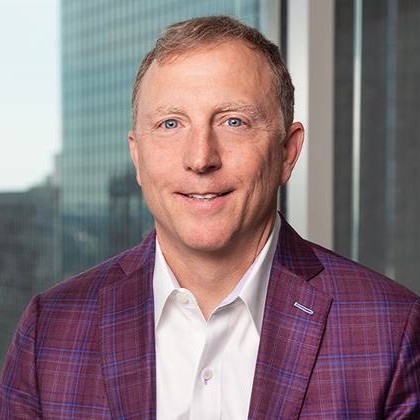
In this episode of The Close, Craig Castelli sits down with Brian Colao, member and director of Dykema’s Dental Service Organization Industry Group, to discuss the evolution of the DSO Conference, the current state of dental M&A, and what it will take for organizations to stand out in today’s market. Brian shares his perspective on private equity headwinds, opportunities for new capital, and how AI and technology are becoming key differentiators for dental groups preparing for growth or sale.



Exploring the Art & Science of dealmaking
Welcome to The Close M&A Podcast with Caber Hill Advisors, where we bring you exclusive insights from M&A experts, business owners, and industry leaders navigating the complexities of buying and selling businesses. Hosted by Craig Castelli, this podcast demystifies the dealmaking process, shares success stories, and offers invaluable lessons for business owners and investors.
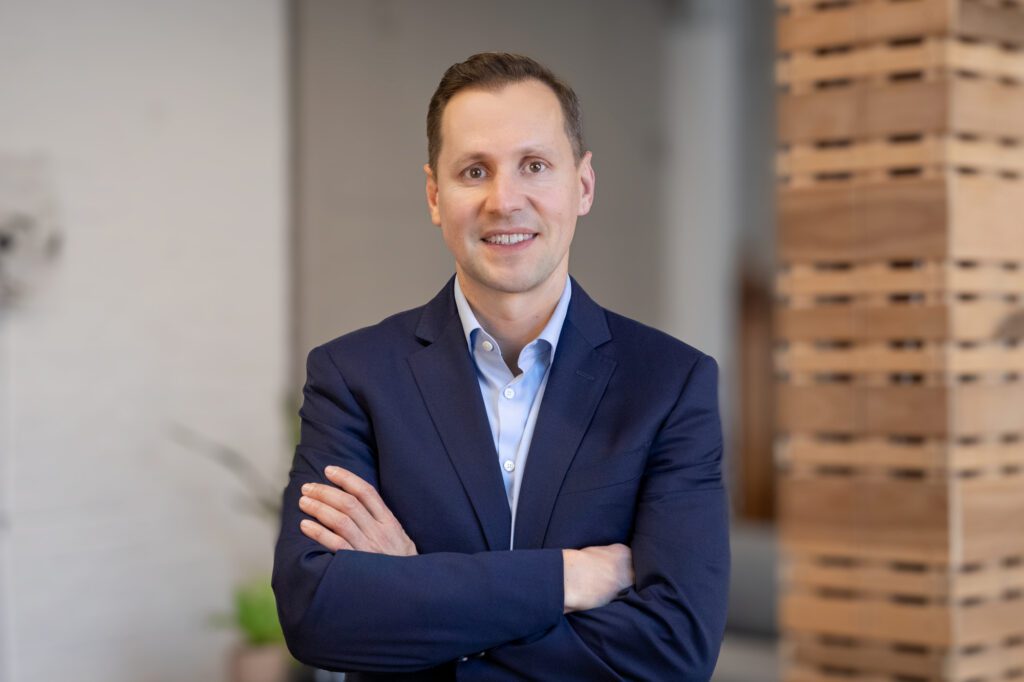
Craig Castelli, Founder & CEO of Caber Hill Advisors, is a trusted M&A expert with decades of experience advising business owners through successful transitions. Alongside a rotating roster of advisors, entrepreneurs, and investors, Craig brings engaging conversations that illuminate the world of middle-market M&A.
- ABOUT THE EPISODE
-

In this episode of The Close, Craig Castelli sits down with Brian Colao, member and director of Dykema’s Dental Service Organization Industry Group, to discuss the evolution of the DSO Conference, the current state of dental M&A, and what it will take for organizations to stand out in today’s market. Brian shares his perspective on private equity headwinds, opportunities for new capital, and how AI and technology are becoming key differentiators for dental groups preparing for growth or sale.
- SUBSCRIBE
-
- ABOUT THE PODCAST
-
Exploring the Art & Science of dealmaking
Welcome to The Close M&A Podcast with Caber Hill Advisors, where we bring you exclusive insights from M&A experts, business owners, and industry leaders navigating the complexities of buying and selling businesses. Hosted by Craig Castelli, this podcast demystifies the dealmaking process, shares success stories, and offers invaluable lessons for business owners and investors.
- ABOUT THE HOST
-
Craig Castelli, Founder & CEO of Caber Hill Advisors, is a trusted M&A expert with decades of experience advising business owners through successful transitions. Alongside a rotating roster of advisors, entrepreneurs, and investors, Craig brings engaging conversations that illuminate the world of middle-market M&A.
- BE OUR NEXT GUEST
-
LISTEN
WATCH
READ
Craig Castelli:
Welcome to the Close M&A podcast with Caber Hill Advisors. I’m your host, Craig Castelli. Today, my guest is Brian Colao. Brian is a member and director of the Dental Service Organization Industry Group at Dykema. He’s won numerous awards for his leadership and influence in the dental space and he puts on the most important DSO conference of the year, at least in my opinion, although I don’t think that’s a unique take right there. But I want to talk about a different distinction to kick things off. Brian, according to the internet, at one point you were named Binghamton’s Most Dangerous. Tell us what that’s all about and should we be afraid?
Brian Colao:
I don’t know. Is it my wrestling career? It looked like it might have been. I wrestled from when I was four years old until 1992, till sort of Olympic trials in 1992 and ended up breaking my jaw and that was sort of the end of wrestling for me. And maybe that’s what you’re referring to. I don’t know. But I began as a wrestler and I always wanted to… My dream was to be an Olympic gold medalist at wrestling. I mean, that really was. I guess most people don’t have difficulty believing that nobody wakes up to goes to law school to become the dental guy. That kind of happens. It’s not like an aspiration you have, although I’ve never looked back. I loved it, but nobody really makes that as an aspiration. And my aspiration was to be an Olympic gold medal wrestler, but wasn’t talented enough injury.
I mean, very few people can achieve that pinnacle and unfortunately that was not something I was able to achieve. And then you got to live the rest of your life. And in my case, I went to law school and I did become the dental guy or the DSO guy to be more precise as it turns out. But that fearsome stuff, I don’t wrestle too much anymore, but I like the reference. I always love to talk about wrestling. It had a very special place in my life.
Craig Castelli:
It’s interesting you talk about that original goal of Olympic gold. So I was a swimmer when I was younger and that’s another sport that requires a ton of discipline and doesn’t really have a path to riches and fame in the professional ranks. And we were all dead set on the Olympics. My injury came a little bit earlier, set me on the path to playing lacrosse, set me on the path to business school doing what I’m doing today. But you never truly leave that part of you behind. Some of that, what I learned is still with me today.
Brian Colao:
No, and I’ve been chasing it for 30 years. I mean, it’s not what I’m saying. I’ve been chasing sort of that high or maybe if you’re a medical professional, you might call it like a dopamine bomb or whatever that you get from winning a really big wrestling match in front of thousands of people or something like that. I’ve been kind of chasing that for a really long time and nothing quite compares to it. I love our industry. I love going on stage in front of thousands of people. I enjoy presentations. You can see behind me, I like blowing off pyrotechnics. We’ve got plenty at our upcoming conference, but nothing’s quite the same as winning a wrestling match in front of thousands of people. But now we’re onto our adult lives here. We’re grown up and this is what we’re doing and I love it. I do love my career, but nothing quite compares to wrestling.
Craig Castelli:
So let’s talk about the conference because we’re recording here at the end of June. We’re going to publish this beginning of July about a week before everyone shows up at the Gaylord and beautiful Denver for a couple days of fun and education and networking. And it’s massive today. It is the must attend event. But in 2014, you had the idea to create this conference and it didn’t have 1,500 to 2,000 people. I bet you it only had a hundred at most. So what was the idea back then and why’d you think it would work?
Brian Colao:
Well, you bet it’d be worse than you ever thought. There were 41 people at the first one. I’ve told that story a few times. And the other story I’ve told a couple times, I’ll tell it briefly again here is, look, around that time, 2012, 13, 14, they were just starting to have some dental events. There really wasn’t DSO conferences per se, but they were dental events. And we’ve had dental events for a hundred years that tried to maybe incorporate a little bit of DSO stuff into otherwise dental event. And they were not understanding the DSO industry and what it meant to be a DSO. And the content I thought was not helpful at all. If anything, a lot of the content was probably Creating misinformation. It was not correct what they were saying. So I approached some of these folks that had these conferences and I said, I actually know a lot about, they weren’t even called DSOs at the time. They were called practice management companies, management service organizations, MSOs. I said, “I know a lot about this. Would it be okay if I did a presentation and sort of corrected some of the misinformation and talked about what it means to be at that time a dental practice management company?” And almost universally the answer was no. I think a very small percentage of the people said if I could write them a giant check, they would let me do it, but not even everybody. It was like a tiny amount said, “I guess if you give us a check, we’ll let you do it. ” But the overwhelming majority was like, “No, we don’t care what you do, you can’t.” And it didn’t matter. I didn’t have a giant check to write anyway. So no one would let me be on their stage and I’m listening to a lot of misinformation and inaccurate and incorrect stuff. So I was sitting in the ocean at the Ritz-Carlton and Cancun at a DSO conference client I still represent and the waves were pretty minor down in Cancun. So I might’ve been in the ocean maybe two hours, Craig, and I’m just sitting there and I’m kind of feeling sorry for myself because I have a message. I feel like I have helpful stuff and nobody will let me talk about it and the waves are kind of hitting me and I’m sitting there. And then it occurred to me instead of just complaining and feeling sorry for myself, maybe I could do my own event. Maybe it can’t be that hard. I mean, boy, I learned that lesson, but can’t be that hard. Let me try to put this thing on. And it was harder than I ever imagined, but that’s how the Dykema Conference was born. We had zero sponsors the first one. There were 41 people there. I had to beg each and every one of them to come and that’s 41 including six or seven of my Dykema partners. So whatever 41 minus six or seven is what we actually had at that meeting. You said a hundred, you were being real generous. It might’ve been 35 or 36 people, but it was a start. And then we had 75. I can’t tell you I was thrilled with 75 in year two. I almost didn’t come back and do it again. But in the third year, we ended up with about 300 and that was the first time that I felt like, “Hey, I might be onto something here and this thing maybe can be successful.”
Craig Castelli:
Yeah. Well, I and everybody else are glad you stuck with it because it truly has become something special. For those who are maybe less familiar or coming for the first time or haven’t been in a couple years, what is one thing everybody should see or do while they’re at the conference?
Brian Colao:
I’m partial to my opening walkout because I spend a lot of time and energy on it. We’re premiering the world premiere of a feature documentary, a rock and roll documentary called Journey Through DSO History. It’s about 28 minutes long. It starts at the second dynasty of Egypt when the first dentist walked the earth Craig right up to the Dykema Conference in 2026. And it’s going to run through everything that’s occurred of significance in the DSO industry. We hired obviously a professional studio. We filmed this thing and it’s the world premiere. It’s going to be that morning. Plus there’s going to be, as you can see behind me, some pyrotechnics, some explosions. We’ve got a great presentation called Lessons in DSO History. Steve Bilt is heading that up from Smile Brands. We’ve got turning points in DSO history. Dr. Rick Workman, the founder of Heartland’s going to join Steve Bilt. And I really feel like the opening, say two to three hours of the event are going to be incredible. If you’re a sports fan, Nick Saban is going to be there, the Hall of Fame college coach. Plus we’re going to have Rick Pitino, the Hall of Fame college basketball coach there on Thursday. And they’re not there just to sign autographs and take pictures. They’re going to give some inspirational presentations. So I’m really excited to hear about team building and the insights that those guys have. Plus, as something near and dear to your heart, we’re going to have updates on the M&A markets. We’re going to have buy-side. I know that you’re participating in our sell-side presentation. We appreciate your willingness to do that. Craig, you’ve always got great insights. There’s going to be buy-side, there’s going to be sell side. There’s going to be international panel on there. There’s going to be various leadership sessions from some of the most important leaders in the space. So just a lot of stuff. But some people tell me that despite all that, the networking is the most important thing to them. And we’re going to have 2,500 people there. We’re a long way from 41 people that first conference. We’ve got 2,500 people there and pretty much everybody from every segment of the DSO industry is going to be there. I always say this and it’s true, you can get more networking done in a half hour in one of our receptions that goes on than it might take you six months to track down all those people outside of the event.
Craig Castelli:
I second that. First of all, I didn’t know that I had an expectation for your answer to this question, but a documentary certainly wasn’t on my bingo card. So I’m looking forward to seeing that. Oh, but I agree that the networking is phenomenal. It’s what I come for. The content is a bonus, but the access that attendees have to these really powerful, high profile leaders in both sports and business is second to none. And I don’t know if I’ve ever told you this, but it’s a story I tell people all the time and I remain grateful for this. A few years ago, Tom Izzo came out and was the speaker. And he was one of the rare speakers who actually came down to the cocktail reception and hung out a little bit and didn’t just fly in and speak and leave. And you grabbed me and you said, “Hey, you want to meet Izzo?” And I don’t know if you know this, but my dad went to Michigan State, was born and raised a Michigan State fan and I was talking to Izzo and it happened to be the eve of my dad’s birthday. And so I just mentioned that to him. I’m like, “Hey, my dad’s a big fan. That’s how I came to respect you and love the team. And tomorrow’s his birthday, he’s going to be pumped that I got to talk to you. ” He goes, “Tomorrow’s your dad’s birthday, pull out your phone, turn on the camera.” And he just impromptu recorded a 30-second birthday video for my dad. The best part is that when I then sent it around on the family text, my dad had no idea what it was and didn’t press play on the video for like two weeks until I said, “Why didn’t you say something about that video?” And he didn’t even know that he’d gotten a personal video from Tom Izzo.
Brian Colao:
Well, what did he do when he finally pressed play?
Craig Castelli:
Oh, he was blown away. He’s blown away.
Brian Colao:
You can’t control these people. Mom and dad are going to do whatever they do, but Coach Izzo is one of the best. I remember that, that he came down and he said, “Brian, I want to get a feel for your conference. I’m going to come down.” And I said, “Well, coach,” because I had a lot of responsibilities. I ended up putting one of my partners on him, but I was like man to man or something. I was like, “Coach, I was like, there’s a lot of people. They’re probably going to mob you. ” He goes, “Oh, it’s not going to be worse than a Michigan State alumni event. I’ll go down there.” And he had a good time. I saw him. I mean, he was not maybe mobbed to the degree he would be at a Michigan State event, but most people knew who he was and he was constantly circled with people, but he seemed comfortable.
He seemed like he enjoyed it. He really did.
Craig Castelli:
Yeah, he knows how to handle it. He knew exactly what he was walking into. All right, let’s shift gears a little bit and talk M&A because this is an M&A podcast. And I want to get your thoughts. So Dykema publishes a great state of the M&A report every single year. They survey guys like me and private equity investors and other attorneys and really gather a ton of data. And you know how near and dear the law firm is to my heart. I grew up in Detroit. My father-in-law spent his career there. So ton of respect for everything Dykema beyond just the DSO conference and this report is one of them. But there was a nice DSO industry spotlight where you or your team collectively called 2025 a year of muted recovery and you mentioned that there were 50 significant processes that had to be abandoned.
Brian Colao:
Closer to 75
Craig Castelli:
Yeah, okay.
Brian Colao:
Upon further analysis, closer to 75.
Craig Castelli:
Wow. So what happened?
Brian Colao:
Well, I mean, I’ve documented this many, many times in articles and podcasts. I will go over it again here. But really, I mean, the interest rates is what happened. I mean, what happened is the politicians want to blame each other and this is an M&A show. It’s not a political show. We’re not going to get into the politics of it. But combination of obviously Russia invaded Ukraine, combination of a hangover of COVID aid programs. So much money got flooded into the economy and people are criticizing it now saying it was an overreaction. Too much got in. The facts that we know without pointing this party or that party or this politician, what we do know is the economy was flooded with a lot of dollars and that caused inflationary levels we haven’t seen in 25, 30 years. I remember this, Craig, you’re I think younger than me. So you didn’t have a lawnmowing business in 1978 like I did cutting everybody’s lawn on my block, but the interest rates were 13, 14% then. So I’ve seen it in my life. But most people in the DSO industry, it’s a young industry, relatively speaking. We’ve not seen interest rates like occur. The interest rates literally tripled almost overnight within a quarter cost of supplies, goods skyrocketed, costs of labor skyrocketed. There was a shortage of labor. 47 million people left the workforce on top of it. So the confluence and reimbursement rates, of course, remain flat. So the confluence of all of these events created some of the most challenging economic conditions, certainly that we’ve ever seen in the DSO industry. If you’re like General Motors and you’ve been around for hundreds of years, you’ve seen this stuff before. But if you’re the DSO industry, you’ve not seen this type of stuff because it’s a relatively new 30 year, 25, 30 year old industry and most of the organizations have been formed in the last 15 years. So certainly I haven’t seen anything like that. And these conditions are not favorable to the M&A markets. I mean, when the interest rates are triple what they were, your buying power goes significantly down. The risks go significantly up. And we saw about 75 transactions. These are big transactions abandoned. About only seven or eight go through and the seven or eight that went through are on what can best be described as modest terms. I mean, they’re not going to make the market with those deals. Nobody’s going to throw a party over them. And that’s sort of where we are right now and where we are today is a couple things. We got to have the conditions improved. The interest rates have got to go down. The expectations of the sellers cannot be stuck in 2021. They got to go down. They got to be realistic as well. There’s a ton of money on the sideline, but it’s not as simple as just waiting for the conditions to improve. And some of the things going on, wars in Iran and unrest in the Middle East, they’re not helping things. If the goal was let’s get everything calmed down and get to where things are stable and there’s less uncertainty and we can start lowering interest rates, we’ve not done a good job for the first two quarters of this year. It’s still been a lot of uncertainty, a lot of instability, but it’s not enough just to wait until the conditions improve. And they will improve, Craig. I mean, I’ve been here 31 years. They don’t last forever. They’re clearly going to improve. If you’re a DSO, a group practice, a small group out there, you’ve got to build a premier organization. You can’t just say our business model will be, we’re just going to wait for the interest rates to go down and then we’re going to sell. You got to do all you can to increase same store growth, have a good culture, integrate specialty and build a premium organization so that you’re differentiated from the competition when the time comes for your equity event.
Craig Castelli:
So all of that is true. I have no argument. However, you could say the same thing about almost every industry out there and certainly in the private equity backed healthcare roll-ups, save a couple of the newer specialties that have kind of heated up or re-heated up. MedSpa’s too young to have any of these really impact that. Infusion is just always hot and has different tailwinds behind that. And so those deals are getting done. Those multiples are high. But what we see with dental where these private equity hold periods are getting to six, seven, eight, nine, 10 years long is kind of hitting eye care, it’s kind of hitting derm, it’s hitting some of these other specialties in similar ways. So is there anything unique to dental or is this just a broader macro healthcare private equity issue that dental just happens to be one of a few that are facing the same headwinds?
Brian Colao:
Dental’s not the only one. That’s absolutely correct. But we’ve had a couple sort of unique problems that have occurred in dental because it was a little more of a mature market than say MedSpa or some of these others, even dermatology. We had folks that didn’t fundamentally understand the business of dentistry that were relying solely on arbitrage. They jumped in and they just said, “Look, we’re going to buy here. The EBITDA is five million. We’re going to grow the EBITDA to 10 or 15 million and we’re going to sell without even really understanding what we bought.” I mean, yeah, they’re dental offices, but how they operate, how they… We don’t need to worry about that. We’re just going to buy more of them and sell. Well, that was a problem. We also had people over-leverage things when money was super cheap and when the interest rates triple, that’s a problem. So we’ve had some organizations that really, I mean, some of them, quite frankly, didn’t make it. Others had to be sort of chopped into little pieces and sold off. Others are in the process of rehabilitating themselves. Some have given the keys figuratively to the bank. The bank came in. Instead of being a lender, now it’s a shareholder. The prior investors sort of lost everything. I mean, these things have gone on. You just got to Google it. It’s all over the… You can see the press releases of when these things have happened over the last couple years and it’s taken a while for those situations to resolve. I’m not an expert on derm. Our group does do some derm deals and some other things, but I’m not an expert on all the macro forces affecting derm and everything. So I don’t know if all of that stuff went on in those verticals, but that stuff did go on in dentistry. So we’ve got to rehabilitate some organizations and get them ready for sale as a result of the consequences of some of these things that happened.
Craig Castelli:
Yeah. Yeah. I mean, it turns out you need to build a good business at the end of the day. And a piece of advice that I was given by a PE partner I worked with earlier on in my career was we’re going to build a business that can stand on its own two feet and it should be equally as attractive to a strategic or to another PE firm or for us to hang onto for another year because it’s doing so well. And I think in all the frenzy to arbitrage multiples and just get really big, really fast, some investors lost sight of that. Not all of them, but some did. And when –
Brian Colao:
Well, that hasn’t happened, Craig, what you’re saying, that advice that that PE person gave you. Great advice, but unfortunately, that has not happened across our industry. And in fact, there are businesses right now that are only attractive to a strategic, and I’ll tell you why, because they mismanaged overhead, they built up too much infrastructure. And look, I know you’re a little bit of a hockey guy, Craig. You got caught in a line change. I mean, they got caught in the line change. Nobody understood and you never do. If you knew, we’d all be billionaires. Warren Buffett seems to be the only guy that actually knows somehow. I don’t know if he’s got a secret crystal ball or something, but he’s been exceptionally good at timing the market. But the rest of us, you don’t really know. And if you did know, you’d be a billionaire. Even though intellectually you know it’s not going to last forever, you always think it’s going to last forever until it just… The music kind of stops and you don’t have a chair. And unfortunately what happened in our industry is a lot of folks built up infrastructure. And at my conference, at the Dykema Conference, if we went back five, six years ago, people were saying from stage, look, money is cheap. Even if you only got 20 offices, get the infrastructure for a hundred, you’ll grow into it. Better to have the infrastructure in place now than have to scramble for it later. And you and I, we’re like, oh yeah, that’s a great idea. We all sat there like, sounds reasonable to us, except when the interest rates tripled and now you had infrastructure for 100 and you only had 20 offices, your overhead got upside down and it became a crisis to a lot of organizations, had to lay people off, had to cut costs. So unfortunately because of all that, there are organizations right now that a strategic like a large DSO, let’s say they have 50 offices, no PE group wants to buy them because their overhead’s too high. But if a giant organization buys them and they just cut all their overhead and absorb them into that organization’s infrastructure, suddenly the clinic level EBITDA makes sense if we cut almost all the corporate level overhead out of it. So unfortunately as a result, I can’t say the advice you got can even come true for a lot of organizations. A lot of organizations have too much overhead right now and they’re only going to be attractive to a very large strategic. And we all know who the large strategics are. And I joke with their CEOs, they can’t buy everything. They’re going to pick a few strategic things that make sense, but they can’t buy like everything out there. So then you get Craig sometimes the term that’s being used is zombie organization where it can service its debt and pay its bills, but it’s not attractive enough for anybody to buy it so it just sits there.
Craig Castelli:
Where’s the opportunity in all this chaos?
Brian Colao:
The opportunities for the new money to come in is where the opportunity is because dental is one of the greatest sectors of the economy always have been people always go to the dentist and the tragedy in all this to me, some of the tragedy I think we’re doing good and we’re recovering. But the tragedy in all this is one I heard over the last couple years during the hard times. The dental practices, and this is down at the clinic level, they’re reaching record revenue. They’ve never done so well, but the overhead and the debt service was just so high they couldn’t overcome it up at the corporate level. But my point is dentistry’s performed. It’s always performed. It’s been virtually recession proof, pandemic proof. It’s incredible. So if we can right size the overhead, there are tremendous opportunities for new money to come in and learn from the mistakes of the last five, six, seven, eight years and really make a killing now. That’s where the opportunity is. I mean, unfortunately some organization, they won’t like this. Some of the legacy, if you’ve made these, what my mom used to say, you made your bed, you got to sleep in it. If you made your bed, for some organizations they’re going to have to sleep in it, but it’s an incredible opportunity for new money to come in and really capitalize.
Craig Castelli:
At the end of the day, the only industry that has a lower default rate industry-wide than dentistry is mortuary services. Two things that are guaranteed to happen: everyone’s gonna die, and everyone’s teeth need taking care.
Brian Colao:
They’re dying to see you. They’re dying to see you over there. Yeah. I mean, that’s a unique… I mean, it is a necessary one. It will never go away and it’s a very unique sector.
Craig Castelli:
For sure, for sure. So let’s shift gears a little bit and talk technology because I know you’ve spent a lot of time in recent years. You advise technology companies, you invest in technology companies. We don’t need to name names. I’m sure you have to be careful all what you say in certain areas, but AI is the topic on everyone’s mind, mine included. And I’m curious your take on where AI is actually delivering value in the space today.
Brian Colao:
Okay. So a couple things on AI. Yeah, AI has been the big thing. Now this year it’s agentic AI. Last year it was regular AI. Now it’s agentic AI. But yeah, to me, AI is the single biggest advancement in the history of the dental industry, but everybody’s trying to copy it and you have to be able, and this is not easy. I mean, this is where I spend a lot of time and earn a decent living trying to help people do this. You have to be able to differentiate shiny objects from value added AI to your organization. And Craig, I’m sure you’ve taken, like many millions of people have their family to Disney World, everybody or Disneyland or Disney World and you have to be able to differentiate. You ever go there and they got a conveyor belt that will take you from the living room to your bedroom. It’ll ride you around your house and it’s fun. That’s a shiny object. It’s a real treat to ride that thing at Disney World and do it. But are you going to install that in your house? Of course not. That’s ridiculous. You can walk on your own to those various rooms. And that’s what AI is sort of becoming right now. There are solutions that are value added that really can help. And then there are like Disney World. They’re shiny objects. They’re fun. It was a real treat to do it, but it’s really not something that’s going to add value to your organization. And you have to be able to tell the difference between the two of them. And now we’re ushering in agentic AI, these agents and they used to call them bots. That’s now a negative connotation. They want to be called agents now. They’re not even human beings.
Craig Castelli:
They have feelings too, Brian. They have feelings too.
Brian Colao:
Well, I guess they do. I understand when human beings say, “I’m a human, call me this instead of that. ” All right, you’re a human being, but the bots get rights now. Now we got to call them agentic or something or agents. They can’t be called bots. I don’t know. But anyway, my point is it’s exploding all over everywhere it’s exploding, but particularly we’re in dentistry. It is also exploding in dentistry and these agents can do, they can make phone calls, they can listen to phone calls, they can send emails, they can send texts, they can compile spreadsheets and data, things that would be really labor intensive for a human being. They can do it. They can do insurance verification. I mean, they can do really cool things, but there’s too many of them out there, meaning too many solutions. And we’re in a free market economy, Craig. I never discourage anybody from being an entrepreneur. That’s wonderful. If you want to take your shot at a business, go ahead and do it, but understand only a fraction of them are really going to be value added and successful and the market is flooded with them right now. A lot of venture capital firms and other things have taken bets on… They’ll bet on 20 of them. They know only two or three are going to succeed, but they’re going to succeed, but they’re going to bet on 20 of them. So the market is rich with funding. So people are running around spending money, hiring people, building stuff up and a lot of them aren’t going to be here in a couple years. And it’s difficult if you’re a practice owner, a group practice, a DSO, to differentiate between what’s really going to add value, what’s a shiny object, what’s going to be here in five years and what’s not going to be here in five years. It’s challenging.
Craig Castelli:
Yeah. And we face the same challenges in our own business. I mean, there’s a lot of noise. There’s very little signal. Everybody likes to sell to me, “Hey, look, if you just get one deal, your ROI is 1,000%.” Well, sure, that’s just the economics of my business and the way that we operate. But there’s no guarantee that any one thing is going to give me one deal. We can’t spend money on all of it. I do believe the cost of ignoring it is greater than the cost of getting it wrong out of the gates and having to go back and redo something and fix it.
Brian Colao:
Well, yeah, here’s what I would say. Yeah, there was a proverb I think going back to ancient times that I learned in college and it was something like I had this buried city and lost tribes course or something. It was fun. And the proverb was like, he who chases two rabbits catches none or something was it. Yeah, I mean, you can’t chase everything, but if you can focus as a business, certainly dental organizations, which is what I spend my time on, if you can focus on one or two, I mean, if there’s like 25 things out there, if you can focus on one or two or three value added things and you can bring them on successfully and they add value, then yeah, sure, it might be time to look at maybe adding something else, but you can’t get everything involved. You said this, Craig, same for the dental org. There’s probably at any given time, 25 or 30 things you could be looking at, maybe more if you really cared. You got to focus on two or three that are going to be the most value added. Take the time to understand them because what we’ve learned in the last three or four years that I’ve been really studying and trying to become an expert on dental technology solutions is if you don’t do certain things, you’re not going to get it adapted.
One, there’s got to be education. If you’ve got 20 offices and you don’t educate everybody as to what this is and why it’s a good idea, people aren’t going to use it or they’re going to misuse it or not use it correctly. Two, it’s got to integrate with your PMS system. I’ve seen a lot of good solutions, but they don’t integrate and if they don’t integrate, people won’t use them. They’re not going to open up all these viewer boxes. Assuming there’s education, it integrates, you’ve got to come up with a sound implementation plan. You can’t put it in 25 offices overnight. You got to figure out the right way to get it there and there’s got to be a delicate dance and collaboration that occurs between the DSO side, between the practice owners, between the clinical employees, the non-clinical employees and the vendor that’s offering And the solution, and if they all dance together, they step on each other’s toes, you’re not going to get adaptation. So these are the things you got to have education, integration, implementation, and then you get adaptation. So there’s work involved. I tell folks that I advise that want to do business with DSOs, if you met with the DSO C-suite and they love, just assume they loved your product. They thought it was the greatest ever and they signed a contract. Craig, if we’re playing football, you’ve got a first down from the 20 to the 30 yard line. You’re nowhere near a touchdown. I mean, good job. You got one first down, but you’ve got a lot of work to do.
Craig Castelli:
Yeah. Is this the next differentiator though? For the group practice owners out there, does this become what drives either a high multiple versus a low multiple or even a decision for a bigger group to buy or not buy you based on how well you’re implementing AI?
Brian Colao:
Yeah, kind of. I mean, I’d say technology as a whole, including but not limited to AI.
I mean, look, you got four things you got to do if you’re preparing your organization for sale. And I know you’re looking at these things, Craig. Nobody does a better job than you, but here’s the thing. One, you got to have a positive culture at your organization. If you’ve got a terrible culture and you’re hemorrhaging people, you might be unsaleable in this market. You’ve got to right size your overhead would be number two. You got to integrate specialty would be number three. And number four, you got to implement technology to offset some of these things like high labor costs, shortages of labor, high supply costs, high inflation, cost to service debt. Technology can do more with less and offset some of these costs. So you do. And I think all of these things in combination are going to differentiate you at the time of sale. I do think if you’ve buried your head in the sand, Craig, and you’ve not paid attention to a single technological solution and you’re operating, what’s that song you’re partying like it’s 1999, you’re operating your practice like it’s 1999, you’re going to be less valuable. Somebody you might be, might be unsaleable altogether, but more often than not, you’re probably just less value. There’s no question you’re going to be less valuable than somebody that has taken the time to implement some of these solutions.
Craig Castelli:
Yeah, I agree. There’s never been a more important time to figure out a way to do more with less. We’re not putting the toothpaste of wage inflation back in the tube. Labor cost is what it is and what it’s going to be. Supply costs are what they are. Reimbursement is what it is. So can you either make your team more efficient or use some of these advanced agentic tools to actually replace certain roles in the organization that no longer need to be filled by a person and can be scaled more rapidly at a lesser cost?
Brian Colao:
Yeah. I’m going to the UK this Friday to go present at a large group practice conference and I try to make it relevant and fun to the UK. So I’m doing my Harry Potter theme and you got Lord Voldemort out there. He’s the evil. And what is his evil? Well, inflation is at a 25 year high. The cost of labor’s at a 25 year high. You have a shortage of labor. Supplies and equipment are at a high. Reimbursement rates have remained flat. So I got to slide. That’s Voldemort. He’s got his wand. He’s trying to get at people. Well, Harry Potter coming in, if you follow that to try to offset this, that’s got to be implementation of technology and culture and integration of specialty. And if you do all of these things and you integrate and implement all these technology solutions, they can offset a lot of the bad things. So for fun in the UK, it’s the forces of dark against the forces of light, but the forces of light are technology and integration of specialty and culture. And if you do these things, you can offset some of the real negative forces. So I can’t wait to make my presentation in the UK. I hope they like it. They might boom me off the stage. I don’t know. But I’m doing the Harry Potter, Lord Voldimort type theme, but that’s sort of how you look at it. There’s darkness and there’s light and you got to get a lot of the forces of light to offset the dark things that are going on.
Craig Castelli:
I love it. If you get any bad reaction whatsoever, just pivot to from Harry Potter to Harry Kane versus whoever they’re playing in their first elimination game and you’ll have everybody’s attention right back like that.
Brian Colao:
That will get you killed. I think Harry Potter might just kind of be like, “All right, Brian, that’s not that funny, but you’re okay. Keep going. ” But you start making bad World Cup jokes about their football team as they call it over there. Yeah, that could cause serious problems.
Craig Castelli:
No doubt. No doubt. Well, Brian, this has been a lot of fun. If anybody wants to learn more about you, Dykema, the DSO Conference, where should they go?
Brian Colao:
Yeah, dykemadso.com. I’m an easy guy to find. If you Google Brian Colao DSOs, you’ll find me everywhere. You’ll get my emails, bcolao@dykema.com, dykemadso.com. You go to any of those places, really, really easy to find me. And I love talking about this stuff. If anybody has any questions about anything, be happy to chat with you more offline and talk about these things.
Craig Castelli:
Well, it’s been an honor to have you on. Good luck in the UK and I look forward to seeing you in a couple weeks and thanks everybody for watching us here on The Close.
Brian Colao:
Thanks, Craig.
