


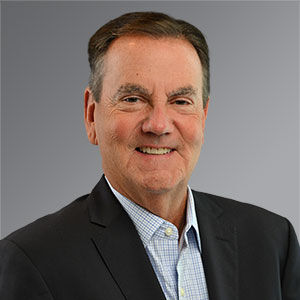
In this episode of The Close, Craig Castelli speaks with Dave Nissen, partner at Cherry Bekaert and former CEO of PKF Mueller. Dave shares how PFK Mueller grew from a small Elgin, Illinois accounting firm into a larger regional player, the role vision and budgeting played in that growth, and how strategic acquisitions helped build talent and capabilities. He also reflects on PKF Mueller’s sale to Cherry Bekaert, navigating due diligence, adjusting after the transaction, and why relationships, referrals, and clear growth incentives matter in professional services.



Exploring the Art & Science of dealmaking
Welcome to The Close M&A Podcast with Caber Hill Advisors, where we bring you exclusive insights from M&A experts, business owners, and industry leaders navigating the complexities of buying and selling businesses. Hosted by Craig Castelli, this podcast demystifies the dealmaking process, shares success stories, and offers invaluable lessons for business owners and investors.

Craig Castelli, Founder & CEO of Caber Hill Advisors, is a trusted M&A expert with decades of experience advising business owners through successful transitions. Alongside a rotating roster of advisors, entrepreneurs, and investors, Craig brings engaging conversations that illuminate the world of middle-market M&A.
- ABOUT THE EPISODE
-

In this episode of The Close, Craig Castelli speaks with Dave Nissen, partner at Cherry Bekaert and former CEO of PKF Mueller. Dave shares how PFK Mueller grew from a small Elgin, Illinois accounting firm into a larger regional player, the role vision and budgeting played in that growth, and how strategic acquisitions helped build talent and capabilities. He also reflects on PKF Mueller’s sale to Cherry Bekaert, navigating due diligence, adjusting after the transaction, and why relationships, referrals, and clear growth incentives matter in professional services.
- SUBSCRIBE
-
- ABOUT THE PODCAST
-
Exploring the Art & Science of dealmaking
Welcome to The Close M&A Podcast with Caber Hill Advisors, where we bring you exclusive insights from M&A experts, business owners, and industry leaders navigating the complexities of buying and selling businesses. Hosted by Craig Castelli, this podcast demystifies the dealmaking process, shares success stories, and offers invaluable lessons for business owners and investors.
- ABOUT THE HOST
-
Craig Castelli, Founder & CEO of Caber Hill Advisors, is a trusted M&A expert with decades of experience advising business owners through successful transitions. Alongside a rotating roster of advisors, entrepreneurs, and investors, Craig brings engaging conversations that illuminate the world of middle-market M&A.
- BE OUR NEXT GUEST
-
LISTEN
WATCH
READ
Craig Castelli:
Welcome to The Close M&A Podcast with Caber Hill Advisors. I’m your host, Craig Castelli. And today my guest is Dave Nissen. Dave’s a partner at the accounting firm, Cherry Bekaert. But we’re going to start prior to his Cherry Bekaert days. Dave, you joined a smaller accounting firm called Mueller right out of school. You’re a newly minted CPA in 1980. Mueller eventually grew to a firm that you ran and sold to Cherry Bekaert. And we’ll get there, but take us back to the beginning. What was Mueller when you first joined in 1980?
Dave Nissen:
Well, it’s interesting because I’m going to go back a little bit further than that. When I was in college, I went to the Harvard of the Midwest, which is Illinois State University. And I interviewed with all the Big Eight. Back in those days, there was eight Big Eight and I wanted to work at Arthur Andersen really bad, but I only had a 3.08 grade point average. So I got rejection letters from eight of them. But Mueller was one that actually came down and they actually gave me a job offer. So I was very appreciative of that. And when I first started, we had really one office in Elgin, Illinois, which I didn’t really know where Elgin was when I first started because I grew up in a near west suburb of Elmwood Park. And my mom took me out here maybe once when I was eight years old. And we were about 30 people back then, about a million dollars worth of revenue when I started in 1980.
Craig Castelli:
Wow. So fast forward a bit to 2006, you took over as CEO. How had the firm grown and evolved by that point?
Dave Nissen:
Well, by that time, when I started, we had Al Mueller was here, Ed Sieracki, all the founding partners because it was only 12 years old the firm was when I started and they were all retiring. By that time they had all retired and I was the youngest partner. And I would say at that point we had some younger partners in there at that point and they were hungry for growth. When you have older, more seasoned partners, they’re looking more for status quo. And then I was kind of a little more hungry and so were my partners. So at that point I realized we had to start maybe making things happen.
Craig Castelli:
We see that in a lot of the businesses that we work with too. You reach a certain age and it’s all about just preserving and maintaining. And at a certain point, the risk of growth is just not worth the risk because you have a good thing going. And I would assume that with those older partners on the way out, it was the same mentality.
Dave Nissen:
Yeah, same thing. And so I realized because we had a vote to come in, it wasn’t like I had to get voted in by my partners and there was nine of us at that time. It was a close vote by the way, but that’s neither here nor there. But I figured if I wanted to be voted back in and two years later, I better start doing something or it’d be a short tenure.
Craig Castelli:
So are there any Chicago backroom deal stories about you solidifying that final vote?
Dave Nissen:
Well, if you really want to know the truth, I didn’t even vote for myself at that point. It’s a really long story, but we needed 60% vote to win and there was a coup going on. So I voted for somebody else, the incumbent. And so basically it was four I lost, but then because you need 60%, we had to revote. So I voted for myself. So then it was five for me. Then we had to revote again and then it ended up being eight to one. So it’s kind of like the Vatican. I think they put the ballots up in the chimney somewhere, but-
Craig Castelli:
We saw some smoke rising from a chimney in Elgin and we knew.
Dave Nissen:
You knew it.
Craig Castelli:
Oh, that’s great. So you have these partners who are hungry for growth. So you come in, you know you have to do something. You probably wanted to grow yourself. You’re young at the time too. What was the vision at that point?
Dave Nissen:
Well, that’s a really good point too, because that’s when I learned how you had to develop a vision statement. I needed a vision. I had a really good marketing director at that point. Her name is Elaine and she goes, Dave, you have all these ideas, but we don’t know what you’re thinking. You got to put it out on paper. So I put it on paper and I didn’t know how to do it first. I’ve never done a vision. I remember putting it down and we were at that point about $8 million in 2006. I started thinking, how do you do a vision? And Lane goes, Dave, you have to just say what you want to look like in five years. So I said, okay. And I remember the first thing I put down is I want to have our IT that is world-class IT department. And I don’t even know why I said that because I’m terrible with IT. But once I had that first bullet point, it got easy. And then I said, I want to be $16 million in five years. I remember throwing a number out and then I had all my partners help me and they all bought in on the 16. And as it turns out, we didn’t hit 16 in five years, but we were like 13 and a half. So we were better than if we didn’t put it down at all, Craig. I guess that’s the point.
Craig Castelli:
Well, there’s something about writing it down that makes you accountable. All of a sudden the pressure ratchets when it goes from a PO to on paper.
Dave Nissen:
So we were on our way. It was a good thing. So having a vision statement was really important. And then after three year, we always had a rolling five-year vision. We always had that.
Craig Castelli:
How important do you think that is for business owners and anybody running a business? I mean, this can’t just be a phenomenon for an accounting firm, right?
Dave Nissen:
No, I think it’s important for every business. So I’m even going to go back. We see so many businesses, believe it or not, that don’t even do a budget for the next year. So I always tell people, if you prepare a budget for the next year, your results will be 20% better than if you do not budget. And then the same thing with a five-year vision. If you have a vision, you’re going to be better than if you didn’t do the vision. So it’s all steps of roadmap for a success.
Craig Castelli:
Yeah, that makes perfect sense. So I know you guys had done some M&A in the latter stages. I specifically remember a larger merger with an Orland Park firm COVID-ish time, maybe shortly before that. But back then, had you guys started exploring M&A as a way to growth or was it all organic at the time?
Dave Nissen:
No, we did a lot of M&A. One of my first M&A deals, I have four kids and I have three boys. So back when I was young, like you said, which I’m not anymore, I was coaching baseball for my kids starting in T-ball for 13 years. I would rotate to all my different sons and there was a guy that was in the WASCO Baseball League that I met who was another CPA. So we started talking. He was the coach of the Orioles. I was the coach of the A’s and asked when you’re a coach, you get to take up the baseball bases at the end and we’re putting them away. I go, “What do you do? ” And he goes, “Well, I’m a CPA.” And I said, “Well, you’re a nice guy. Tell me about your firm.” He goes, “Well, we have five partners, but we have six total people.” And I thought to myself, well, that’s a formula for disaster. So we ended up acquiring those guys and that was a good acquisition. I think that was even before I was CEO, that was in 1999. So we started doing a lot and then there was another guy. I did a lot of business valuation in my younger day. There’s another guy that was in Aurora, really nice guy. His name was Mike and we acquired him in around 2005 and there was another good … He had about a million dollar practice and we just did the little ones, these little ones, but they were really, really good. They were really, really good. They got us some good talent and maybe some Mike was a business valuation expert, so we got some skills.
Craig Castelli:
That’s great. Well, you’re solving a need whether they realize it at the time or not a five partner firm with six total employees has no exit strategy for any of the partners and they can bolt onto you. There’s growth, there’s an expansion of the talent pool. They probably receive access to more resources than they’ll ever have when it’s just five of them. So it’s the ultimate win-win beyond just the quantitative part of the deal.
Dave Nissen:
Yeah, definitely. So then after that, Craig, after I became CEO, we remember in 2008, 2009, that was really a bad economy if you remember back in those days, but maybe one of the worst economies ever with the market crashes. So I remember going to a banquet or a lunch and the Caterpillar CEO was speaking in 2008, 2009, and he got up. We were in a banquet hall called the Lincoln Inn here in Batavia and he said, “Don’t waste a good economic disaster.” And I remember him saying that. I go, “Well, that makes a lot of sense because there’s a lot of opportunity around you if you have the financial wherewithal and the guts.” So at that time, Grant Thornton, PWC, all the firms were basically laying off in 2009. So what did I do as an early, one of my bold CEO moves was to hire two partners out of Grant Thornton and one out of PwC in 2010, 2009, 2010. So now I’ve got all this payroll with no revenue and my partners probably thought it was crazy. However, it was a good move because I brought in some high level skills. To get to double, you have to get a little more sophisticated. So we brought some big skills in and it took a couple years, but one partner is still now at Cherry Bekaert leading our nonprofit group. So he was very important for our growth in the nonprofit area.
Craig Castelli:
Which is a huge area that a lot of firms don’t cover. So when you can really get a foothold there, the access to business is pretty massive. So we fast forward 2023, Mueller sells to Cherry Bekaert. Cherry Bekaert themselves had just taken on their own private equity investor and Parthenon Capital. Take us through in the first place, were you guys looking to sell? How did that whole deal come together?
Dave Nissen:
No, no. It’s funny. The last thing I was never going to sell with my baby and I knew Al Mueller, I knew his wife. I mean, he was my mentor. So the last thing I was going to do is sell. But we had twice a year partner retreats and we had one in 2020, December of 2022 in Lake Geneva. So we have Carl Deorge, he was a prior CEO of CliftonLarsonAllen. He was our consultant for 10 years. He would come there, facilitate the retreat. And the first thing he did was he always talked about the state of the industry and he said, “Private equity is in the accounting industry now. It’s big.” And he was talking about these firms, EisnerAmper, Cherry Bekaert, Citrin Cooperman talking about this. And it was one in one ear and one out the other. But then I started thinking about it and I said to my partners in January of 23, I said, “We should probably at least investigate what this all means because you got to at least investigate.” So I called Carl. I go, “Carl, my partners think it’d be a good idea, but they don’t want to sell, but we just want to understand the landscape.” And he goes, “Can I give you two names to talk to? ” And I said, “Yeah.” He goes, “Call Michelle Thompson at Cherry Bekaert and Charlie Weinstein at EisnerAmper. That’s who I would call.” So I sent both emails right away and Michelle got back to me right away and she goes, “I’d love to come to Chicago and meet with you. ” Charlie never got back to me for a few days. And then when he did, he wanted to do a Teams call. So I never talked to Charlie. Big difference in the tone there. So it’s good. It’s kind of some advice for people. If you’re looking to do something, face-to-face is better than a Teams call. I’m just very important. So Michelle comes in probably, it was late January, early February, meet with her like her. And you got to understand the good news about what I thought about Cherry Bekaert is they did not have a Chicago platform. They didn’t have anything in Chicago I figured. Remember these 200 people we have in Chicago, these are my family members. I got to take care of them. So I figured if we’re going to do something, that’s a good plus is that we could be the bulkhead in Chicago. I did like the Carolina headquarter theme. It’s a little bit closer to the cultural fit of Chicago as you know, and we’re both Chicago guys. I mean, Chicago is probably the best city in America and it’s kind of like the melting pot.
We’re not the West Coast and we’re not the East Coast. We’re kind of like normal.
Craig Castelli:
You’ve got your best combination of cost of living and income generation potential. You’ve got all the culture and sports and business and everything else you could ask for. Yeah. Fantastic.
Dave Nissen:
Yeah. So they came here, we had a really good meeting, took them to dinner. Then they go come on to Raleigh. So me and another partner who was our president at the time, Jeff, we went to Raleigh. We had really another nice visit, met with their number two guy named Kurt, really good guy. Well, Michelle and Kurt are great people and just one thing led to another. So we went to Raleigh probably in say mid-February and we signed LOI by May Labor Day weekend of that we signed LOI.
So Craig, another thing I need to bring up, I guess in some ways I consider myself an entrepreneur and I was lucky because over 46 years I’ve worked with a lot of good entrepreneurs, really good business owners and I still do today. And the best ones have taught me, you have to make quick logical business decisions. And again, accountants by nature are very risk averse, sometimes they’re not the best entrepreneurs, but they’re really good technicians. But I think we made a wise move. We decided to do it and we signed the LOI and then that then just took a grueling due diligence period grueling.
Craig Castelli:
So did the two accounting firms have to hire a third party accounting firm to do quality of earnings to get this deal done?
Dave Nissen:
Yeah. Yeah, they used PWC for ours. Now as this turns out-
Craig Castelli:
What was that like being on the other end of it?
Dave Nissen:
It was bad. Well, luckily, like I said, I have Jeff who’s our president. He’s a little bit more detail orientated than I am. Yeah, you know Jeff. So he took a lot of the brunt of it, but we had 46 adjustments. I mean, remember we’re an accounting firm, so we had some adjustments, but they accepted most of them, Greg. But I think the quality of earnings wasn’t the difficult part is the deal itself. The last week before close was unbelievable stress. It was stressed. I was down in my Florida house just so it happened. It kept on being pushed back. We were supposed to close in August and it was … Cherry Bekaert, when they acquired us, they had acquired two other very large firms within a three-month period. So they were really busy. They were-
Craig Castelli:
They were drinking from a fire hose managing all that.
Dave Nissen:
We all were. And so I remember playing golf with my wife and I told her, because the phone kept on blowing up and I said … And I never quit in golf. I go, I got to take off the last nine. I got to focus. It was tough. It was tough.
Craig Castelli:
Yeah. But all worth it in the end. And I’ll ask this now that the deal is a couple years in the rear view mirror in any hindsight lessons learned, any second thoughts, we should have run a process or we should have negotiated this that we didn’t, or has everything played out exactly as you hoped it would?
Dave Nissen:
Financially, perfect. No, very exactly what you would’ve expected on the financial part. Cherry Bekaert is very … I would say there’s a lot of honor going from CEO to basically just a partner could be difficult for some people, but for me, they’re very respectful. I guess that’s the word I’m trying to say. Very respectful. If there’s anything that they think they want to do in Chicago, they always make a phone call to me before they do it. Now, does that mean I have any authority to do something different? Not necessarily, but they do make the phone call and that’s really … Let’s face it, when you get acquired, Craig, you got acquired.You’re not running the show anymore. You’re going from a hundred percent authority to zero with maybe a little bit of input, but that’s okay.That’s the way the world works.
Craig Castelli:
Right. And I think that if you go into the deal knowing that and accepting it, one, that means you’re actually ready to transact. Two, you’ll be able to handle these changes post-sale. I think the biggest problems are when we have a buyer say, “Oh, nothing’s going to change. You’re still going to run. Your business is part of our organization.” And the seller only hears the parts of that that they want to hear and forgets that they are no longer in control of that the real friction develops.
Dave Nissen:
Yeah. And the other thing though, if I could roll the clock back for the first nine months, I’d say I really didn’t want to be that guy that got acquired and still felt they had to run the show because I figured Michelle Thompson’s the CEO, I’m a partner in the Chicago office. That’s the way I looked at it. So I let them play it out. It’s what did they want to do? And I should have been a little bit more proactive of where I am today because now as Chicago market leader, I am still responsible for the people and the market. So it’s my job to grow the market. We have to grow it. So we have to do the things that we’ve always done in the past. So it took a little time to understand my new role, but I think I know it now. It’s not like there’s an operating book you could read how to do it.
Craig Castelli:
Well maybe that’s what you do next is write that book. Right. It’s interesting though. I mean, it’s a very fine line between pulling back enough to let the new owners be in charge and not trying to be overly controlling and getting in the way and completely checking out and doing too little, which ultimately becomes counterproductive. You still are the leader of this market. The people still look to you. I mean, it’s the same team the day after closing as was the day before, right? But also you know this market better than people sitting in Raleigh or New York or anywhere else the folks involved are. So they’re wise to call you, they’re wise to lean on. And you’re wise to recognize that you have an opinion, you don’t have final say.
Dave Nissen:
And like I said, very respectful, good people. I could ask Michelle, “Hey, could you have a few minutes to talk?” And she’d make the time for me, which is really nice, but I don’t take advantage of that. I’m not calling her too often. You know?
Craig Castelli:
Yeah but that’s fantastic.
Dave Nissen:
But it took some time, but our market’s very vibrant right now, as you know. Chicago is a … The economy’s not bad right now and it’s given us … Craig, you had asked the question too when you sent me a couple things to at least think about what are the things since the acquisition that have been really positive? We’ve got a really great private equity transaction advisory group. We’ve got 150 people that focus on that, do 700 quality of earnings a year, which is crazy. We used to do at Mueller, we used to do maybe four, but now we’re doing 700 and really good group, really good skills, great. We have a fraud and forensics group that comes into Chicago about every month, but we have 15 people that do their forensics and fraud and they come with litigation support. We used to do that too, but it was like we used some auditors that might go in and look at some when something bad was maybe happening, but now we got seasoned teams. So it’s kind of nice to have some of that. The breadth of skills is amazing.
Craig Castelli:
Yeah. Well, there’s a flywheel effect to that business, but also I think it makes you stickier with all of your clients. The more you can offer them, you are doing them a service, but it is also self-serving in a positive way to the firm because there’s more that they can use you for, therefore it’s a higher share of wallet and that builds business.
Dave Nissen:
Yeah, no question.
Craig Castelli:
So I guess unpack a little bit these extra services and think of the entrepreneurs. What are the things that an entrepreneur could come to Cherry Bekaert for and you can say without question, you guys have the expertise to support them. And I guess beyond just what everybody would assume, I mean, there’s obviously the tax and accounting, but if I own a mid-market business, I’m thinking of selling this in the next five years, what should I be calling you and asking you for help with?
Dave Nissen:
Well, I think it’s a really good question because everybody goes into a meeting and they talk about taxes, maybe audits, accounting services. We’ve just recently signed up a few new clients and one came to the professional service event we had last week and nice young man, he’s got a great idea starting up a new business and he went with us. So we’re charging him for the normal things, but the thing we’re going to bring to the table and the thing that he knows we’re going to do is I’m going to connect them with some of our clients. And I think that’s, to me, we’ve done this forever, Craig. We’ve always taken advantage of the people we know and I think the highest level of service you can give to a client is helping them refer them to another client that maybe needs where they could do some work with each other. So if you could help them bring in sales, that’s like the ultimate, because now you’re paying for yourself.
Craig Castelli:
Well, that’s something that I’ve always appreciated about you. And since you made fun of the stereotypical accountant earlier, I will now too. I mean, you have a much more robust network and are very, very generous with it. You throw great events, you make great introductions, not everybody does it, especially not everybody in your field. I know it’s helped you get where you are today, but it’s something that I think anybody who’s thinking about doing business with Cherry Bekaert needs to look at if they’re working with you, that’s the intangible.
Dave Nissen:
Well, I think this is good for any accountant. It’s interesting. I want to go back to when I was really young. When I was 23 years old in the audit department, our managing partner at the time was Glenn Miller and he was a hard nose guy. I don’t want to swear. Because you said you’ve never had to bleep out anything, so I don’t want to be the first. So he was a hard nosed guy. I remember I was making $23,000 a year and we were about ready to have a family and I went into him and he gave me his raise and he gave me $500. He goes, “You’re doing a great job, Dave. You’re going to make 23,500 next year.” And I go, “That’s great.” I go, “But Glen, how can I make more money here?” And he said, “Dave, if you could solve a problem, fill a need in an organization and you could fill that need, you’ll make more money.” I go, “Glen, I’m asking, what are you talking about?
Tell me. ” He goes, “Dave, what do we need at Mueller right now?” I go, “I don’t know. Sales?” He goes, “Yes, if you could bring in sales, you’ll make more money here.” And I remember that when I was in my early 20s and from that point forward, it was all about how to deliver sales. And if you’re going to deliver sales, Craig, you’re in the same business in investment banking and you’re in a professional services, you have to do something different than someone else. And I know you do because you have specialists that specialize in different industries. You have to differentiate yourself. And the way I’ve always figured to do that is with the network, use your network to add value to your clients.
Craig Castelli:
Yeah. It’s interesting. I am a firm believer in all of that. We incentivize everybody who works here, even the most junior analyst to bring in business. Now, do we expect them to? No. Their core job is analysts work. They’re in the office most of the time, but if they happen to be out at a bar at the country club at wherever and fall into a conversation and it could lead to business, we want them to think about that. How do you get them to think about that? You financially incentivize it. Yeah, I don’t care what anybody says money motivates. And so there’s a plan in place for everybody in the firm, from those who are expected to do that as a core part of their job to those who are focused on completely different things. And that really brings a lot of alignment around the growth of our business.
Dave Nissen:
For anybody who’s an accounting firm looking at this, the one other thing I did when I became CEO is piggybacking on what you said, I went down, I met a really successful firm in Atlanta called Frazier Deeter, met with David Dieter and he gave me his growth plan. He gave me his partner comp model, but I changed it a little bit and he had 30% for your book of business size. I didn’t like book of business size so I got rid of all book of business and I had 30% of partner comp was pipeline wins, but I had pipeline wins where we would go to market together. So if you and I went together, we both got equal credit on a win. It wasn’t like who got the call? I think using an initiator model is so negative in an organization because it’s better if you and I would go together. We’d be better together than you going yourself or me going myself. And we did that for all these years and it was very important because you have to motivate to get growth. If you want growth, you have to put your money where your mouth is really. It’s just the way it works.
Craig Castelli:
Yeah, there’s no better way to say it than that. Well, Dave, this has been a ton of fun. If anybody watching wants to learn more about Cherry Bekaert, wants to get in touch with you, maybe wants to snag an invitation to your next event, where would you send them?
Dave Nissen:
Yeah, just send it to me, david.nissen@cbh.com, for some reason, because when they joined, I’d go by Dave, but they put david.nissen. So it’s david.nissen@cbh.com.
Craig Castelli:
Perfect. Well, Dave, thanks again for joining here and thanks everybody for watching us on The Close.
